Console Table Care in Singapore: Lacquered Surfaces That Survive the Humidity
Two months ago I packed a small sample case in my Tampines studio and rode the lift down to the void deck, where a client had asked me a question that comes up almost every week here in Singapore: how do you keep a lacquered console table looking new when the relative humidity sits between 78% and 92% for nine months of the year? She had just received a 1.6 m solid wood console table imported from a Foshan maker and the finish had begun showing faint blush marks under a glass of cold water. I went up to her ninth-floor HDB flat, measured the room with a hygrometer, and we worked through the routine I am going to share with you in this piece. If you own a console table in Bedok, Punggol, Toa Payoh, or anywhere else where the air feels like a warm towel on your face, the rest of this guide is written for you. Prices are quoted in SGD, dimensions are practical, and the numbers come from real homes, not catalogue fantasies.
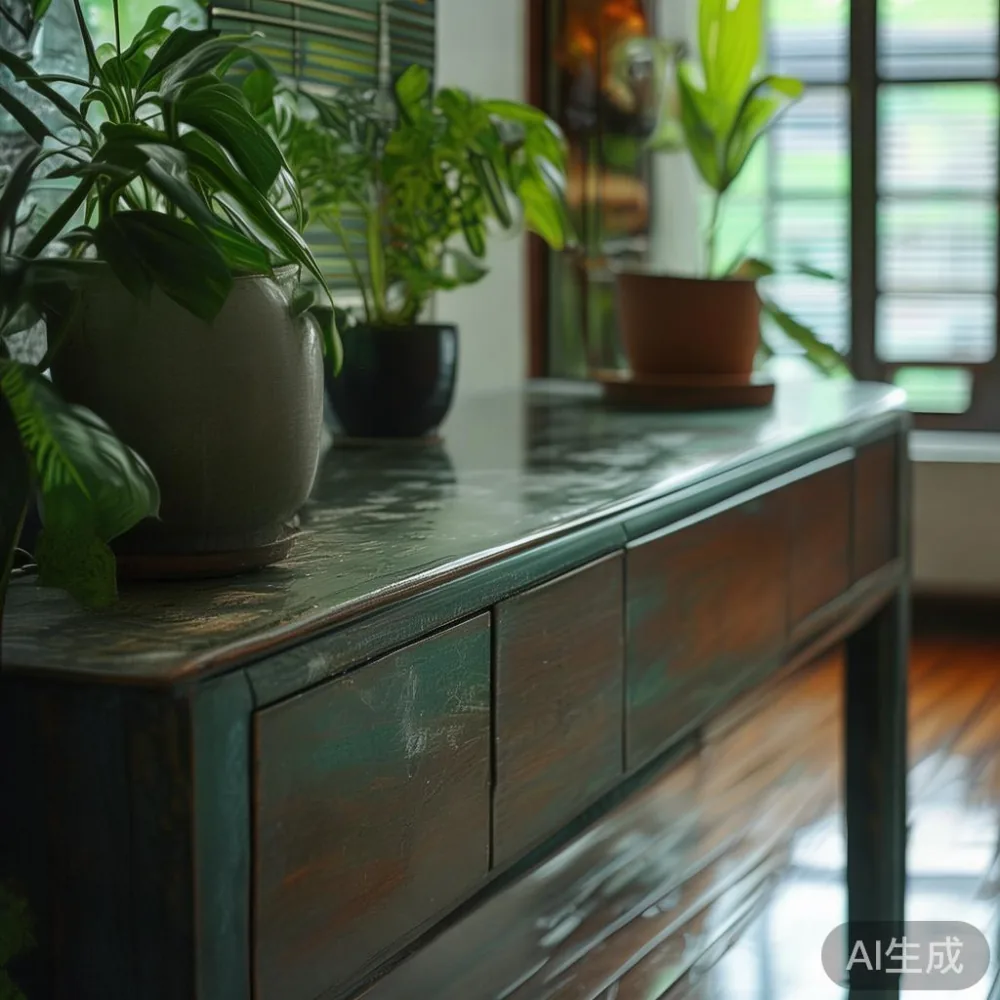
Before the care notes, a quick positioning note for readers new to the brand. The maker in question is a Foshan solid wood furniture workshop established in 2008, exporting to more than 15 countries, with a 10-year structural warranty, lifetime refinishing access, free shipping above US$350, and a 14-day return window. They are best known for solid wood sofas, bed frames, dining tables, wardrobes, nightstands, marble tables, and lacquered console tables that ride easily through Singapore lift landings (typically 1.0 m to 1.2 m wide) and standard corridor turns. Light-luxury is a word their designers use often, including French light luxury, American light luxury, and post-modern light luxury lines, and a lacquered console table is usually the piece buyers fall in love with first, before they consider a matching MIDHILL coffee table or the European light luxury dining table they keep seeing in the showroom renders.
Why Does Singapore Air Attack Lacquered Wood So Hard?
Lacquer is a finish, not a shield. It is a thin film built up in 5 to 12 coats, each cured and sanded, and its job is to give wood a glassy depth that shows off the grain. When relative humidity sits above 80% for weeks, three things happen: the wood underneath the lacquer swells slightly, the lacquer film absorbs a small amount of moisture, and then the air-conditioning kicks on at 23°C and the surface dries again. That cycle stresses the bond between film and substrate. I have personally watched a 1.4 m console table in a Punggol condo develop a 12 cm hairline at the joint after four monsoon weeks because the unit was set to 24°C while the window was left cracked 4 cm for fresh air. The client rang me, panicked, and the fix turned out to be simple: stabilise the room, then buff and recoat.
Singapore adds a second problem: salt. Sea breezes from the east coast carry chloride ions that land on everything, including lacquer. A 3 mm ring from a sweaty glass in Tampines is partly mineral salt and partly tannin pull from the wood below. The lacquer itself is usually fine; the stain underneath it is the issue.
What Is the Ideal Indoor Climate for a Console Table?
For lacquered solid wood, aim for 45% to 60% relative humidity and 20°C to 26°C. In Singapore that almost always means running a dehumidifier in tandem with the aircon, because the outdoor reading rarely drops below 70% even on a clear December morning. A 12-litre dehumidifier covers a 25 m² living room for under S$15 a day in electricity. Place it 1.5 m from the console table, not against it, so the airflow does not cool one panel faster than the others.
Keep the console table out of direct afternoon sun. In a west-facing HDB living room in Bedok, the sun between 3 pm and 5:30 pm can push the surface temperature to 38°C. That cooks the lacquer. A sheer linen curtain cuts the radiant load by roughly 60% and the panel temperature stays under 30°C, which the film can handle without softening. The same rule applies if you mount a TV above a Mid-century modern TV console; the heat plume off the panel adds another 2°C to the surface directly below.
Daily Care: What Should I Actually Wipe It With?
Use a soft, lint-free microfiber cloth (around S$6 for a 6-pack at any neighbourhood store in Tampines), lightly dampened with room-temperature water. Wring it out until no drops fall. Then wipe with a second dry cloth. That is the entire daily routine, and it takes 45 seconds. Avoid any spray that contains silicone, ammonia, or citrus solvent. Silicone builds up and prevents future recoating; ammonia dulls the finish in four to six uses; citrus will mark a French light luxury console within a single application.
Coasters are non-negotiable. Keep four felt-bottom coasters (S$10 to S$18 a set) at the entry to the dining room corridor so guests do not put a cold mug directly on the surface. If you entertain frequently, a 60 cm linen runner along the centre of a 1.6 m console table catches roughly 80% of the glassware traffic and protects the most-used zone.
Weekly and Monthly Care: What Routines Actually Matter?
Once a week, use a pH-neutral wood soap (around S$22 for 500 ml) diluted 1:20 with water, on the same two-cloth method. Dry the surface immediately. Once a month, apply a thin coat of paste wax (S$18 to S$35 for a tin) using a separate cloth, let it haze for 8 minutes, then buff. Paste wax on a lacquered surface sounds old-fashioned, but it adds a sacrificial layer that takes the abuse instead of the lacquer. On a heavily used console table, this monthly wax can extend the time between professional refinishes from 24 months to 48 months.
Beware of over-polishing. A console table that someone buffs every day with a silicone-rich spray polish will end up with a cloudy film that no amount of cleaning will remove. I have seen a 1.2 m post-modern light luxury piece in a Toa Payoh HDB come back to the workshop with the surface completely flat because the owner had layered nine products over eighteen months. A damp cloth once a day, soap once a week, wax once a month, done.
How Should I Move a Console Table Through Singapore Corridors Without Ruining the Finish?
This question comes up the most. Standard HDB corridors are 1.2 m to 1.5 m wide, lift landings run 2.0 m to 2.4 m deep, and lift cabins are usually 1.1 m wide by 1.4 m deep with a 0.9 m door. A 1.6 m console table will not fit diagonally in that lift unless you remove the legs and the apron, which a professional mover will do for S$120 to S$180 per piece within Singapore. Wrap each section in moving blankets (S$5 each), and tape soft foam corners (S$2 for a set of 8) over the lacquered edges. Never drag a console table over the floor; lift it with two people at 30 cm off the ground or place it on a furniture dolly with rubber wheels.
If you live on a high floor in Punggol and have booked the lift, allow a 30-minute moving slot because the booking system in most estates lets you reserve specific two-hour windows. A 1.4 m console table in two sections usually clears the lift in a single carry; a 1.8 m unit often needs to be tipped on its side and rotated, which is where a French light luxury console with slim legs benefits from being partially disassembled. Plan ahead, and your console table arrives looking like it just left the showroom.
What Do I Do About Water Rings, Scratches, and Sticky Residue?
Water rings: rub the mark with a cloth barely dampened with equal parts white vinegar and water, then dry, then a drop of paste wax. If the ring has gone white, the moisture has crept under the lacquer; a hairdryer on the lowest setting, held 20 cm away, sometimes draws it back out in under a minute. Light scratches (under 0.2 mm deep): melt a matching-coloured wax stick (S$8 to S$14, available in Tampines furniture supply shops at Jalan Besar) into the groove, smooth it flat, and buff. Deep scratches or gouges: stop DIYing and book a professional refinishing at the workshop; the 10-year structural warranty from your maker usually covers craftsmanship, and lifetime refinishing access means a single touch-up on a console table runs roughly S$80 to S$150 depending on size.
Sticky residue from stickers, tape, or spilled juice: a pea-sized amount of mineral oil on a cloth, left on the spot for 60 seconds, then wiped off. Never use acetone, nail polish remover, or anything from a convenience-store cleaning aisle.
How Should I Store or Pack a Console Table During a Reno?
Renovation dust in Singapore is a lacquer killer. Plaster and paint dust will settle into the pores of the film and cure under the wax, leaving permanent haze. Wrap the entire console table in 2 m of furniture blanket, then in cling wrap, then stand it in the room you are not renovating. If you have to move the piece into storage, the unit should be climate-controlled to 50% RH at all times. A non-climate-controlled self-storage unit in Tampines Logistics Park can swing from 65% to 95% RH in a single day and will damage the finish within 3 weeks. Budget S$80 to S$120 a month for a proper unit.
Which Console Table Styles Hold Up Best in Tropical Climates?
Of all the silhouettes, a console table with a closed-grain solid wood substrate (teak, white oak, or rubberwood) and a multi-coat polyurethane lacquer holds up the longest. Open-grain woods like ash show every humidity shift under the finish. French light luxury consoles with rattan fronts demand a different care regime (no wax, only a soft brush), and American light luxury consoles with brass-capped legs need a separate brass cleaner every two months. If you are starting fresh, ask the maker for a sample swatch, leave it in your living room for 7 days, and judge how it ages before committing. The swatch is usually free with a refundable S$20 deposit.
Singapore buyers often ask me about pairing the console with other pieces. If you already own a solid wood sofa and a marble table from the same workshop, the console table will match in sheen after a single waxing session. A matching bed frame in the master bedroom, a wardrobe in solid oak, and a nightstand on either side pull the whole apartment together without feeling like one bulk order. If you are still comparing bed styles while you wait for the console to be delivered, a quick guide on how to choose Japanese bed frames is worth a read alongside considerations like French bed vs Italian light luxury bed for the master suite. And while you are planning a full apartment refresh, the best Coastal wardrobe for 2026 is one line worth bookmarking if you want your wardrobe humidity tolerance to match your console table performance.
One last practical note for shoppers comparing options online. You will see many Solid Wood furniture listings, and some of them look tempting because the sticker price is sharp. Cheap Mid-century modern furniture in this category often skips the multi-coat lacquer and applies a single wipe-on finish that fails in tropical humidity within 8 to 10 months. A properly lacquered console table in the 1.2 m to 1.6 m range, made by a workshop with a 10-year warranty, generally lands between S$850 and S$2,400 delivered to a Singapore address. GST is 9% as of 2025 on imported furniture, factored into the delivered price. Below S$700 for a 1.4 m solid wood lacquered console from a brand with that warranty, the finish is almost certainly compromised somewhere, and the lifetime refinishing promise becomes more important than ever because you will use it.
Quick Reference Card: Console Table Care in Singapore
Humidity target: 45% to 60%. Temperature: 20°C to 26°C. Sun: avoid direct afternoon exposure. Daily wipe: damp microfiber, then dry. Weekly: pH-neutral wood soap, 1:20 with water. Monthly: thin paste wax, haze 8 minutes, buff. Coasters: always. Lift move: book a 30-minute slot, remove legs, wrap blankets. Sticky spots: mineral oil only. White rings: low-heat hairdryer 20 cm away. Refinish: every 18 to 36 months depending on use. Budget: S$80 to S$150 per professional touch-up at the workshop. Total annual care cost for a single console table, realistically, S$25 to S$60 in consumables and S$0 to S$150 if you book one service. Compare that to replacing a 1.4 m lacquered console at S$1,400 delivered, and care is the cheaper line by a wide margin.
Treat the console table as a long-term piece rather than a disposable one. The combination of stable indoor climate, gentle weekly routines, and a single yearly check-in with the workshop will keep the surface looking rich and reflective for the next decade, regardless of how many monsoons pass through your corridor window in Punggol.