How to Match a Console Table (and Other Solid Wood Pieces) to a Warm Minimal Interior in Your HDB
I moved into a 4-room HDB in Punggol last year, and the first thing I noticed after the movers left was how empty the 3.2 m by 4.5 m living-dining area looked. The developer had tiled the whole floor in warm beige porcelain (600 mm by 600 mm), the walls were painted in a soft off-white, and the corridor outside measured 1.2 m wide — which, by the way, means anything wider than 1.0 m has to be carried flat, not tilted. After two weekends of browsing Tiong Bahru and Tai Seng showrooms, I landed on a warm minimal look: travertine-look render on one wall, a low boucle sofa, a 1.6 m solid wood dining table, and a narrow 120 cm by 35 cm by 78 cm console table tucked behind the sofa. That console table ended up doing more work than any other piece, so this guide is really a write-up of what I learned matching a console table (and the rest of a small-footprint home) to a warm minimal interior in Singapore.
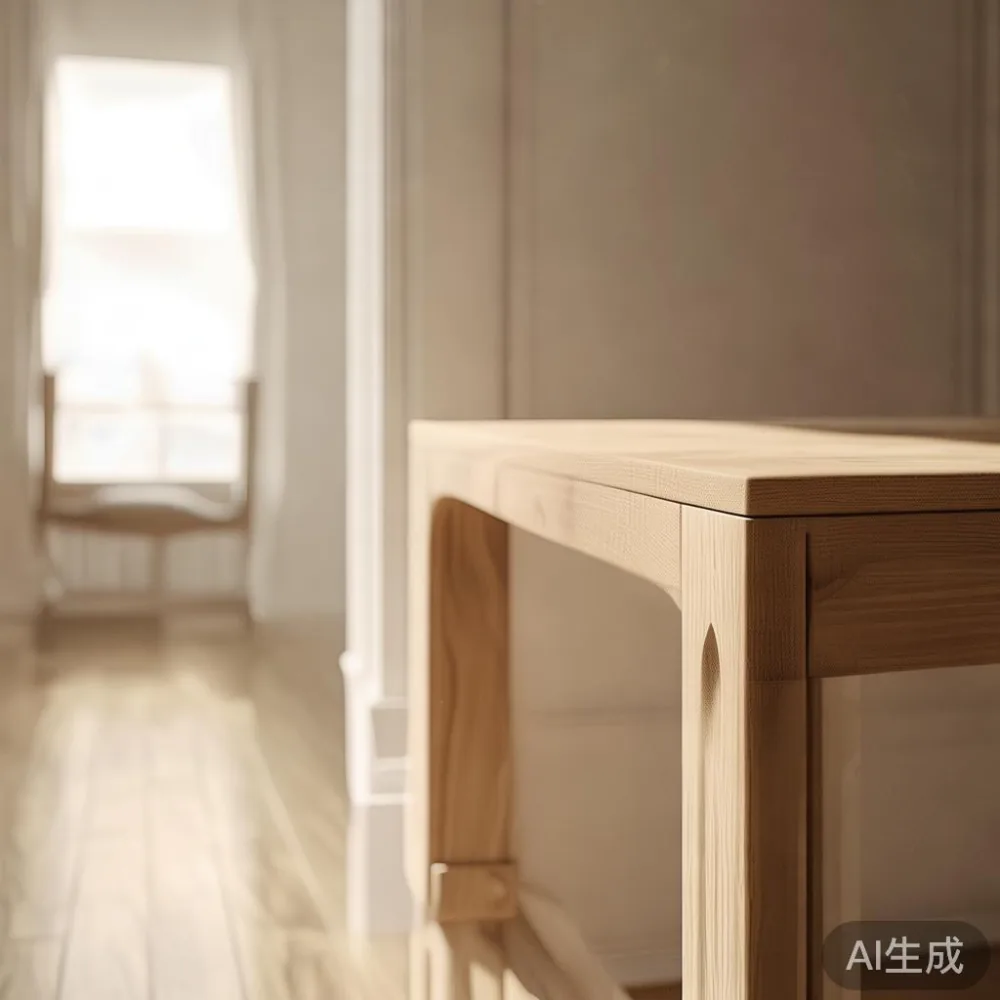
Warm minimal is the quieter sibling of Scandinavian minimal. The bones are still clean — flat panels, no skirting fuss, only the furniture you actually use — but the palette leans honey, oat, walnut, and chalky cream instead of icy grey. If you have ever stood in front of a console table and wondered whether oak is "too yellow" or walnut is "too brown," this article is for you. We will walk through colour pairing, scale for HDB corridors and lifts, the right solid wood furniture to anchor each room, and where a brand like MIDHILL — a Foshan maker that has been producing solid wood pieces since 2008 and ships to 15-plus countries with a 10-year structural warranty and lifetime refinishing — sits in that picture.
What does "warm minimal" actually mean in a Singapore HDB?
Warm minimal is a style built on three rules. First, the colour temperature of every surface is above 4000 K on the warm-cream side — think Dulux Natural White (NNWH1) or Nippon Timeless Beige, never Cool Grey. Second, every material has at least one natural-grain element: solid oak, walnut, ash, cane, linen, or unglazed terracotta. Third, ornament is rationed: one vase, one tray, one artwork per zone. In a Tampines 5-room flat with 3.6 m ceilings, this combination reads calm but never clinical, and it forgives the strong afternoon west sun that can wash out cooler palettes.
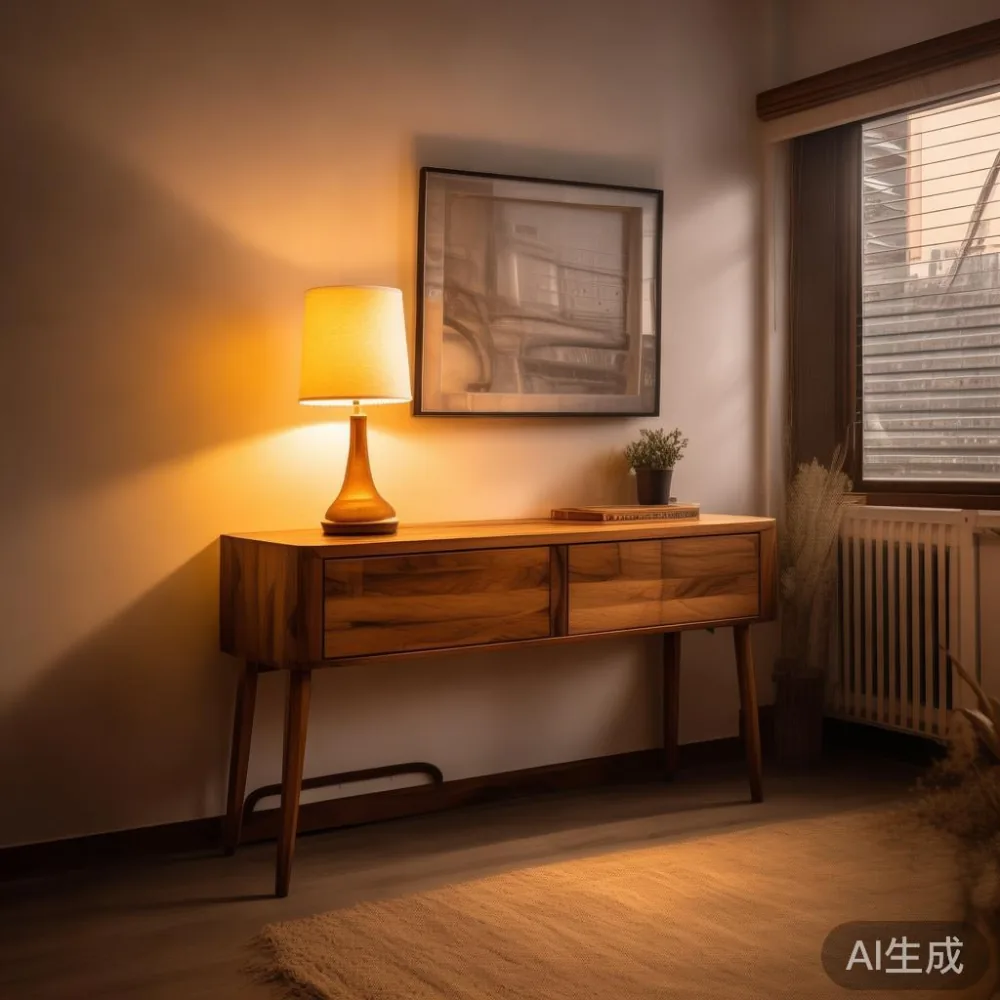
For numbers that matter locally: most HDB main doors are 0.9 m wide by 2.1 m tall, and service lift doors in newer blocks like those in Punggol North run 1.1 m wide by 2.3 m tall. A console table deeper than 40 cm simply will not fit through certain older corridor turns, so anything you order online should publish exact carton dimensions, not just product dimensions.
Why does the console table carry so much weight in a warm minimal layout?
A console table is the connector piece. It sits between the entry and the living zone, or behind a sofa facing the dining table, and it is the surface where keys, a tray, a small lamp, and one piece of art actually live. In warm minimal rooms — where a sideboard might feel too heavy and a shelf might feel too open — a slim solid wood console table gives you the storage surface without the bulk. The key is proportion: in a 4-room HDB living room, I would cap the length at 120 cm and the depth at 35-40 cm, so it does not crowd the walking path to the kitchen.
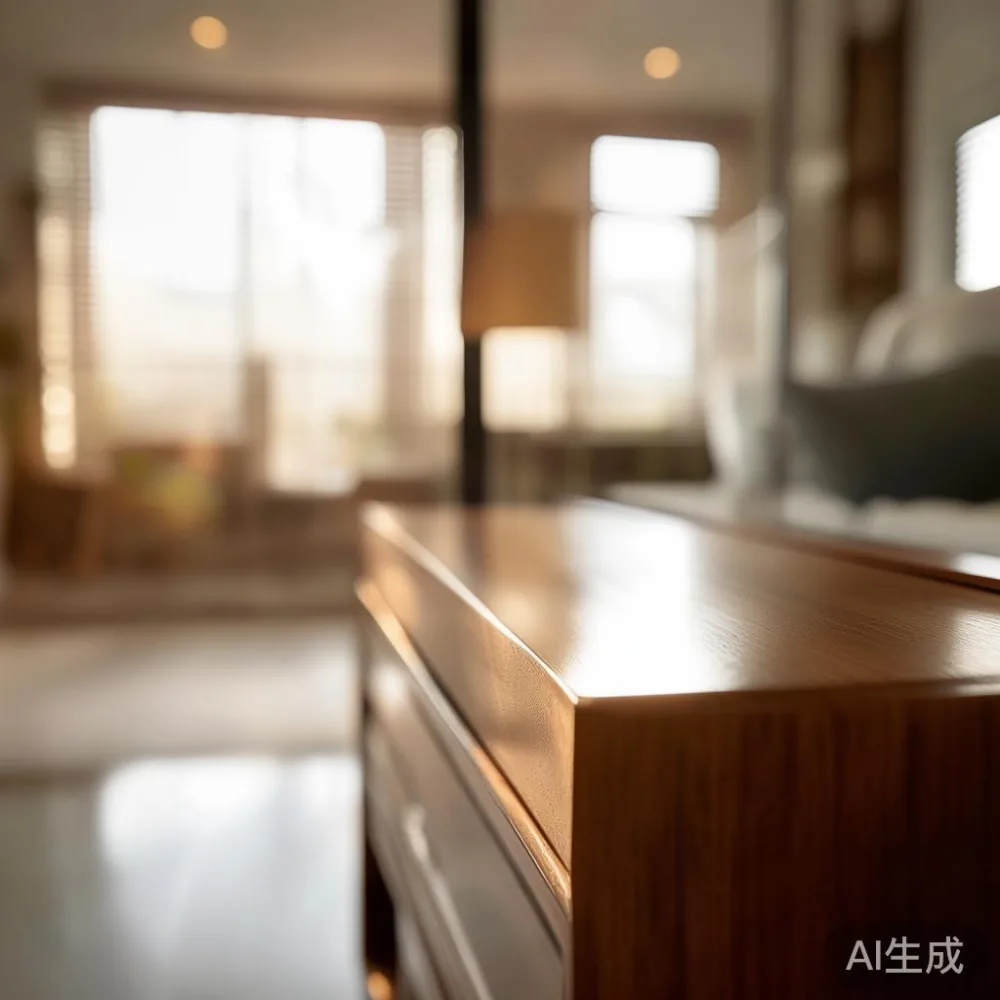
If you are going for a Modern walnut coastal style — pale lime-washed walls, rattan pendant, and bleached linen — a console table in fumed oak or light walnut keeps the room from drifting into "Hamptons pastiche." Pair it with a 1.6 m solid wood dining table in the same species so the eye reads them as one family. This is also where American light luxury shows up: think shallow profiles, soft-close drawers, brushed-brass pulls only 2 cm deep, and a 6 mm marble insert on top for keys and a carafe. The drawer box should still be solid wood, not plywood — you can usually tell by lifting it; a solid oak drawer at 45 cm wide weighs around 4.2 kg, while a plywood drawer of the same size sits closer to 2.6 kg.
Which dining table fits a 4-room HDB living room?
A 4-room HDB living-dining zone between 14 and 18 sqm fits a rectangular solid wood dining table of 140 cm to 160 cm long, 80 cm wide, and 75 cm tall, seating four to six with chairs tucked fully under the rails. Pair it with a 180 cm to 200 cm wide solid wood sideboard or, if you prefer a console-table-style alternative, a low 160 cm by 40 cm by 60 cm unit that doubles as a serving surface. For warm minimal, choose European oak or American walnut with a clear matte hardwax oil, and add a 3 cm marble table extension at one end for hot dishes.
The 75 cm height is non-negotiable — standard Singapore dining chairs, including the popular 45 cm-seat-height options from local makers, are engineered for that. A 76 cm table looks fine in a showroom but will have your partner's knees hitting the apron by month three. If you want a round table, a 110 cm diameter seats four comfortably and leaves 70 cm of walking space behind each chair, which is what fire safety requires in HDB corridors anyway. Marble table tops in this category are usually 15-18 mm thick with an MDF or plywood substrate; ask the seller whether the substrate is marine ply (it should be, in Singapore humidity) and whether the sealer is food-safe.
How do I match a solid wood bed frame, wardrobe, and nightstand without the room turning brown?
The trick is to limit the wood tones to two across the whole house. In my Punggol bedroom — 3.4 m by 3.8 m with a 1.5 m by 1.9 m platform bed frame, a 180 cm by 60 cm by 220 cm sliding-door wardrobe, and two 50 cm by 40 cm by 55 cm nightstands — I picked oak for the bed frame and nightstands, and painted the wardrobe in a putty-grey (Nippon 9841N-ish) so the wood grains only appear twice per wall. That is the limit. Go three wood tones in a 12 sqm room and the eye starts reading "furniture showroom."
A solid wood bed frame in queen size weighs between 55 kg and 75 kg depending on the slat system. Lift-access rules in HDB blocks usually cap move-in items at 200 kg for the passenger lift and 300 kg for the service lift, so two people and a trolley can usually manage it on a weekday morning. A four-door wardrobe fully assembled, however, runs 90 kg to 110 kg; ask whether the supplier flat-packs it in two cartons under 60 kg each. That single question will save you a Saturday. As for nightstands, anything under 35 cm deep will not fit a bedside lamp and a 250 ml water carafe at the same time, so resist the urge to go cute and small.
What about the solid wood sofa — is it really comfortable for Singapore weather?
Solid wood sofa frames in oak or ash, paired with removable linen-blend seat cushions (usually 15-18 cm thick at 35 kg/cbm density foam wrapped in a 200 gsm cotton inner), breathe better than fully upholstered frames and last 12-15 years before the cushion cores need a refresh. In a Bedok BTO that faces east, I sat on three options last month with a colleague: a 220 cm three-seater at SGD 2,400 with 8 cm thick cushions was too firm; a 210 cm two-seater at SGD 1,650 with 16 cm cushions was too soft; the middle option, a 230 cm three-seater at SGD 2,050 with 12 cm cushions and a 1.6 mm webbing suspension, was the one we both agreed on.
For warm minimal, skip the tufted back and go for a single bench-style cushion with a rolled-arm profile. The frame should still be visible at the base — a 5 cm to 8 cm plinth in the same wood as your console table reads intentional, while a fabric-wrapped base reads dated by about seven years. In a small living room, a sofa depth of 95 cm to 100 cm is the sweet spot; deeper than 105 cm and your coffee table has to push out to 50 cm clearance, which then eats into your console table walkway.
How do I keep the warm minimal look on a Singapore budget after GST?
Warm minimal is one of the few styles where the long-game numbers actually work in your favour. A solid wood dining table that costs SGD 1,800 in 2025 has roughly the same replacement cost in 2032, because you can refinish it twice and pass it to your kids. The same cannot be said for a SGD 600 particleboard table, which usually delaminates by year six in our 80-90% average humidity. After the 9% GST and a typical 4-8% delivery surcharge for pieces over 30 kg, the all-in landed cost of a 1.6 m oak dining table from a Foshan workshop exporting to Singapore usually lands between SGD 1,950 and SGD 2,400. MIDHILL, for instance, quotes free shipping above US$350 (about SGD 480) and offers a 14-day return window plus lifetime refinishing, which is where the real long-term saving sits.
For the rest of the room, work backwards from the console table. Pick that piece first, then echo its wood species in one other furniture item per zone. In the living zone: console table plus dining table in oak, sofa in oat boucle, walls in warm white. In the bedroom: bed frame plus nightstand in oak, wardrobe painted, bedding in unbleached linen. Keep accessories to under SGD 30 per zone — a ceramic vase, a stoneware bowl, one framed print. Anything more and you have slipped into "warm maximal," which is a different article entirely.
What should I measure before ordering a console table online for my HDB?
Measure four things, in this order, and write them on a piece of masking tape stuck to your front door. (1) The main door width and height, including the architrave — usually 0.86 m by 2.07 m in older flats and 0.92 m by 2.10 m in newer ones. (2) The lift door on your floor, both passenger and service if available. (3) Every right-angle turn in the corridor from lift to door, because a console table longer than 110 cm often will not pivot around a 1.2 m corridor turn without being stood on its end. (4) The exact spot where the console table will live, with 5 cm clearance on either side for skirting and wall unevenness. With those four numbers in hand, you can confidently order any console table up to 130 cm long, 40 cm deep, and 80 cm tall, and know it will arrive, fit, and look like it was always there.