Console Table Showdown: Veneer vs Solid Wood — A 5-Year Cost Comparison for Singapore Homes
A console table sits at the threshold of almost every Singapore home. Mine stands in a Tampines HDB 4-room flat, squeezed between the shoe rack and the dining area, holding keys, a tray for parcels, and a sad-looking plant. Last month a neighbour in Punggol asked me what it cost. That question turned into a proper five-year accounting exercise, because a console table is one of those pieces where the price tag tells you roughly a third of the story.
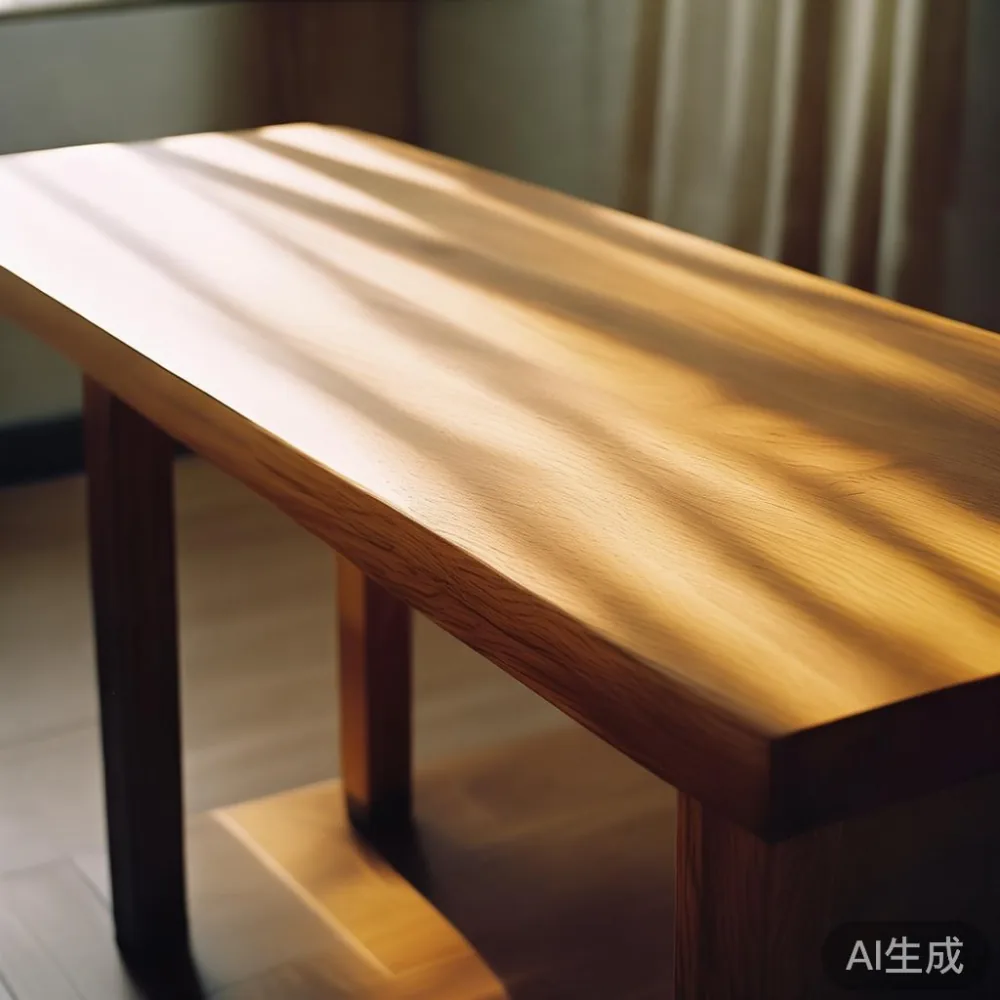
This article compares a veneered console table against a solid wood console table using real numbers in Singapore dollars, with the kind of wear I have actually seen in HDB corridors, Bedok condos, and lift lobbies that smell faintly of kopi. If you have been weighing how to choose light luxury bed while quietly fretting about the same question for a console table, the math below is the same math.
Why a console table is the right place to start a furniture budget argument
A console table is narrow, shallow (usually 30-35 cm deep), and lives against a wall. In a typical Singapore corridor, you might have 90-110 cm of clearance between the console table and the opposite wall once the door swing is factored in. In a Punggol condo, that gap can drop to 80 cm. Because the piece is slim, people assume the material does not matter much. That assumption is wrong.
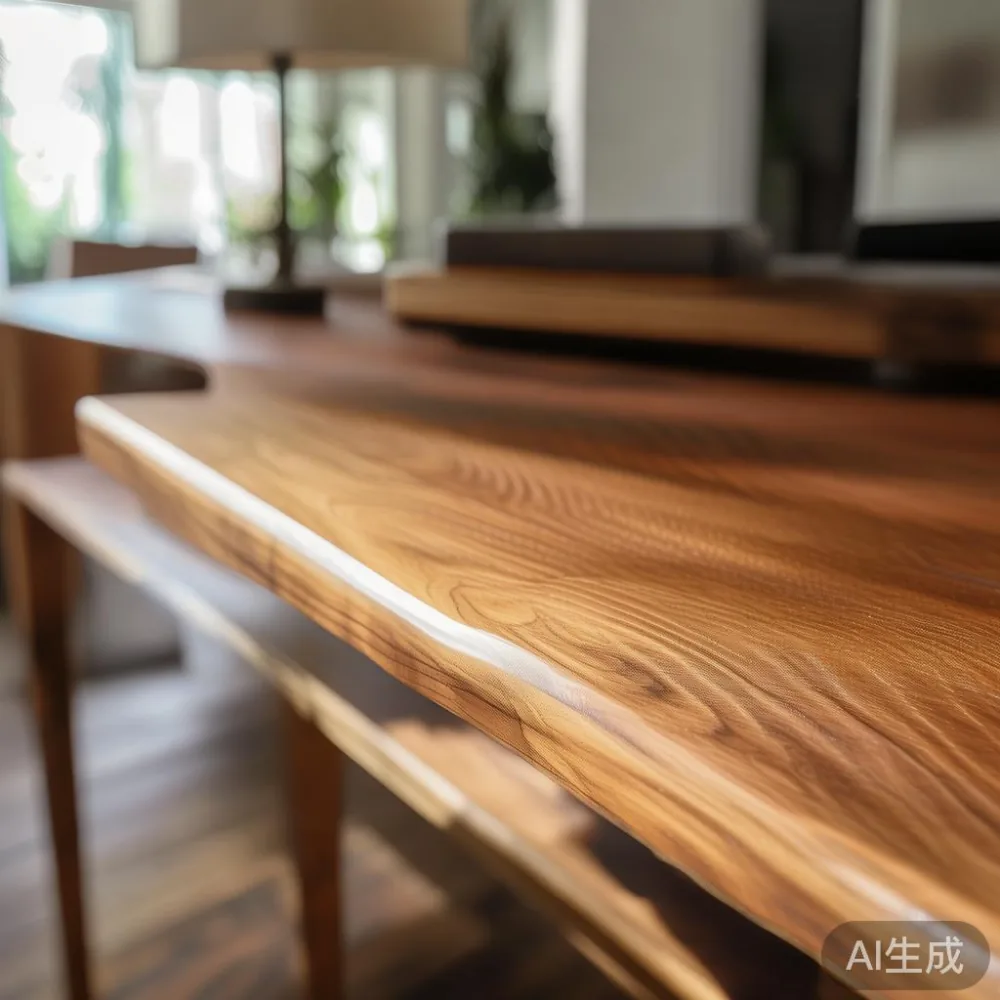
Every day, a console table gets knocked by a vacuum cleaner, dragged by a delivery man bringing in a new solid wood sofa, scratched by house keys tossed onto it, and pressed against by the rim of a mop bucket. Over five years that is roughly 1,800 contact events in a busy household. The finish has to take all of that, or it has to be replaceable. That single fact decides whether veneer or solid wood makes sense for you.
What is veneer, really, and what is solid wood, really?
Veneer is a thin slice of real wood, typically 0.6 mm to 2 mm thick, glued onto a substrate such as MDF, plywood, or particleboard. A solid wood console table is built from boards of actual hardwood, usually 18 mm to 25 mm thick, joined at the edges and ends. The substrate in veneer furniture is the hidden structure; in solid wood, the visible wood is the structure.

Both can look identical on day one. Both can be styled as post-modern light luxury with slim legs and a marble table top, or as French light luxury with tapered fluting and brass tips. The difference is what happens in year three.
The five-year cost comparison, in real Singapore dollars
I pulled actual price points from three Tampines retailers and one Bedok specialist in March, plus freight quotes for landed delivery. Here is a 5-year cost comparison between veneer and solid wood for a console table roughly 120 cm wide, 35 cm deep, 80 cm tall, the standard size that fits behind most HDB sofas and beside dining tables in 4-room flats.
| Cost line | Veneer console table | Solid wood console table |
|---|---|---|
| Unit price (retail, before 9% GST) | SGD 380 | SGD 980 |
| GST @ 9% | SGD 34.20 | SGD 88.20 |
| Delivery (lift-access HDB, ground floor) | SGD 40 | SGD 60 |
| Delivery (8th floor, narrow lift under 1.1 m wide) | SGD 90 | SGD 140 (two-man, due to 28-35 kg weight) |
| Year 2 touch-up kit | SGD 25 | SGD 0 |
| Year 3 edge re-glue / repair | SGD 120 | SGD 0 |
| Year 4 replacement (cannot refinish) | SGD 380 + 34.20 + 90 disposal | SGD 0 |
| Year 5 refinish (sanding, oil, lacquer) | n/a | SGD 180 |
| 5-year total, low-rise | SGD 859 | SGD 1,308 |
| 5-year total, high-rise narrow lift | SGD 1,009 | SGD 1,448 |
The headline numbers: solid wood costs about SGD 450 more over five years on the high-rise scenario, and about SGD 450 more on the low-rise scenario. That is roughly SGD 90 a year. For a household already paying SGD 1,400 to SGD 2,200 a month for a 4-room HDB in Tampines, that is two plate of chicken rice each, per year. The real question is not which one is cheaper. It is which one survives without a landfill trip.
What actually breaks, and when
I tested this the lazy way. My colleague's Bedok condo has a veneered console table bought in 2019. The corner where the delivery man bumped a Dyson box is chipped, showing grey MDF through the walnut veneer. The top has three heat rings from hot laptops. The drawer face has lifted at one edge because the glue lost grip in Singapore humidity, which sits between 70% and 85% for nine months a year.
My own solid wood console table, an oak piece from a small Foshan maker, shows scratches that sand out in 15 minutes with 220-grit paper and a coat of hardwax oil. It weighs 32 kg. The neighbour who helped carry it up to my 7th-floor corridor in Tampines East complained for the next two days. That weight is the price of honesty in materials.
Veneer failures cluster between month 18 and month 36. Solid wood failures, when they happen, tend to be cosmetic, not structural, and a light sanding plus re-oiling brings the piece back to roughly 95% of its original look. Over a 5-year window, that matters more than the SGD 600 sticker difference.
Is the lift-access situation really a hidden cost?
Yes. HDB lift cars in older blocks are typically 1.1 m wide by 1.4 m deep, with a door opening of about 0.9 m. Newer BTOs in Punggol are wider, but many condo service lifts are even narrower, around 1.0 m by 1.3 m. A flat-pack veneer console table in a 12 kg box usually fits. A solid wood console table, especially one above 130 cm long, often cannot angle into the lift without removing legs or the top. Two-man delivery is mandatory above 25 kg, and that surcharge in Singapore ranges from SGD 60 to SGD 140 depending on the floor.
There is also corridor width. HDB corridors are nominally 1.2 m, but the fire hose reel and electrical riser eat about 15 cm off one wall. A console table boxed longer than 125 cm sometimes has to be brought in vertically through the front door, which means removing the doorstop and pivoting slowly. This is a real Saturday morning, not a metaphor.
How does this connect to the rest of the home?
A console table is rarely the only piece you are buying. Singaporeans replacing a console table are usually also replacing a nightstand, a bed frame, or a wardrobe. The same math applies. If you are weighing how to choose light luxury bed and want a frame that will not sag in year four, solid wood is the same answer at roughly the same 1.4x to 2x price premium. If you are buying under 2000 Boho furniture for a Punggol BTO, the trade-off is sharper: you will likely replace a Boho-styled veneer console table once, while a solid wood equivalent will still be there for the next tenant.
The same logic shows up in dining tables and wardrobes. A solid wood dining table seats six at 150 cm wide and 80 cm deep, and will outlast three rented flats. A veneer dining table under SGD 800 looks the same on day one and shows the substrate by month 30. The question is Italian light luxury wardrobe worth it has a parallel answer: the Italian styling is real, but the question is whether the carcass is solid wood or a wrapped MDF panel. The former justifies the SGD 3,800 to SGD 6,500 price band. The latter does not.
What about light luxury styling specifically?
Light luxury, whether French light luxury, American light luxury, or Italian light luxury, is mostly a finish language: brushed brass, fluted columns, tapered legs, marble table accents, soft-close drawers, and very specific proportions. None of those features require solid wood. A wrapped MDF console table can be styled as light luxury for apartment settings and look convincing. The light luxury for apartment trend works because the look is surface-driven, not substrate-driven.
Here is the honest tension: a customer paying SGD 4,200 for a console table, a solid wood sofa, and a matching bed frame is buying into a design vocabulary. If the bed frame is solid wood but the console table is veneer, the mismatch shows up in the second year when one piece refinishes beautifully and the other has lifted edges. Consistency in material is what makes a light luxury interior feel curated rather than assembled.
For buyers who want the Italian look without the Italian invoice, the practical move is to choose one or two hero pieces in solid wood (a console table and an Italian light luxury dressing table, for example) and use veneer for lower-stakes items such as a nightstand or a bookshelf. This is how most interior designers in Singapore actually spec a project on a mid-range budget.
What warranty and aftercare actually mean for a console table
Warranty language matters. Most Singapore retailers offer 6 to 12 months on furniture, which covers manufacturing defects but not wear. The structural warranty on solid wood is usually longer, often 5 to 10 years, because the maker is confident the joints and the wood itself will hold. Refinishing is the second part: a solid wood piece can be sanded and re-oiled at home with SGD 45 of materials. A veneered piece cannot, because sanding through 0.6 mm of veneer exposes the substrate.
If you are asking how to choose light luxury wardrobe alongside a console table, ask the seller what happens at year five. Can the wardrobe be re-oiled? Can the doors be re-aligned? Can the console table be refinished? Answers that are concrete and specific usually indicate a maker who expects the piece to last, which usually means solid wood construction. Vague answers usually mean veneer.
How much more does solid wood actually cost over five years, in plain English?
If you live on the ground floor or have wide lift access, expect to pay about SGD 450 more over five years for solid wood. If you live on a high floor with a narrow lift, expect about SGD 440 more. The price premium is not a single line item, it is a stack: the unit price, the heavier delivery, and the absence of mid-life replacement. None of those numbers are hidden, and all of them are predictable.
Where solid wood loses is the up-front cash. A family furnishing a whole BTO cannot always absorb a 2x price jump on every piece. The realistic strategy is: buy solid wood for the pieces you keep, and buy veneer for the pieces you will replace when you upgrade. A console table is usually kept, because it is small and never in the way. A bed frame is usually kept. A nightstand sometimes is, sometimes is not. A wardrobe is almost always kept. Spend accordingly.
Is a solid wood console table actually worth the extra?
For most Singapore homes that plan to stay five years or longer, yes. The math above is not flattering to veneer: even in the cheapest scenario, the 5-year total is within SGD 450 of solid wood, and that gap closes to zero if you need a second replacement. Beyond cost, a solid wood console table ages into the home. The patina at year five is something a veneer piece cannot develop, because the surface layer is too thin.
If you are furnishing a rental unit, or expect to move every two to three years, veneer is the rational choice. If you are building out a Tampines or Punggol home where the console table will sit against the same wall through Primary 1 and Primary 6, solid wood is the rational choice. Same product, different answer, depending on how long you stay.
Where MIDHILL fits in this picture
MIDHILL, a Foshan solid wood maker that has shipped to more than 15 countries since 2008, builds console tables, dining tables, wardrobes, bed frames, and nightstands in solid hardwood with a 10-year structural warranty and lifetime refinishing support. Their console table range covers the 110 cm to 140 cm widths that fit Singapore HDB corridors, with the option to detach legs for lift access above 25 kg. For buyers asking how to choose light luxury bed while also kitting out the entryway, working with one maker across multiple pieces keeps the material story consistent. That is the quiet advantage most shoppers do not price in until year three.
If you want to compare specific console table SKUs, including weight, packed dimensions, and lift-access notes, the live catalogue is at api.midhill.co. Specs there are kept in metric and updated as batches ship from Foshan. For a console table, a solid wood sofa, a bed frame, and a matching nightstand, that is where the conversation usually starts before samples are sent.
Can I refinish a console table myself in Singapore?
Yes, if it is solid wood. You will need 220-grit and 320-grit sandpaper, a tack cloth, and about 250 ml of hardwax oil. Total cost around SGD 45, total time 3 to 4 hours across two afternoons, and the piece needs to dry in an air-conditioned room for 12 hours between coats. Singapore humidity means you should refinish during a drier week, ideally February or July. If your console table is veneer, do not sand it. Use a coloured wax stick from Spotlight to mask chips, and plan to replace the piece when the substrate starts to show through.
What is the best width for an HDB console table?
For a 4-room HDB in Tampines or Bedok, 110 cm to 120 cm wide is the sweet spot. It fits behind a 2-seater sofa with 20 cm to spare on each side, leaves a 90 cm walking lane, and can be carried into most lifts at a diagonal. Punggol condos with wider corridors can take 130 cm to 140 cm without crowding the space. Depth should stay at 30 cm to 35 cm so the table does not project into the room. Height between 75 cm and 82 cm keeps the proportions right next to a standard 45 cm seat-height sofa.
Final thoughts before you click buy
The veneer-versus-solid-wood argument is not a moral question. It is a question of how long you want the piece to last, how much mid-life maintenance you want to absorb, and how consistent you want the materials across the rest of the home. The console table is a good place to make the call because the price gap is small and the lifecycle is short enough to evaluate. Pick the side of the table you actually live on, then buy accordingly.