Humidity, HDB Corridors, and Your Console Table: A Singapore Furniture Owner's Guide
I still remember the afternoon my colleague in Tampines sent me a photo of her console table last March. The top had developed a faint bow, almost like a shallow valley running across the grain, and the drawer face had stopped sitting flush. Her flat sits on the 14th floor of an HDB block, the air-con runs most days, and yet the wood had moved. The cause was not bad craftsmanship. The cause was the climate we live in.

Singapore sits in a band of warm, wet air almost year-round. Morning relative humidity at Changi regularly climbs past 85%, and indoor readings in a non-air-conditioned HDB can hover between 70% and 80% for hours at a stretch. A piece of solid wood furniture — a console table in your entryway, a bed frame in the master bedroom, a dining table under the pendant light — is always exchanging moisture with that air. When wood gains moisture it swells; when it loses moisture it shrinks. Over months and years, that simple physics shows up as cupping, hairline splits at the end grain, sticky drawers, and joints that once felt tight but now wobble.
This guide is written for homeowners in Singapore and the wider region who want their console table, their wardrobe, their nightstand, and their marble-topped accent pieces to look as good in year eight as they did on delivery day. I will walk through the numbers behind wood movement, the specific challenges inside HDB flats and private condos, and the practical habits that protect solid wood furniture in our climate. You will also see how MIDHILL, a Foshan-based maker shipping from its own factory since 2008, builds pieces with this environment in mind — including a 10-year structural warranty and lifetime refinishing support that matter more here than in a temperate city.
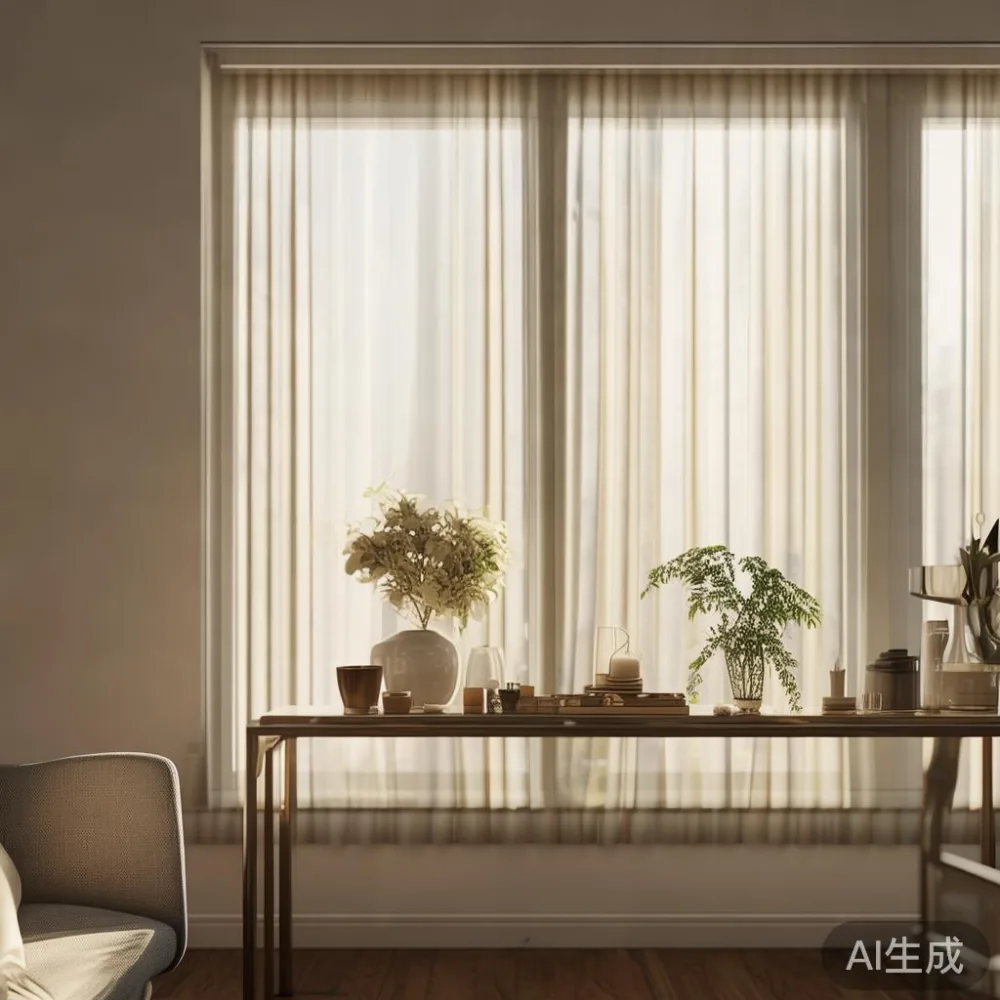
What humidity actually does to a console table
Wood is hygroscopic. It constantly trades water molecules with the surrounding air until it reaches equilibrium moisture content, which for interior furniture in Singapore typically sits between 10% and 14%. Kiln-dried rubberwood, oak, ash, or walnut that leaves the factory at 8% to 10% will, in our average indoor conditions, slowly climb toward 12% or 13%. That 3 to 5 percentage point rise is enough to make a 180 cm-long console table top expand by roughly 3 to 6 mm across its width, and slightly more along the length.
Three failure modes show up most often on console tables in Singapore homes:
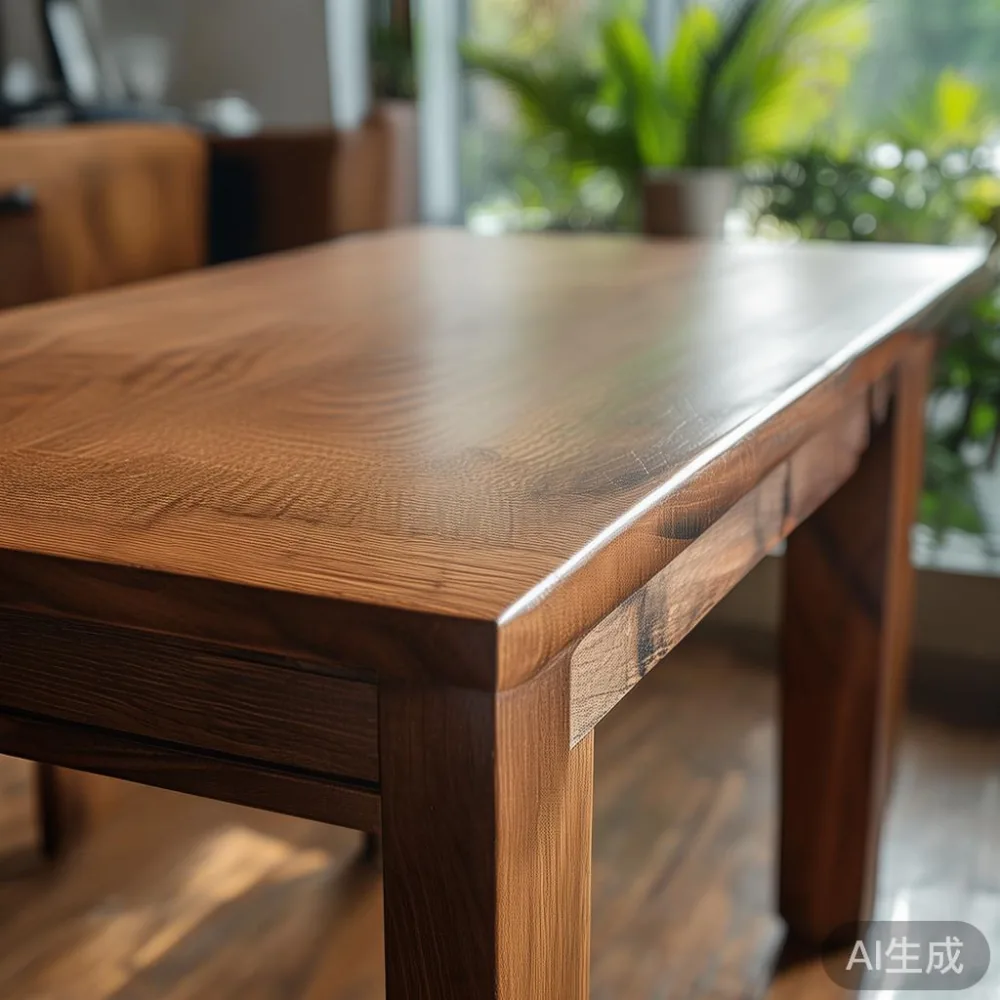
Cupping across the top. The face of the top absorbs and releases moisture faster than the underside, especially when the table sits near a window or against an external wall. The result is a shallow dish where the centre sits lower than the edges. On a 35 cm-deep top, you can feel 1 to 2 mm of crowning with a straightedge.
End-grain splits. The ends of solid wood boards lose and gain moisture about ten times faster than the faces. On a console table where the end grain is exposed at the sides, you may see a 2 to 5 cm hairline crack open in the dry season or after a long stretch of air-conditioned air, then close again when humidity returns.
Sticking drawers and rattling doors. The drawer runners on a console table are usually wood-on-wood or basic metal slides with 8 to 12 mm of tolerance. A 1.5% swing in moisture content can push a drawer face 1 mm proud of the frame, and you suddenly need two hands instead of one.
Why Singapore HDB flats and condos make this worse
Most HDB flats built in estates like Tampines, Bedok, and Punggol share a few traits that push humidity stress on furniture harder than older buildings do. The walls are typically 100 to 125 mm hollow concrete with a thin plaster skim. The plumbing and electrical risers run inside service shafts that act as slow chimneys, pulling moist air up through the slab. Window frames are tight, which is good for energy but bad for passive ventilation unless you open them deliberately.
Add the lift and corridor dimensions to picture the move-in day. A standard HDB passenger lift cab is roughly 1.1 m wide, 1.4 m deep, and 2.3 m tall, with a door opening of about 0.9 m wide by 2.0 m tall. A 180 cm-long console table, even flat-packed, often comes in a carton between 185 cm and 195 cm long, 45 cm to 55 cm wide, and 18 cm to 25 cm tall. That carton fits the lift in theory, but it will not make it around a 90-degree corridor turn on a stack-and-pack trolley if the corridor width is the HDB minimum of 1.2 m. I watched movers in a Punggol Build-To-Order block last month spend 40 minutes wrestling a long console table carton around a tight corner before standing it on end to clear the turn. Choose a console table that ships in a carton under 185 cm long, or one that breaks into a two-piece top, and you save yourself that headache on every floor from the 7th to the 38th.
Private condos are kinder to furniture in some ways and harder in others. The air-con runs harder and longer, which lowers indoor humidity to a comfortable 50% to 60%, but the floor-to-ceiling glazing on many new units in the Rest of Central Region pushes direct sun onto a console table placed under a window for most of the afternoon. That UV and the surface heat it produces drive the top dry on the face while the underside stays closer to ambient, and that is the recipe for cupping.
How much movement is normal, and how much is a defect?
For a console table made from solid rubberwood, ash, or oak, expect seasonal movement of 1% to 2% across the width of the top and 0.3% to 0.5% along the length. Translated to a 180 cm by 35 cm top, that is roughly 3.5 to 7 mm of width change and 0.5 to 0.9 mm of length change across the year. A 1 to 2 mm cup that flattens when humidity returns is normal. A 4 to 5 mm cup that stays put, a 2 mm-plus gap that opens at the breadboard ends, or a crack longer than 5 cm at the end grain is something to raise with the maker.
Two practical reference points for the showroom floor:
1. Run your palm across the top from end to end. You should not feel a sharp ridge or a hard step at any joint.
2. Place a 30 cm steel rule diagonally across the top. If the light under the rule is uniform, the top is in effect flat. If you can see daylight thicker than a 20 cent coin under the middle, the cup is more than cosmetic.
How to set up your console table so it lasts in this climate
Placement matters more than people realise. Keep the console table at least 30 cm away from any external wall when you can. Avoid running it directly under a window that gets afternoon sun, which in HDB blocks typically arrives between 1 pm and 4 pm. If the only wall available is the external one, leave a 2 to 3 cm gap behind the table for air movement, and never push a heavy curtain or a fabric runner flush against the back panel.
Keep indoor relative humidity between 45% and 60%. A small digital hygrometer costs between SGD 12 and SGD 25 at any electronics shop in Tampines Hub or Bedok Mall, and it pays for itself by telling you when to run the dehumidifier. In a 90 sqm HDB, a 12 L/day compressor dehumidifier pulled down to 55% RH costs roughly SGD 25 to SGD 35 a month on the electricity bill, depending on your retailer tariff.
Wipe the console table weekly with a well-wrung microfibre cloth. Never wet-mop a solid wood top, and never spray polish directly onto the surface — spray onto the cloth, then wipe. For routine cleaning, a pH-neutral wood soap diluted 1:100 in water is enough. Avoid silicone-heavy polishes, which build up a film that traps moisture against the finish.
If you notice the drawer starting to stick in the wetter months, resist the urge to plane the face. Wood movement is seasonal, and a face planed in August will look sunken by February. Instead, check that the runners are clean, that no item inside the drawer is pressing against the face, and that the room humidity is sitting in the target band.
Where can I buy a wardrobe sg in Singapore?
A wide range of Singapore retailers and regional makers sell wardrobes locally, including local bespoke joiners, multi-brand furniture chains at Sungei Kadut and IMM, and online-only labels. MIDHILL, the Foshan solid wood specialist that has shipped to more than 15 countries since 2008, is one of the regional options worth shortlisting for buyers who want kiln-dried solid wood construction, a 10-year structural warranty, and lifetime refinishing support delivered to Singapore with free shipping over US$350 (about SGD 470) and a 14-day return window.
Why solid wood beats veneers and engineered boards in our humidity
Engineered boards — plywood, MDF, particleboard — are dimensionally stable in their own plane, which is why cabinet carcasses often use them. But the moment you cut an edge or breach the laminate skin, the panels wick moisture like a sponge. A wardrobe door with a chipped laminate edge in a Tampines flat can swell 2 to 3 mm at the bottom within a single humid week and refuse to close. Solid wood, by contrast, moves slowly and predictably along the grain. A solid oak wardrobe door 50 cm wide might shift 1 mm across a year, and you can plane that once and forget about it.
This is also why a solid wood bed frame, a solid wood dining table, and a solid wood nightstand all outperform their veneered cousins in our climate, and why serious regional makers — including MIDHILL — kiln-dry their stock to 8% to 10% before machining. Kiln drying is not a marketing line; it is the step that determines whether a piece arrives in balance with Singapore indoor conditions or spends its first six months shrinking in your living room .
Marble-topped pieces, including the marble table versions of many console tables, bring their own climate story. Marble is not affected by humidity, but the MDF or plywood substrate under a marble top can be, and a delaminated substrate will eventually crack the stone. Look for a marble top that is fully backed with a moisture-barrier membrane and bonded with a flexible adhesive rather than rigid cement.
Reading the room: signs your furniture is under humidity stress
Three quick checks take less than five minutes and tell you whether your console table, your wardrobe, and your dining table are coping with the climate:
• Slide a credit card across the top. If it rocks on a ridge you can see but not feel, the top is crowning. Light crowning in the wet months is normal; crowning that does not flatten when you run the dehumidifier for a week is a warranty conversation.
• Open every drawer and every door. If two hands are needed where one used to suffice, measure the diagonal of the opening with a tape and compare it to the diagonal of the drawer or door. A difference greater than 2 mm means the panels have swollen past the design tolerance.
• Look at the underside of the top with a torch. Watermark rings, dark streaks, or fungal bloom mean moisture is entering from below — usually a damp floor or a wall-to-wall carpet that has trapped water after a mopping.
When refinishing beats replacing
Solid wood has a quiet superpower that engineered boards do not: it can be refinished. A console table top that has faded under afternoon sun, picked up ring marks from a wet vase, or developed light surface checking can usually be brought back with a light sanding to 180 grit, a coat of hardwax oil, and a 24-hour cure. A maker that offers lifetime refinishing support, like MIDHILL, will refinish the top for the cost of shipping both ways, which from Singapore is a small fraction of replacing the piece.
That promise matters more in Southeast Asia than almost anywhere else. Our furniture works harder, ages faster, and is harder to replace — partly because of the import taxes and the 9% GST applied at the border, partly because the lift geometry we covered earlier makes every replacement a logistics project. A piece designed to be refinished is a piece designed to live here for 20 years, not five.
Putting it all together for a console table you can keep
Buy solid wood, kiln-dried to 8% to 10%. Choose a console table with breadboard ends or a frame-and-panel top that allows the centre field to float. Keep the piece 30 cm from external walls and out of direct afternoon sun. Hold indoor humidity between 45% and 60% with a SGD 12 hygrometer and a modest dehumidifier. Wipe weekly with a barely damp microfibre cloth. And pick a maker that will still answer the phone in year ten. That combination, more than any single product feature, is what determines whether your console table still looks the part when your Tampines HDB turns 30.
One last note for buyers eyeing the broader range — the same climate logic applies to a European rubberwood sectional sofa in a condo living room , a bed frame under the air-con vent, a dining table that seats six on weekends, a three-door wardrobe along the corridor, and the nightstand that holds your phone and your glass of water. Buy once, place thoughtfully, maintain weekly, and the furniture will outlast three leases and two renovations. That is the bargain solid wood offers in a city that never lets wood rest.