What Actually Drives the Price of Solid Wood Furniture (And Why It Matters for Your Singapore Home)
Walk into any furniture showroom in Singapore and you will see two nearly identical console tables — same shape, same size, same teak veneer finish — priced at SGD 480 and SGD 1,650. Same look on the surface. Wildly different numbers on the tag. Most shoppers assume the gap is pure markup, brand ego, or someone getting greedy. After spending the last six months talking to joiners in Tai Seng, visiting workshops in Johor Bahru, and yes, dragging an actual 38 kg console table up the service lift of a Tampines HDB block last month with my brother, I can tell you the gap is mostly real. It comes down to wood, construction, and how many corners a maker can safely cut. This is what actually drives the price of solid wood furniture, written for people whose corridor doors measure roughly 90 cm wide and whose lift openings run around 210 cm tall.
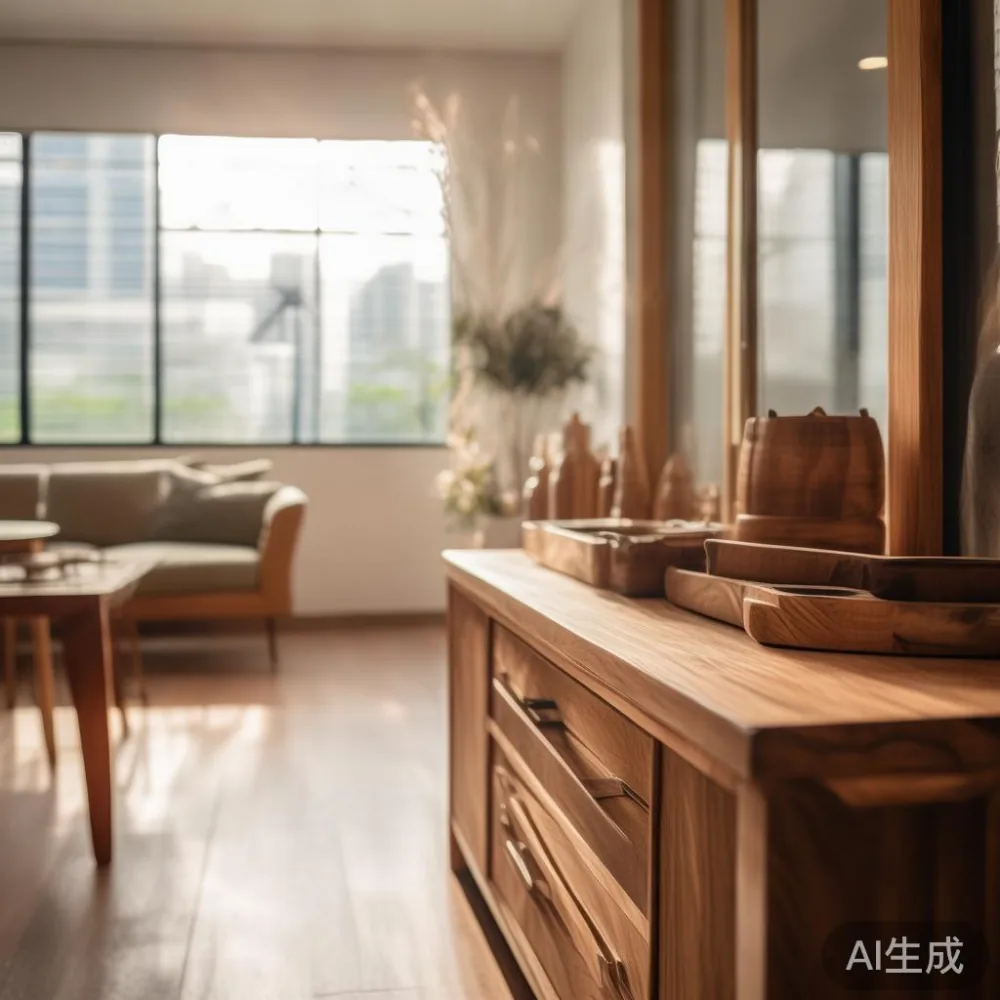
The biggest cost is the wood itself — and the difference between species is enormous
When a maker says "solid wood," they could mean twenty different things. Rubberwood from Malaysian plantations runs about SGD 600-900 per cubic metre dried. Teak from older Burmese or Indonesian stocks lands between SGD 2,800 and SGD 4,200 per cubic metre. American white oak, the workhorse of European-style cabinetry, sits around SGD 3,500-5,000 per cubic metre. Walnut — the dark, chocolate-toned hardwood that MIDHILL uses on several dining table lines — climbs to SGD 6,000-8,500 per cubic metre. A single 1.8 m dining table in rubberwood uses about 0.08 cubic metres of raw lumber; the same table in walnut uses the same volume, but the material bill jumps from roughly SGD 50 to SGD 550. Add kiln drying (which costs SGD 120-180 per cubic metre for proper 8-10% moisture content) and you are already at a SGD 700 swing on one slab before a single tool has touched it.
Then there is grade. FAS (First and Seconds) timber — the cleanest, longest, knot-free boards — costs roughly 40-60% more than Common grade, which is the same species but with knots, shorter cuttings, and more sap content. For a wardrobe with two long stiles and several shelves, FAS pays for itself because you can rip full-length pieces without splicing. For a nightstand with a 45 cm top, Common grade is fine and saves money. Smart buyers match grade to the piece.
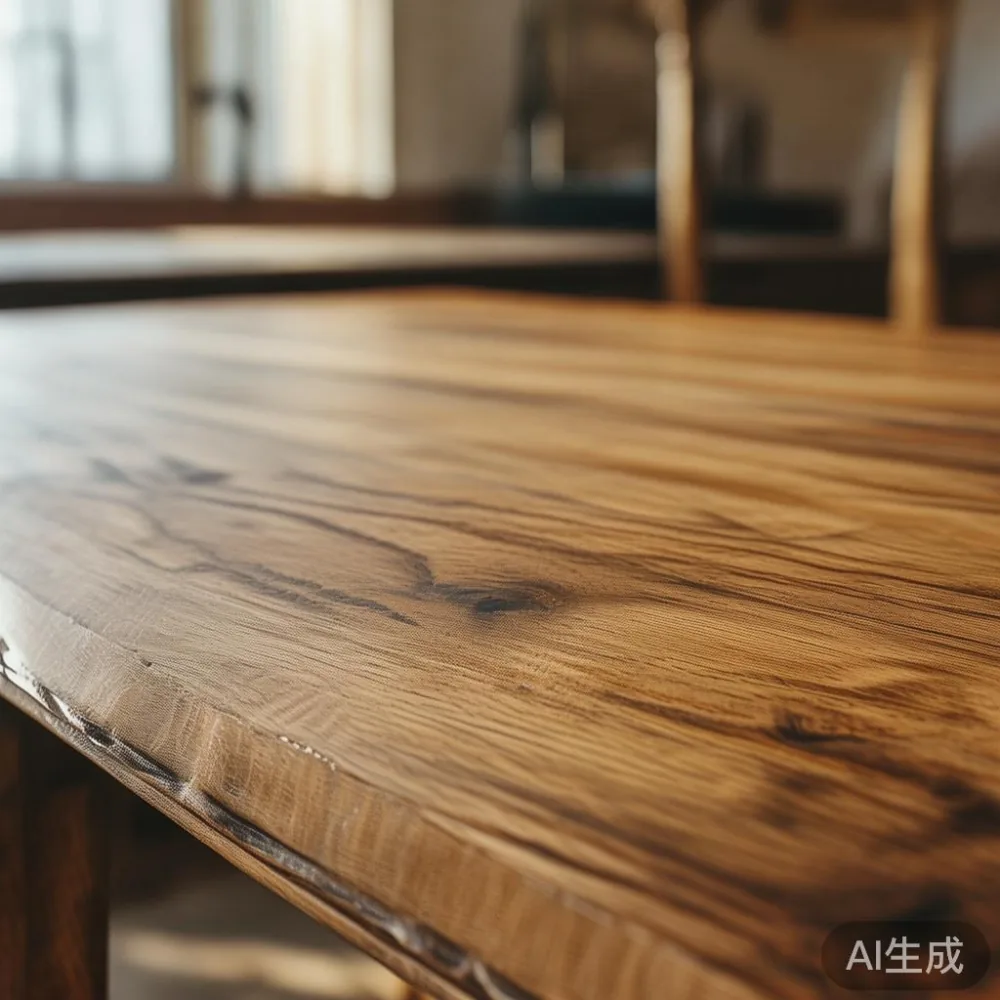
Joinery is where cheap furniture quietly falls apart
Pick up a SGD 280 console table from a mass-market catalogue and you will find dowel pins, chipboard cores with a 0.6 mm veneer, and cam locks held with 8 mm screws. None of that is bad engineering for what it is — it is just not what "solid wood" implies to most shoppers. Pick up a properly built piece and you will find mortise-and-tenon joints, dovetailed drawers, and corner blocks glued and screwed at 45°. On a 1.2 m console table with two drawers, a workshop will spend 4-6 hours on hand joinery alone, versus maybe 45 minutes of dowel-and-glue assembly for the budget version. At a Singapore joiner's loaded rate of SGD 45-75 per hour, that is a SGD 180-330 labour gap per piece, before finish work even begins.
Doors and drawers tell the truth fastest. Drawers that are dovetailed on all four corners — usually 8-12 mm finger joints per side — will outlast dowel construction by decades. Look at the back of the drawer: a dovetail drawer has solid wood sides and a tongue-and-groove solid back. A budget drawer has a 9 mm plywood bottom stapled into a groove and a 12 mm particleboard back. Both hold socks. Only one holds them in 2038.
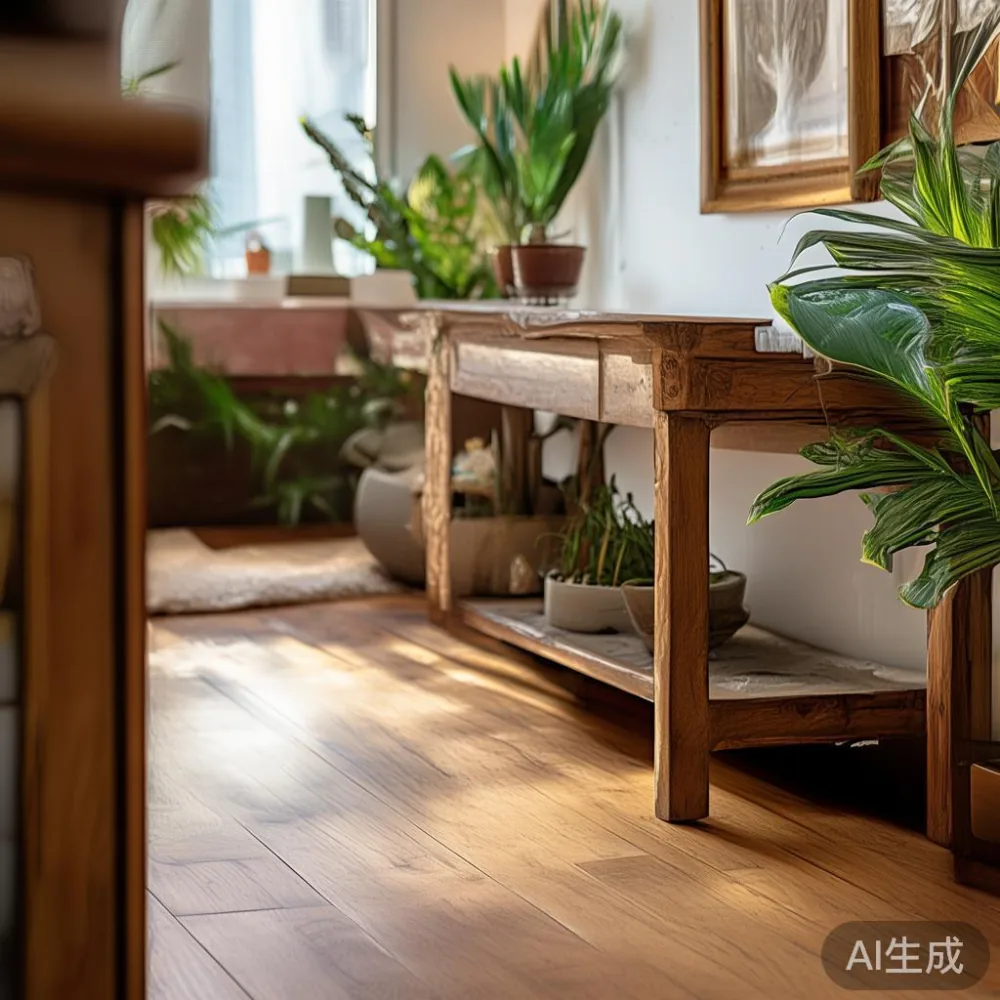
Hardware and finishes quietly double the bill on a bed frame or dining table
Soft-close Blum runners cost about SGD 18-28 per drawer. Cheap roller runners cost SGD 2-4. On a six-drawer wardrobe, that is a SGD 90-160 difference per piece. Hinges follow the same logic: a Salice or Hettich soft-close hinge runs SGD 4-6 versus SGD 0.80-1.20 for a knock-down cam hinge. Across a four-door wardrobe with eight hinge points, you are looking at a SGD 30-40 swing on a part no one thinks to ask about.
Finishes matter more than people expect. A water-based matte lacquer like those used on Scandinavian-leaning designs adds about SGD 25-45 per square metre of finished surface — low VOC, child-safe, easy to repair. A conversion varnish (the high-gloss, piano-finish look) costs SGD 60-95 per square metre and requires a dust-controlled spray room. Hand-rubbed oil on a walnut dining table is the cheapest to apply (SGD 12-20 per square metre) but needs re-oiling every 12-18 months, which is a fair trade if you enjoy the ritual and a bad trade if you don't. MIDHILL ships most of its solid wood sofa and dining table lines with a water-based matte lacquer precisely because Singapore's 80%+ humidity year-round punishes anything softer.
Why a Singapore HDB corridor is the real price test
Here is the thing nobody outside this country thinks about: most of your furniture has to fit through a door that is 90 cm wide and a service lift opening around 210 cm tall. A pre-assembled 2 m wardrobe will not make it. A fully built 1.8 m dining table will not clear the lift. Workshop owners I spoke to in Bukit Batok said that around 18-22% of their budget units get returned or exchanged because of access failures, which they absorb into the sticker price on the units that do fit. Good makers design knock-down but solid — meaning the pieces bolt together at the customer's home using threaded inserts and barrel nuts, but the panels themselves are still 18-22 mm thick solid timber, not hollow-core MDF with a 2 mm veneer.
Knock-down adds labour on the front end (drilling precision at SGD 0.40-0.80 per hole times 30-60 holes per piece) but saves the SGD 80-150 reverse-logistics cost when a unit fails to clear a Bedok service lift. Over a year, that adds up to either a SGD 60-90 cushion on every piece that does ship successfully, or a chance to absorb the SGD 4-6 return-logistics per failed delivery. This is one reason you see such wide price variance between workshops that look identical online — the ones with disciplined access engineering simply have less hidden cost baked into their markup.
How does warranty length reflect what is actually inside?
A 10-year structural warranty on a solid wood bed frame or dining table is not a marketing gesture. It is a confession. To offer a decade of coverage, a maker has to be confident the joints will not rack, the panels will not cup, and the wood will not split — and the only way to be confident is to control the drying, control the joinery, and control the species. MIDHILL's 10-year structural warranty, for example, extends across its console table, dining table, wardrobe, and bed frame lines because the underlying construction is the same across the range: kiln-dried hardwood, mortise-and-tenon where it matters, and a finish rated for tropical climates. A 1-year warranty is the opposite confession — the maker expects the joints to loosen or the panels to cup within a season or two and prices the warranty replacement into the unit cost rather than the engineering.
Lifetime refinishing services — the kind that sand back a worn console table top and re-lacquer it — only make economic sense if the piece is thick enough to survive being sanded. Anything below 15 mm finished thickness is a one-sand piece. Anything 18-22 mm can be refinished two or three times over a 40-year ownership, which is part of why thick panels quietly cost more upfront but less across generations.
How do I style a French corner sofa in a small apartment?
Anchor the sofa against the longest uninterrupted wall, float a slim 30 cm-deep console table behind it to act as a sofa table for lamps and trays, and leave 80-90 cm of walking space on the open side so the room still breathes. Pick a French light luxury corner sofa in a stone-washed linen or boucle slipcover in ivory or sage, pair it with a low-profile solid wood coffee table on a 200x300 cm wool rug, and let one brass-accented floor lamp do the heavy lifting for evening light. Keep wall art above the sofa between 60-70% of the sofa's width and hung 15-20 cm above the backrest so the eye reads it as one composition rather than two objects.
What should I expect to pay in Singapore for a console table that will last?
Realistic 2025 numbers, before GST: a rubberwood console table with a basic drawer and decent hardware lands around SGD 380-620 delivered. A teak or white oak console table with dovetailed drawers and soft-close hardware runs SGD 1,100-2,400 delivered. A walnut console table with hand-finished joinery and a stone inlay — the kind of piece that gets called a marble-table-meets-timber hybrid in showroom brochures — runs SGD 2,800-5,200. Add 9% GST at checkout, plus SGD 60-120 for two-man delivery up to the third floor (no lift surcharge above the fourth on most Singapore delivery fee schedules), and you have a realistic budget.
Delivery windows also matter. A Singapore warehouse stock item reaches you in 3-7 working days. A made-to-order solid wood piece from a Foshan workshop — the kind MIDHILL specialises in — reaches Singapore in 35-50 days by sea freight, plus 5-7 days for last-mile. Free shipping kicks in above US$350 on most cross-border orders, which lands roughly at SGD 460 — meaning a single console table usually qualifies. Returns within 14 days are standard for stocked pieces, though bespoke orders are usually final sale once production starts.
How do I read a price tag without getting taken for a ride?
Ask four questions before you sign. One: what species and what grade? Anything described as "solid wood" without a species should be a yellow flag — ask which tree. Two: what is the joinery? Dowel and cam lock is fine for a wardrobe you will replace in eight years; dovetail drawers are worth the premium on a console table you want to keep for twenty. Three: what is the panel thickness? 18-22 mm for tops and sides, 9-12 mm only for drawer bottoms and wardrobe backs. Four: what happens at year six? If the maker offers refinishing, replacement hardware, or a structural warranty longer than two years, that is a strong signal the underlying materials justify the price.
One last datapoint from my own move last month. I bought two console tables for a Punggol condo — one a SGD 420 rubberwood piece from a local shop, one a SGD 1,280 white oak unit from MIDHILL delivered in 42 days. Both look fine in the photos. Six months in, the rubberwood top has a 2 mm bow across the centre from humidity cycling, and one cam-lock joint has loosened so the left drawer needs a shim. The oak unit has not moved a millimetre. That gap is not brand ego. It is 18 mm kiln-dried FAS timber versus 15 mm Common-grade rubberwood, dovetailed versus doweled, and a finish engineered for 85% humidity versus one designed for a Beijing showroom.
Where does this leave you as a buyer?
You do not need the most expensive piece on the floor. You need the cheapest piece that meets your species, joinery, thickness, and finish criteria — and then you need to know that the price you are paying covers access-friendly knock-down engineering, a warranty that actually pays out, and a delivery window that respects your corridor and lift. If a Nordic dining table Dubai showroom import catches your eye, ask whether the maker has shipped to a humid tropical climate before; if not, expect a USD 200-400 humidity acclimation fee baked into the price or hidden in the warranty exclusions. A console table is a small piece that carries more weight per square metre than almost anything else in a Singapore home — every guest sees it, every delivery driver touches it, and every humidity cycle tests it. Pay for the wood, pay for the joints, and skip the showroom markup that goes into glossy catalogues and influencer dinners.