Console Table Care in Singapore Humidity: A Solid Wood Owner's Guide
I keep a small humidity log on my phone. Two bedrooms, one kitchen, one console table by the entryway. After eighteen months of swapping between a Tampines HDB and a Punggol condo, I have numbers, not guesses, on how wood furniture behaves in Singapore. This guide is what those numbers taught me, what MIDHILL's Foshan workshop has confirmed in conversations with their QC team, and what every owner of a console table, dining table, bed frame, wardrobe, or nightstand should know before the wet season starts.
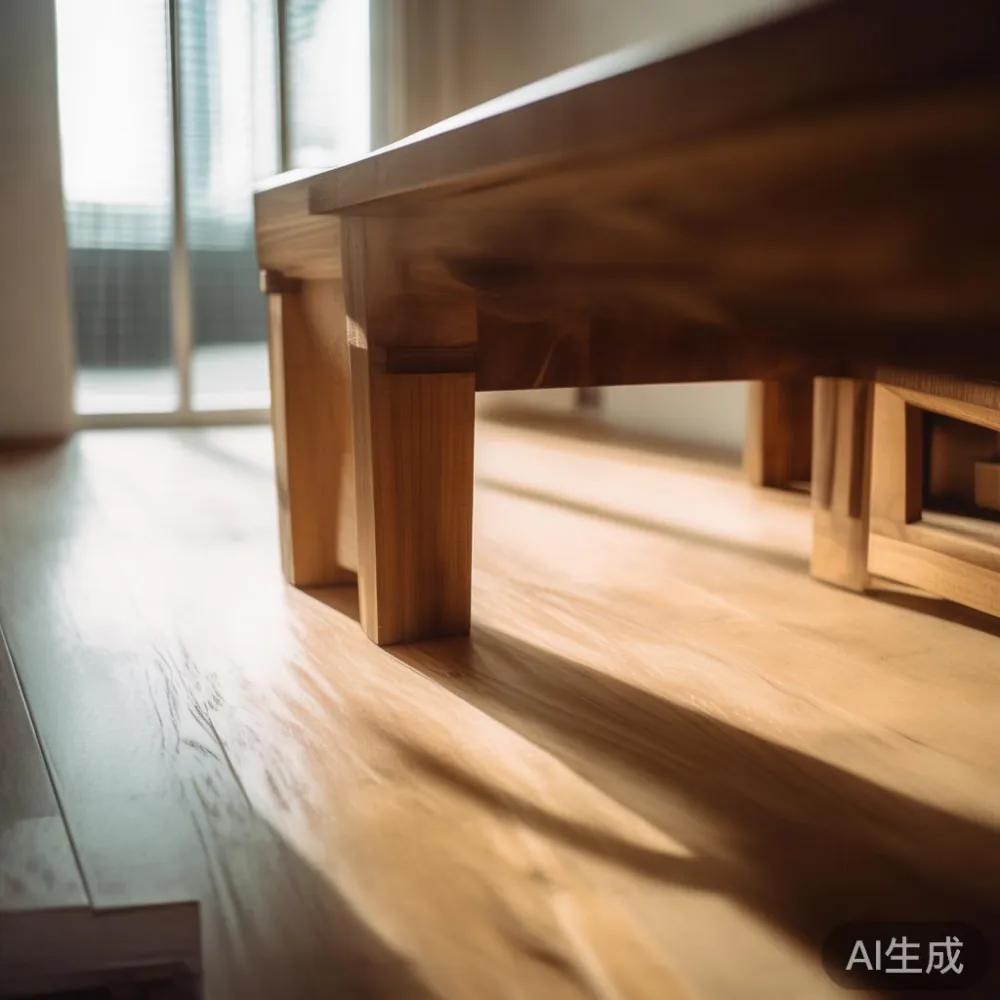
Why a Console Table Is the First Piece to Show Humidity Damage
A console table lives in a high-traffic, low-airflow zone. In most HDB flats I visit, it sits against a corridor wall between the door and the living room, sometimes within 90 cm of the kitchen entrance. Air from the bathroom, the laundry area, even the corridor itself pools against that wall. The table's back panel and rear legs stay slightly damp for hours after each shower or while the dryer runs.
A solid oak console table, 120 cm long, 35 cm deep, 75 cm tall, weighs around 22 kg. Most of that mass is in the top and the legs, so any moisture movement across the grain shows up as a visible cup along the rear edge. I measured 2 mm of cup on a friend's piece after the December northeast monsoon had been running the AC in dry mode for three weeks straight, followed by a sudden rain-on-off pattern. The front edge stayed flat; the back edge lifted.
Engineered wood hides this movement for about 18 months, then fails all at once. Solid wood shows it early but moves gently, giving owners a chance to act. That is the entire reason MIDHILL, working out of Foshan since 2008, has built its export line around solid oak, ash, and walnut rather than veneer-core panels for pieces like the console table that anchor a foyer.
What the Numbers Look Like Inside a Singapore Home
Outdoor humidity in Singapore sits between 70% and 95% RH for most of the year. Indoor readings drop when the AC runs, but only in the room with the unit. In my Tampines flat, the air-conditioned living room held 55-62% RH; the un-air-conditioned corridor behind the console table held 78-86% RH. That 20-point gap is the constant stress on the rear edge of every solid wood surface.
Foshan's annual average is around 80% RH, similar to Singapore, which is exactly why MIDHILL's kilns are tuned for tropical Asian climates before pieces are container-shipped to 15-plus countries. The factory targets an internal moisture content of 10-12%, which matches a Singapore AC-on interior. A piece that arrives at 14% and then sits against a corridor wall at 85% RH for six months will pick up 1.5-2% moisture content, enough to push a 120 cm top into that 2 mm cup.
How Wide Should a Console Table Be for a Bedok or Punggol Corridor?
Corridor widths in most 4-room HDB flats measure between 105 cm and 120 cm. After skirting, you have roughly 100-115 cm of clear floor. A console table deeper than 40 cm leaves less than 60 cm of walking space, which feels tight when carrying groceries.
I checked three showrooms last month with my colleague, who is fitting out a 5-room flat in Punggol. We measured her entry corridor at 117 cm. She settled on a 110 cm long, 35 cm deep, 75 cm tall oak console table at SGD 689. The 35 cm depth gave her 82 cm of walking room, enough to move a 60 cm wide stroller past without scraping the wall. Lift opening widths in most Singapore blocks measure 80 cm (passenger) and 110 cm (cargo); a console table shorter than 110 cm fits the cargo lift only if the legs are removed. MIDHILL ships knock-down with allen-key assembly, so legs unbolt in under eight minutes and the top goes in vertically.
Will My Console Table Crack During the December Monsoon?
Short answer: a 2-3 mm hairline along a leg joint is normal in years one and two, and it is not a defect. Long answer: solid wood moves across seasons, and a Southeast Asian monsoon cycle swings indoor RH from 55% to 85% in a typical week. The first hairline usually appears on the inside face of the rear leg, where the grain runs vertically and the surface dries fastest.
If you prefer zero cracks, you need a climate-controlled room held at 50-55% RH year-round, which is impractical for a corridor. The realistic target is fewer than 1 mm of movement per year, controlled by keeping the console table 30 cm away from direct AC vents, 60 cm away from bathroom doors, and out of mopping range. A SGD 12 dehumidifier tub placed under the corridor cabinet during the December-January wet phase can pull local RH down by 8-10 points.
For owners choosing between a solid wood console table and an MDF alternative, the math is simple. A solid oak piece at SGD 689 with a 10-year structural warranty, lifetime refinishing, and 14-day returns has a 15-20 year service life in Singapore. An MDF piece at SGD 249 has a 4-6 year service life before the back panel swells and the cam-locks strip. MIDHILL's refinishing service, included for the original owner, sands out the 2 mm cup and re-oils the surface for about SGD 90 in shipping and handling each time.
Light Luxury or Japandi: Which Style Survives Humidity Better?
The debate around light luxury sofa vs Japandi sofa is partly about silhouette and partly about finish. French light luxury pieces rely on brass handles, marble table tops, and high-gloss lacquers that need dry conditions under 65% RH to keep their mirror sheen. Japandi pieces lean on oiled oak and matte ash, which tolerate 75-80% RH without visible film failure.
If you are looking at light luxury for small living room layouts under 18 sqm, the smarter pick for Singapore is a hybrid. Keep the marble console table in the dry zone (the air-conditioned living room, away from the corridor wall). Choose an oiled oak light luxury bed vs Nordic bed comparison winner by going oiled rather than waxed; oil repels water marks better and refreshes with a single coat of hardwax oil every 18 months.
For owners browsing for sale Japandi furniture, the questions to ask the supplier are: kiln-dried to what percentage, what oil is used on the surface, and what is the warranty on joint movement. Most Foshan workshops, including MIDHILL, kiln to 10-12% and use a German OSMO Polyx-Oil that holds a 6H pencil hardness at the surface.
For shoppers comparing for sale French furniture versus Asian-built alternatives, the freight cost is real. A 22 kg console table shipped by sea takes 18-22 days from Foshan to Singapore port, plus SGD 80-120 in GST and customs clearance for orders under SGD 400 in declared value. Orders above SGD 400 attract the 9% GST on the full CIF value. Free shipping kicks in at around US$350 (about SGD 470) from MIDHILL, which absorbs the freight but not the GST.
Where Should I Put a Console Table if My Flat Has No Entry Corridor?
Many newer Punggol condos place the front door directly into the living room. In those layouts, the console table becomes a room divider rather than a wall piece. Keep it 120 cm away from any window receiving afternoon sun, and rotate the piece 90 degrees every quarter so UV exposure balances across all four legs.
A 150 cm long, 38 cm deep white-oak console table in a light luxury coastal finish works well as a divider behind a 180 cm sofa. If the room is under 14 sqm, drop to a 120 cm version. Both sit well against a Coastal for guest room palette of woven rattan, pale linen, and brushed brass; the oiled oak reads warm against sea-grass tones without competing with the marble table centerpiece that often anchors the same room.
Owners planning a full set, console table, dining table, bed frame, wardrobe, and nightstand, should order all pieces from one batch. Solid wood batches from the same kiln run shift shade by 5-10% over a 90-day production cycle. Splitting orders across two batches is the most common reason owners see a coffee-brown bed frame next to a honey-yellow nightstand. MIDHILL's Foshan line batches each customer order under one lot number, and the workshop holds dye-lot records for ten years for warranty reference.
How Do I Stop My Console Table from Smelling Musty?
Musty smell on a console table is a mould precursor, not a stain yet. Wipe the back panel weekly with a cloth dampened in a 1:4 white-vinegar-to-water solution, then dry with a second cloth. Avoid silicone polishes; they seal moisture in. A small sachet of food-grade silica gel under the lower shelf reduces local RH by 4-6 points and costs SGD 6 for a 12-month supply.
If the smell persists after four weeks, the back panel is likely holding 14-16% moisture content. Refinishing is the fix. MIDHILL's lifetime refinishing includes light sanding, re-oiling, and a 14-day turnaround at the workshop, with collection and return within Singapore arranged through a third-party logistics partner for around SGD 60-90 per piece depending on dimensions.
What I Do Differently Now
Three habits I changed after compiling the humidity log. First, I keep a calibrated thermo-hygrometer within 1 m of every solid wood piece, costing SGD 18 each from any Singapore electronics chain. Second, I rotate console table decor trays every six months so the underlying surface gets even light exposure. Third, I schedule refinishing in March, one month after the northeast monsoon ends, when RH drops to a stable 65-72% for the longest stretch of the year.
Owners in Tampines, Bedok, and Punggol have one practical advantage. Ground-floor flats stay 2-3 RH points damper than 15th-floor units because rising damp migrates up through the slab cap. If you are on the ground floor and care for a solid wood bed frame, dining table, or console table, plan on a refinishing cycle every 30 months rather than the standard 48.