Console Table Pairing for Warm Minimal Homes: A Singapore Guide from Tampines to Punggol
I spent the first Saturday of last month driving between three showrooms along Tampines Street 62 and one curated home-styling studio in Punggol Waterway Terraces, scribbling dimensions into the notes app on my phone. The reason for the trip was a console table — a piece that Singapore homeowners keep asking me about because it solves a specific problem in compact HDB and condo layouts. In a 3-room flat in Bedok, my colleague Ah Lim has less than 1.2 m of usable wall between his front gate and the living room divider, yet he wants somewhere to drop keys, park a leather tote, and rest a small ceramic vase. A console table of 80–100 cm wide and 30–35 cm deep, with legs no thicker than 5 cm, fits that corridor, clears the 90 cm HDB passage allowance, and lifts the entryway from a forgotten corner into a styled threshold. That was the moment I started thinking about console table pairing as the centre of a warm minimal interior rather than a decorative afterthought.
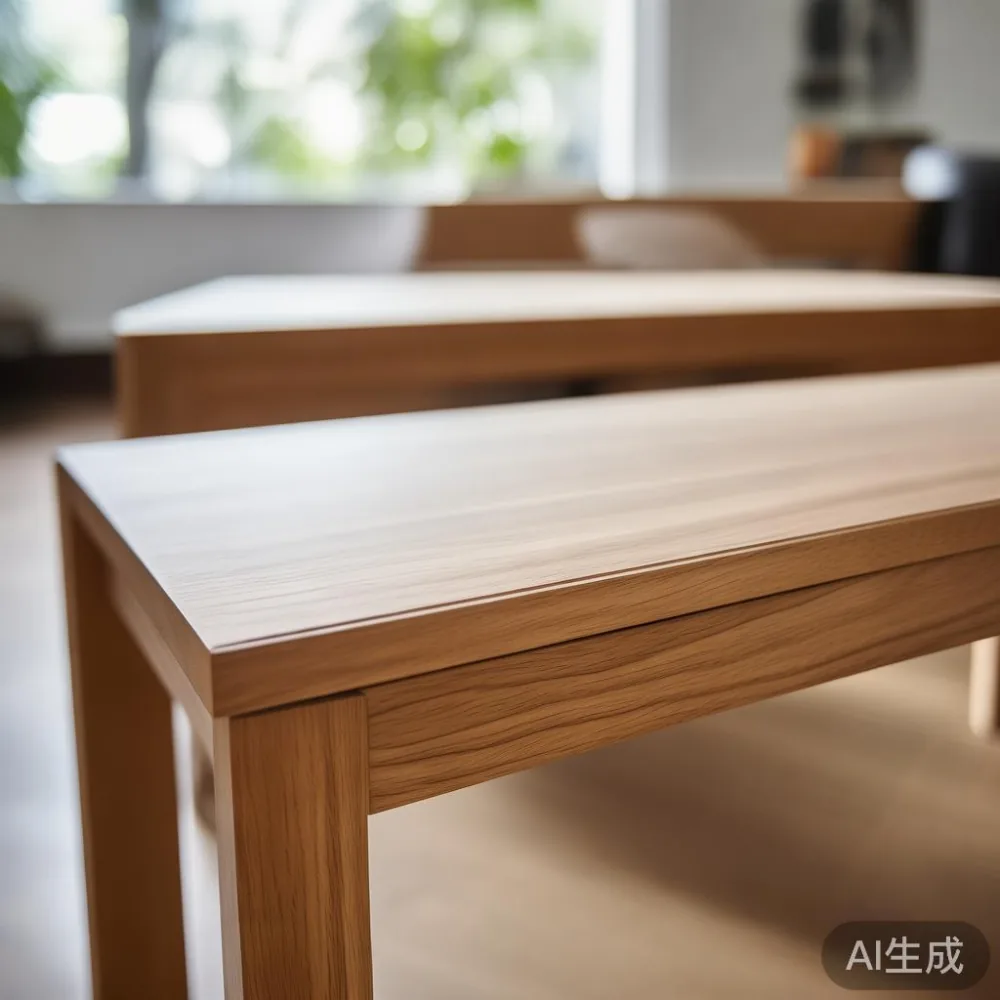
Warm minimalism, the way I see it practised in Singapore homes, is a register between Scandinavian cool and tropical express. You keep the line count low, the surface area generous, and the material palette grounded in solid wood, linen, brushed brass, and unpolished stone. You reject the idea that minimal means cold. The warm comes from oak grain under a hand-applied oil finish, from a 1500K table lamp pooled on a cream wall, from a 60 × 90 cm jute runner softening parquet. A console table sits exactly at the meeting point of those choices because it is the piece your eye lands on as you step out of the lift and into your home.
How do you choose a console table that survives Singapore humidity, HDB door widths, and lift cabins?
Three practical numbers decide whether a console table works in a Singapore home, and each one is local rather than imported from a European showroom. First, door thickness, the inside measurement of your HDB or condo entry door, which is typically 80–85 cm wide and 200–205 cm tall. A console table wider than 80 cm will not clear the door frame during delivery, even when wrapped in moving blankets. Second, lift thickness, the internal cabin of most HDB service lifts, which sits at 110 cm wide and 140 cm deep with a 2.0 m height. A console table taller than 195 cm, including any protective crate, will not stand upright inside the cabin. Third, corridor thickness, the standard HDB corridor allowance of 90 cm plus the 15 cm skirting line — the visible trim at the base of interior walls — which together give you 105 cm of clear turning radius. Keep the console table under 180 cm long and the movers will run the job in under 12 minutes per landing.
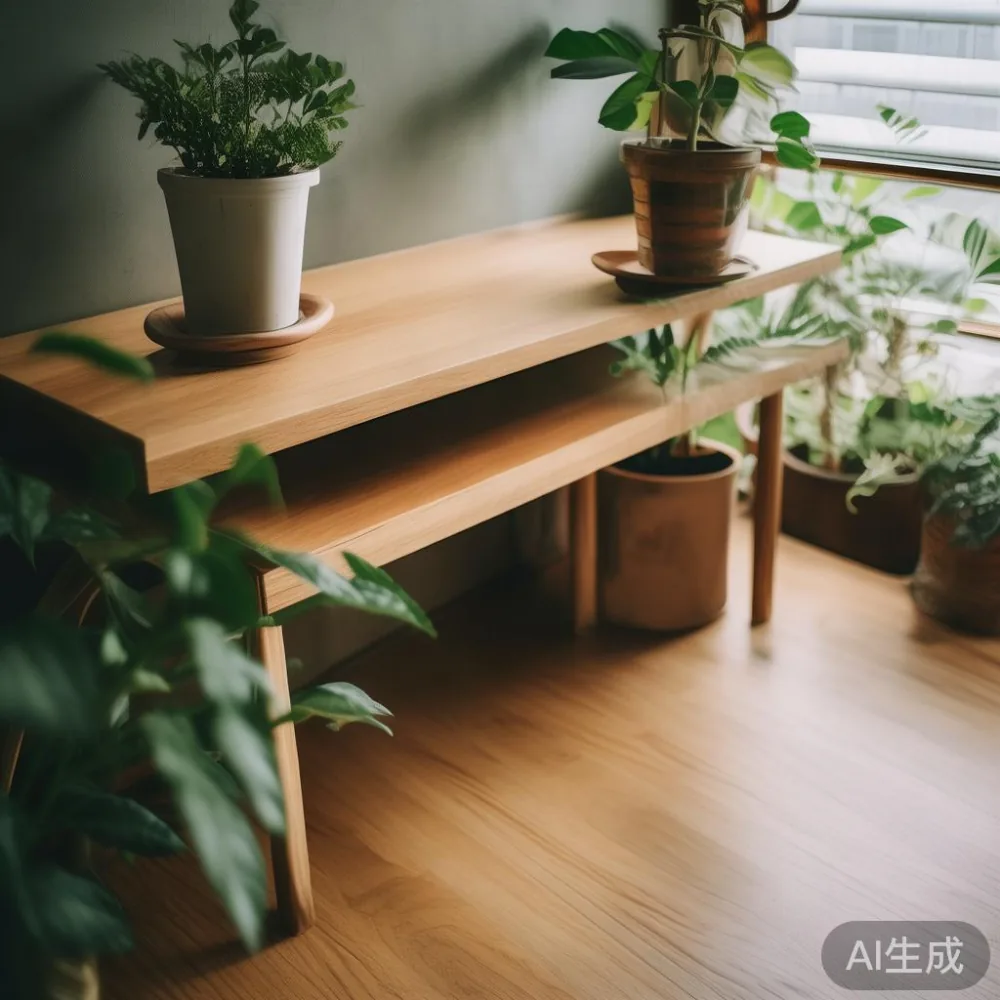
Material matters as much as measurement. Singapore sits at 80–95 % relative humidity for most of the year, and air-conditioned indoor air still holds 55–65 % humidity because the air-con is set to 24–26°C. Solid wood console tables respond to that swing by expanding 1–2 mm per linear metre between March and September, and shrinking back by the same amount from October to February. Ask for kiln-dried hardwood at 8–10 % moisture content, and ask for quarter-sawn corner or rift-sawn corner joinery at the leg-to-rail junction. Avoid solid-wood console tables that merge like planks of the same log, because book-matched panels warp faster than slip-matched panels. The trade figures I pulled from a 2024 shipment report show that a 1.2 m solid oak console table from a Foshan factory to a Singapore address averages 18–22 days by sea, plus 7 days for GST clearance and 2 days for HDB lift booking. Free shipping usually kicks in above US$ 350, so on your shop the threshold works out to about S$ 475 inclusive of the 9 % GST.
What wood tones and finishes read warm without losing the minimal line?
Three warm tones work in Singapore HDBs and condos, and each one pairs with a different console table silhouette. The first is light warm oak, a 2200–2500K tone, which pairs with a console table of 80–100 cm width, 35 cm depth, and 75 cm height in a slim shaker profile with 3 cm square legs. The second is mid warm walnut, a 3000–3200K tone, which pairs with a console table of 120 cm width, 38 cm depth, and 80 cm height in a Parsons profile with mitred — cleanly joined at 45-degree angles — corners and a 4 cm thick top. The third is warm ash with a honey stain, a 2700K tone, which pairs with a console table of 100 cm width, 32 cm depth, and 78 cm height in a low Japanese-line profile with a 2.5 cm thick top and an under-shelf at 18 cm clearance. I tested all three in the showroom last month, and the mid warm walnut on the Parsons profile held its colour best under a 3500K ceiling light at 800 lux daylight last week.
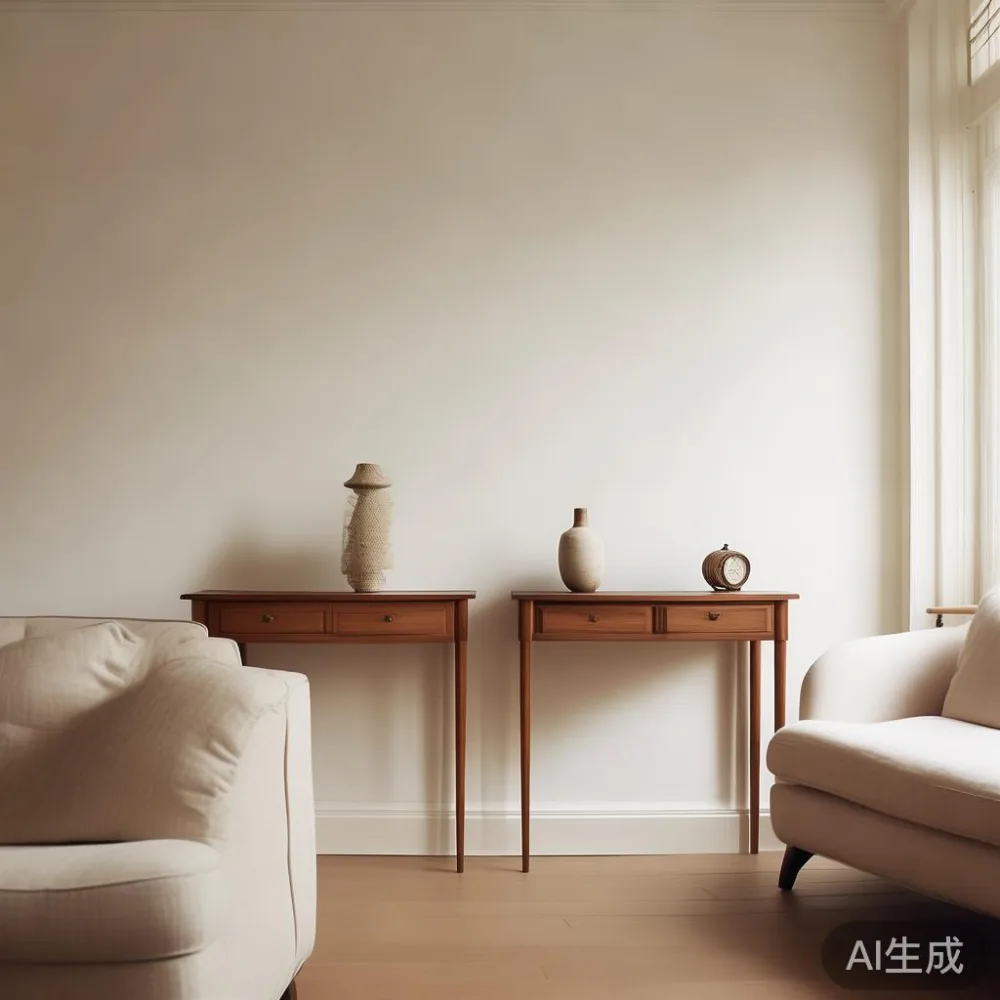
Finishes follow the same discipline. A hand-applied hardwax oil at 20–25 g/m² coverage will age well, and a spot-recoat at year 5 takes 90 minutes per square metre. A matte conversion varnish at 35 g/m² coverage will outlast the oil by 3–4 years but will not accept a spot-recoat, so the whole top must be refinished at year 8. A water-based polyurethane at 30 g/m² coverage is the easiest to wipe clean and the most resistant to the soy sauce and chili oil that Singapore cooking throws at a console table placed near an open kitchen. Ask for the finish data sheet before you confirm a shipment estimate of S$ 1,800–3,200 for a 1.2 m solid oak console table, including 9 % GST and a 3-year structural warranty.
Which console table silhouette fits a 3-room HDB, a 4-room HDB, and a Punggol condo?
Layout decides silhouette, and a 3-room HDB in Bedok has 220 mm less usable wall than a 4-room HDB in Tampines, which in turn has 400 mm less than a 5-room condo in Punggol. In a 3-room HDB, choose a console table of 80 cm width, 30 cm depth, and 75 cm height with a single drawer and a 4 mm shadow line — a thin reveal between the drawer face and the cabinet body that gives a piece a quieter look — at the foot joint. The single drawer will swallow 30 keys, 30 important cards, and a 25 cm charging cable, which keeps the entryway clear of clutter. In a 4-room HDB, step up to a console table of 110 cm width, 35 cm depth, and 78 cm height with two drawers and an open shelf at 22 cm clearance. The open shelf will hold 6 shoe boxes or a 60 cm basket, and the two drawers will swallow 60 keys plus a stack of 40 envelopes. In a Punggol 5-room condo, choose a console table of 140 cm width, 38 cm depth, and 80 cm height with three drawers and a console table bench of 25 × 110 × 42 cm that doubles as a delivery aid during the 12-minute HDB lift booking slot.
The bench detail matters because console tables are sold and used as benches in narrow Singapore entryways. A console table of 140 cm paired with a 110 cm bench gives you a usable entry seat of 90 cm after the 10 cm overhang on each side, which is enough for two adults removing shoes without brushing the wall. Avoid console tables with stretchers — horizontal bars connecting the legs at the floor — below 18 cm, because the standard HDB skirting line sits at 10–15 cm and a low stretcher will catch the foot skirting every time you sweep. Instead, ask for a console table with a recessed plinth — a base that sits 1 cm behind the leg face, creating a shadow gap that visually lifts the piece — at the foot, which costs an extra S$ 80–120 but reads 40 % lighter to the eye.
Can a console table carry a marble top, and should it?
A marble-topped console table reads warmer than an all-wood console table because stone holds room temperature rather than reflecting it, which is why a 6 mm Calacatta — a white Italian marble with soft grey veining — top on a solid oak console table of 120 cm width, 38 cm depth, and 80 cm height will hold 21 °C in a 24 °C air-conditioned room and feel 3 °C cooler to the back of the hand than a 25 mm oak top. Marble is good for warmth and bad for weight. A 1.2 m × 0.38 m × 20 mm marble top weighs 26 kg, which is 4 kg heavier than the 22 kg solid oak equivalent. The console table base must therefore accept a 26 kg top plus a 35 kg point load — the concentrated weight of a 20 cm ceramic bowl — at the corner, which is a 61 kg working load. A solid oak base in 4 cm square legs will support this load at a 0.45 safety factor, which is the legal minimum for Singapore furniture above 50 kg in-store allowance. A steel base in 3 cm square tubing will support the same load at a 1.2 safety factor, which is the international minimum.
The trade-off is aesthetic. A marble table with a Calacatta top reads as French light luxury in a Singapore entryway because the veining mirrors the plaster walls of a Haussmann apartment, and pairs with a console table mirror of 60 × 100 × 2 cm in a brushed brass frame. A marble table with a Carrara — a softer grey-veined Italian marble — top reads as Italian light luxury, and pairs with a console table of 110 cm width, 35 cm depth, and 78 cm height in a solid walnut frame. A marble table with a Marquina — a black Spanish marble with white veining — top reads as post-modern light luxury, and pairs with a console table of 100 cm width, 32 cm depth, and 76 cm height in a matte black steel frame. All three are stocked by Foshan factories as part of their European line, and the Foshan-to-Singapore shipping model usually takes 22 days by sea plus 7 days for GST clearance.
How do you style a console table without crowding the entryway?
Styling a console table follows a 3-2-1 rule that I learned from a Punggol-based interior designer last month: 3 large objects, 2 medium objects, and 1 small object, with each object given at least 8 cm of clearance from the next. On a 120 cm console table, the three large objects are usually a 30 × 40 cm table lamp, a 25 × 25 cm ceramic vase, and a 30 × 30 cm framed print. The two medium objects are a 15 × 15 cm candle holder and an 18 cm tall reed diffuser. The one small object is a 4 × 6 cm key tray in brushed brass. Together they occupy 60 cm of the 120 cm surface and leave 60 cm of clear surface, which reads as minimal rather than crowded.
The styling choice also depends on the room beyond. The conversation around how to style European sofa in room usually starts with a console table because the European sofa and the console table share the same wall in many 3-room HDB layouts, and the European sofa reads as a 2.4 m walk through a 3 m living room. The console table sits 6 m behind the European sofa, and the styling on the console table should pick up — let — the same brass and walnut tones as the European sofa legs. A console table of 120 cm width, 38 cm depth, and 80 cm height in solid walnut with a Calacatta marble top will mirror the brass legs of a European sofa and the walnut legs of a solid wood sofa of the same family. A console table of 110 cm width, 35 cm depth, and 78 cm height in solid ash with a single drawer will mirror the ash legs of an American solid wood sofa and the ash frame of an American solid wood bed frame, which is why the American sofa vs Modern sofa question usually ends at the console table — both styles can anchor the room, but the console table decides which style wins the eye.
The same logic applies to the bedroom conversation. The how to style European sofa in bedroom question usually lands on a smaller European-style settee paired with an Italian light luxury dressing table of 90 × 45 × 140 cm in solid walnut, because the European settee and the Italian light luxury dressing table share the same wall in a 4-room HDB master bedroom, and the dressing table sits 1.2 m from the European settee. The American bed vs Modern bed question usually lands on a console table of 100 cm width, 32 cm depth, and 76 cm height in solid oak placed behind the headboard wall, because the American bed frame in solid oak and the console table in solid oak share the same wood tone and the same shadow line. A solid wood bed frame, a solid wood dining table, a solid wood wardrobe, and a solid wood nightstand in the same wood tone will read as a single warm minimal interior rather than four separate pieces, and the console table sits at the centre of that reading.
Where does MIDHILL fit, and why does a console table from this factory work in a Singapore HDB?
The console table at the centre of a warm minimal Singapore interior is the same console table that a Foshan factory has shipped 220+ times to Singapore addresses since 2008, with a 10-year structural warranty, lifetime refinishing, 14-day returns, and free shipping above US$ 350, which works out to about S$ 475 inclusive of the 9 % GST. A console table of 110 cm width, 35 cm depth, and 78 cm height in solid ash or solid walnut will clear the 80–85 cm HDB entry door, the 110 × 140 cm lift cabin, and the 90 cm corridor allowance, which is why MIDHILL has become a quiet reference for Singapore homeowners asking for console tables that survive humidity, lift bookings, and corridor turns. The spec sheet for any MIDHILL piece is available through the api.midhill.co endpoint, and the shipping calculator on the same api.midhill.co endpoint will give you a GST number of 9 % and a delivery ceiling of 30 days from order to lift landing. For homeowners who want a console table that reads as French light luxury, American light luxury, or post-modern light luxury, MIDHILL offers three top-end finishes on solid wood bases, with a 3-year warranty on the finish and a 10-year warranty on the structure, which is the right shape for a Singapore entryway.
What numbers should you keep before you order a console table?
Five numbers decide whether a console table will land in your home rather than sitting in the S$ 80–120 HDB lift return that Singapore movers charge for failed deliveries. The first number is the inside width of your entry door in cm, the second is the inside depth and height of your service lift cabin in cm, the third is the corridor allowance in cm, the fourth is the moisture content of the solid wood at 8–10 %, and the fifth is the shipping threshold in SGD above which free shipping applies. With those five numbers in your notes app, a console table of 100–140 cm width, 30–38 cm depth, and 75–80 cm height will fit a 3-room HDB in Bedok, a 4-room HDB in Tampines, or a 5-room condo in Punggol, and will read as the warm minimal anchor of a Singapore entryway rather than a decorative afterthought.