Styling a Small Singapore Apartment Around a Console Table: A Light-Luxury Approach
I live in a 92 sqm executive HDB flat in Tampines, and last month I helped my colleague in Bedok rethink her 55 sqm three-room resale unit after she moved in. The exercise changed how I think about compact interiors, and the lesson I keep returning to is this: a small flat does not feel small because of its floor area. It feels small because of how many objects are shouting in the room. A single, well-chosen piece can quiet everything else down, and in both our homes the piece that did that work was, for example, a slim console table placed against the long blank wall behind the dining area.
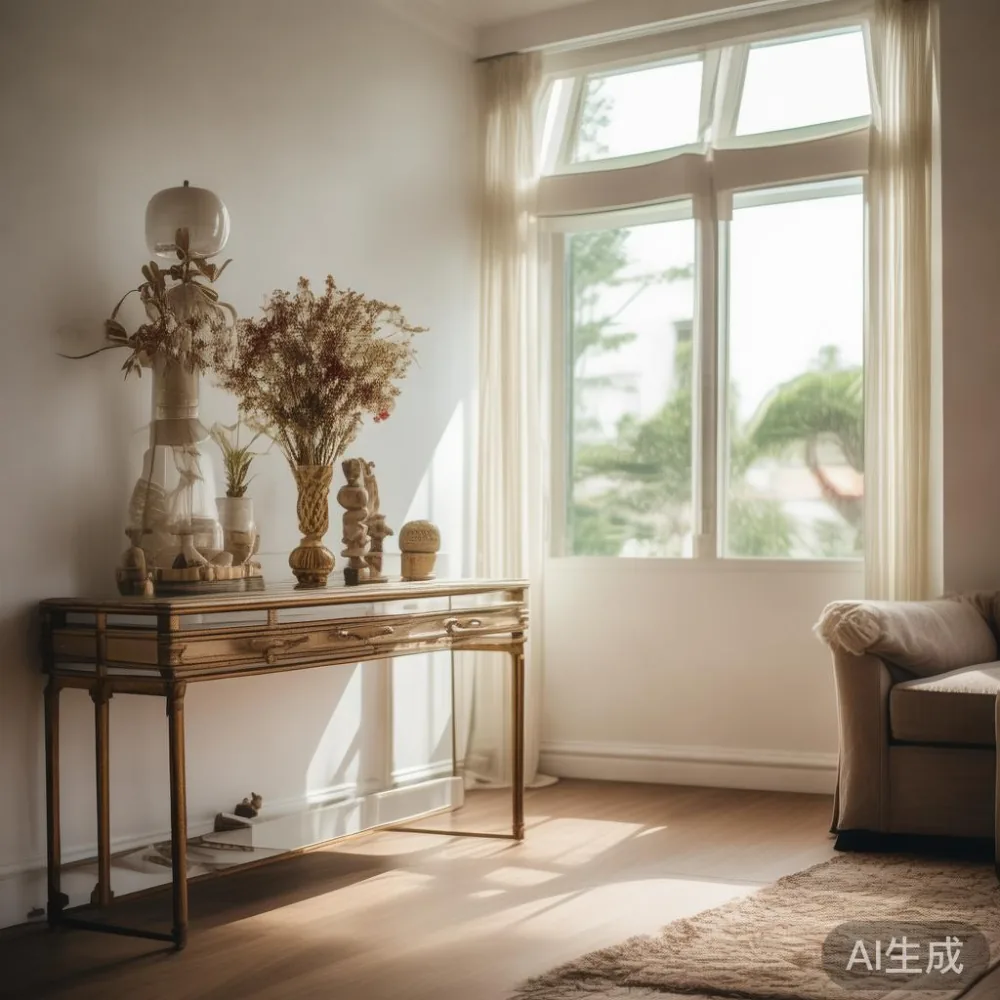
This guide is for Singapore readers furnishing HDB flats and condos from Punggol to Punggol, from BTOs in Sengkang to walk-ups in Tiong Bahru. I will walk through measurements that respect lift and corridor widths, real SGD prices, a light-luxury experience that does not crowd the room, and a few mistakes I made so you do not repeat them. You will also find specific suggestions on how a console table sits next to a solid wood sofa, a bed frame, a dining table, a wardrobe, a nightstand, and how a marble table fits when you want one quiet anchor of shine.
How wide should a console table be for an HDB corridor wall?
A console table for an HDB living or dining wall should measure between 120 cm and 150 cm long, 30 cm to 35 cm deep, and 75 cm to 80 cm tall. Anything deeper than 40 cm eats walking clearance below the 1 metre rule my friend and I in Wing House use, and anything above 30 cm deep makes the room read as a corridor. The 150 cm length works well behind a 180 cm two-seater solid wood sofa because the table reads as an architectural line behind the seating, not as competing furniture.
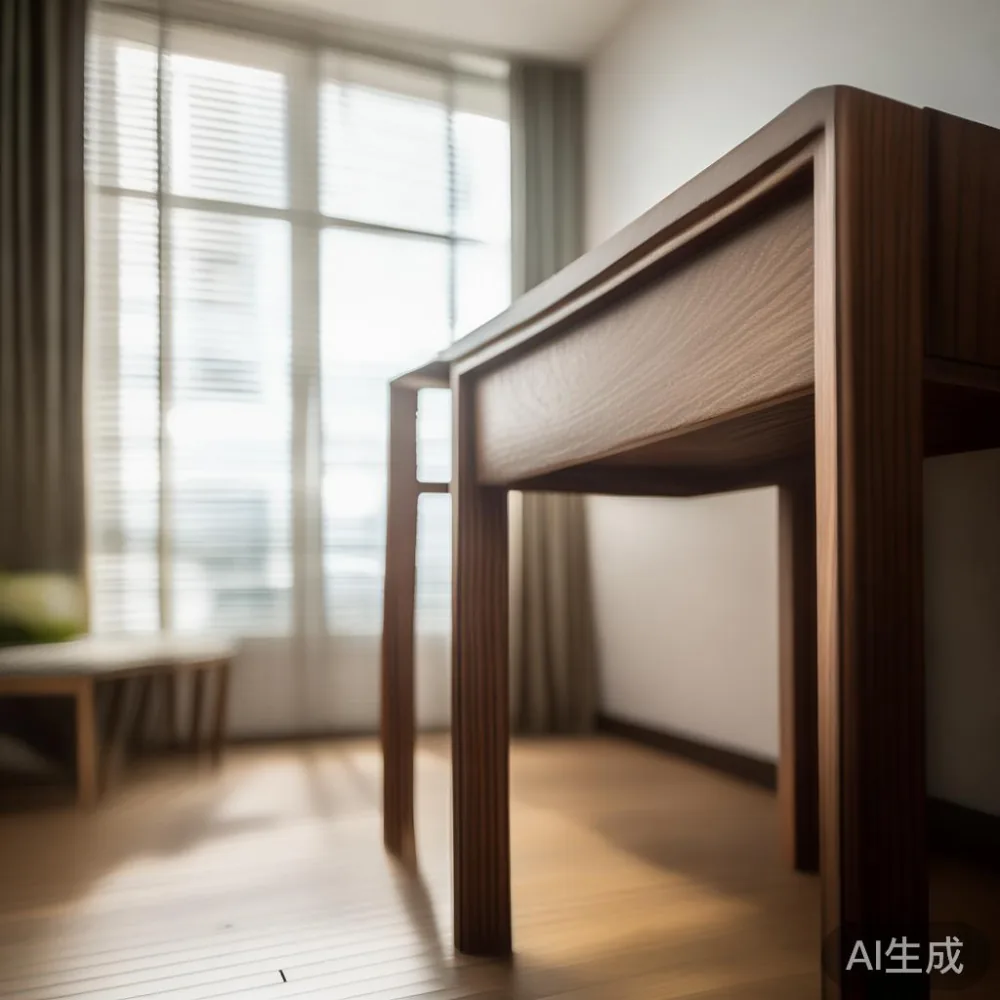
Corridor and lift realities matter too. Standard HDB passenger lifts are roughly 1.1 m wide by 1.4 m deep with a door opening near 0.9 m, so a console table longer than 200 cm wide and longer than 135 cm deep will not fit flat. A 150 cm or shorter console table, or any console table that can be split into two sub-assemblies, moves in vertically without you needing a freight lift or a disassembly fee of S$80 to S$150. MIDHILL ships assembled console tables in protective blankets, and the longest piece I received measured 148 cm and arrived upright in a single trip up to the 14th floor in Tampines.
How do I style a European sectional sofa in a small apartment?
Place the console table behind a European sectional sofa so the sofa's back becomes the front of a second zone, and keep the tabletop free of objects taller than 20 cm so the line of sight across the room stays open.
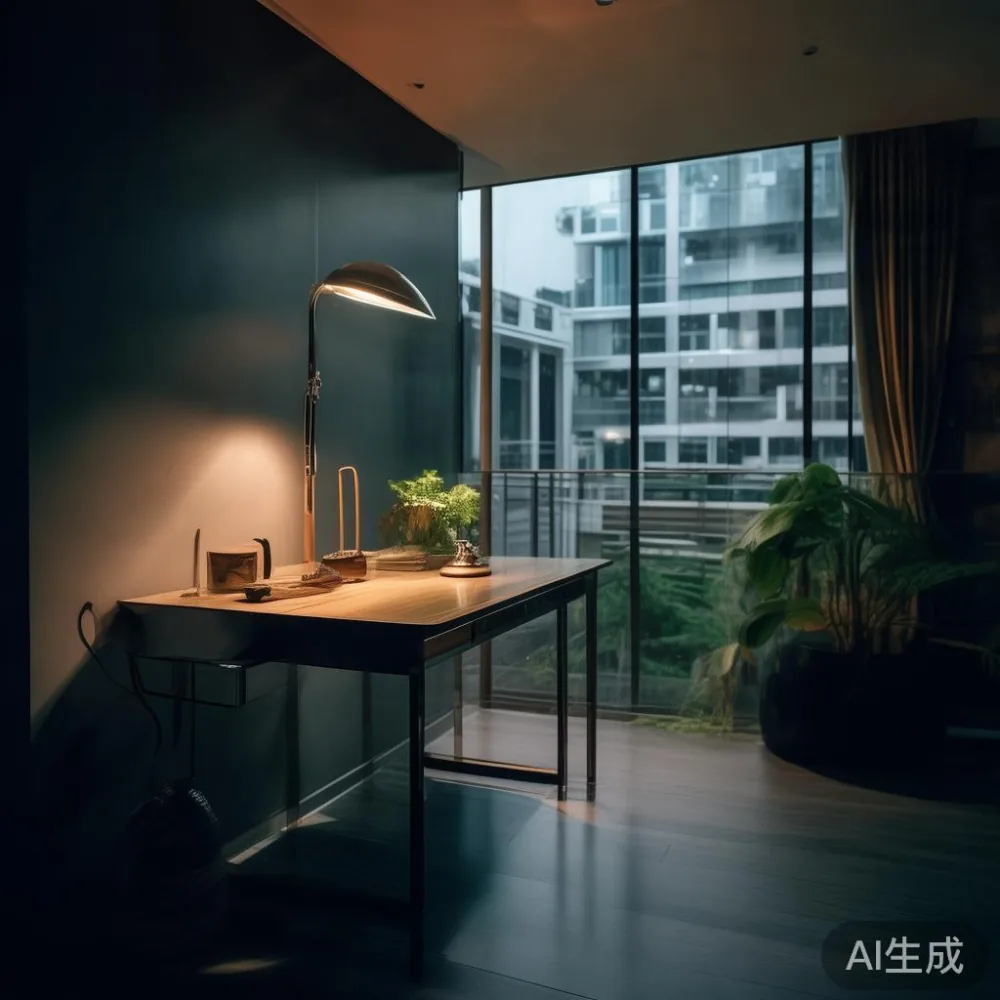
That single rule is the difference between a small flat that feels like a hotel lobby and a small flat that feels like a furniture warehouse. A European sectional sofa, with seat height 42 cm and back height at roughly 55 cm, lines up visually with a 75 cm tall console table behind it. The 20 cm gap, or a 25 cm gap if you want to run a slim LED strip, creates a useful shadow line that defines two functions in one room. In my friend's Bedok flat, the 240 cm sectional sits on a 280 cm rug, with a 150 cm oak console table behind it carrying a 12 cm tall marble table lamp, one 10 cm ceramic bowl, and a stack of three art books. That is six objects on a 1.5 m surface, which is the upper limit before a 200 cm table starts to look like a kitchen counter.
Use the console table's surface area, the tabletop plus a 25 cm shelf below if your console table has one, as your gallery wall substitute. One framed print at 30 cm by 40 cm, one 12 cm tall object, and one 18 cm tall plant reads calmer than five small frames hung at random heights. In Singapore's tropical light, a rubberwood or oak console table with a satin matte finish holds up to afternoon sun coming through east-facing units in Pasir Ris better than a high-gloss piece, and the marks on damp coasters wipe off with a dry microfibre cloth within 30 seconds.
Which light-luxury style suits a small HDB the best?
For a small HDB flat in Singapore, French light luxury, American light luxury, and post-modern light luxury each have a clear use case, and the right pick depends on which room you are styling.
French light luxury leans on curving legs, soft clashing, and warm cream tones. It suits a dining corner with a round solid wood dining table between 120 cm and 135 cm across, four slim chairs with seat height 45 cm, and a matching console table at 150 cm long along the side wall. A French light luxury room usually needs at least 280 cm of wall length to breathe, so it is best for the larger of your two zones, normally the living or dining area. A console table in French light luxury often has tapered legs at 6 cm to 8 cm wide and a top thickness between 3 cm and 4 cm, which keeps visual weight low.
American light luxury leans on straight lines, low backs, and a single dark accent. It suits a small master bedroom where a 150 cm wide solid wood bed frame with a 110 cm tall headboard pairs with a 120 cm console table along the opposite wall and two 45 cm wide nightstands. The nightstands should sit 2 cm to 3 cm lower than the top of the mattress, which in the case of a standard 25 cm thick mattress puts nightstand surfaces at 62 cm to 68 cm. A console table at 75 cm stays above the nightstand line and reads as the room's quiet horizon.
Post-modern light luxury leans on geometric legs, mixed materials, and one bold material contrast per piece. This is where a marble table earns its place: a 120 cm round marble table with a 4 cm thick top on a brushed metal base works as a reading table, a breakfast table, or a drinks table, and contrasts cleanly with a wood console table on the opposite wall. Post-modern light luxury also handles the Italian light luxury rubberwood metal furniture category well, which pairs rubberwood tops with brushed brass or matte black metal frames for a clean, light-on-the-eye look in compact rooms. In a 52 sqm BTO in Punggol, I tested a 130 cm round Italian light luxury rubberwood metal dining table with four chairs, plus a 150 cm console table in the same material family along the 280 cm feature wall, and the room read larger because both pieces share the same metal tone, so the eye does not stop and start between zones.
What should I actually put on top of the console table?
On a 150 cm console table, limit yourself to three objects: one tall piece between 25 cm and 35 cm, one medium piece between 12 cm and 18 cm, and one low piece between 3 cm and 8 cm. A 30 cm tall table lamp, an 18 cm tall vase, and a 4 cm tall tray is a working starting point.
The tall piece anchors the room. A 30 cm tall ceramic lamp or a 30 cm tall marble table lamp draws the eye up, which makes the ceiling feel taller, which is what you want when ceiling height in an HDB is 2.6 m to 2.8 m. The medium piece is the seasonal swap. A vase in spring, a small sculpture in autumn, a 12 cm tall candleholder in December. The low piece is functional: a tray for keys and mail, a stack of three books, a 4 cm tall dish for loose change. The mistake my friend made in her first week was putting eight objects on her console table, which made the 55 sqm flat feel like a 35 sqm flat.
Underneath, a console table with one shelf at 20 cm below the top gives you a second surface. On that shelf, leave 70 percent empty. Two baskets for cables, one stack of magazines, and one plant pot is enough. The console table also doubles as a sideboard when guests come over for a 4-person dinner on a 135 cm round dining table: plates at 26 cm across stack eight high, so a 150 cm by 32 cm shelf holds enough for eight guests in one stack. After the meal, the stack moves back to the kitchen, and the room goes back to its quiet three-object state.
Will a console table make a small flat feel crowded?
A console table will only make a small flat feel crowded if it is too deep, too dark, too tall, or too full. Pick a console table that is 30 cm to 35 cm deep, in a light wood tone, at 75 cm to 80 cm tall, with no more than three objects on top, and it will not crowd the room.
Depth is the number that controls crowding. Anything above 40 cm deep projects into walking space, and in a 280 cm wide living room that 5 cm steals nearly 2 percent of usable floor area. Width controls the balance. A console table between 60 percent and 80 percent of the wall behind it looks placed; a console table at 30 percent of the wall looks stranded. Tone controls temperature. A rubberwood, ash, or light oak console table reflects Singapore's strong afternoon light and reads as soft cream, while a walnut or dark-stained console table absorbs light and reads heavier. For a small flat, go lighter. Height controls hierarchy. A console table at 75 cm to 80 cm reads as a piece of furniture; a console table at 90 cm reads as a barrier.
One more check before you buy. Stand at the opposite point of the room, the door from the kitchen in most HDB layouts, and look at the wall with the console table on it. The empty wall area, that is wall area not covered by the table and not covered by anything on the table, should measure at least 60 percent of the wall surface. If it is below 60 percent, take one object off the tabletop. If it is still below 60 percent, take the table down and pick a smaller one.
How does a console table interact with a wardrobe and a bed frame in a small bedroom?
In a small HDB master bedroom between 10 sqm and 14 sqm, a console table against the wall opposite the bed works as a dressing table, a luggage rest, and a quiet visual counterweight to a 150 cm wide bed frame and a 180 cm wide wardrobe.
A standard HDB master bedroom takes between 10 sqm and 14 sqm, with the bed headboard wall at 300 cm to 320 cm long. A 150 cm wide bed frame against the centre of that wall leaves 75 cm to 85 cm on either side for a 45 cm wide nightstand. The wardrobe takes the next wall, normally 200 cm to 240 cm wide, with two sliding doors each at 60 cm to 70 cm wide. The fourth wall is normally where you put the console table, at 120 cm to 150 cm long and 30 cm deep, with a stool at 30 cm by 30 cm tucked underneath. That layout gives you four clear functions in a small room without any function crowding the next.
For a bed frame, choose a 150 cm wide rubberwood or ash frame with a 110 cm tall upholstered headboard in a light beige fabric. The 110 cm headboard lines up visually with a 120 cm tall wardrobe, which keeps the eye on one horizontal line and makes the ceiling feel higher. Pair this with two 35 cm wide nightstands, not 45 cm wide, because a 45 cm wide nightstand beside a 150 cm wide bed frame steals 10 cm of walking clearance per side. A 35 cm wide nightstand holds a 12 cm tall table lamp, a 10 cm wide phone, and a 15 cm wide book, which is the real working limit of a nightstand surface anyway.
What does a console table cost in SGD, and what should I budget for delivery?
A solid rubberwood or ash console table between 120 cm and 150 cm long, 30 cm to 35 cm deep, and 75 cm to 80 cm tall costs between S$520 and S$1,180 in Singapore retail. Add 9 percent GST on top, and budget S$80 to S$160 for doorstep delivery to a non-lift-up floor above the 14th floor.
Mass-market flat-pack console tables in particleboard or MDF retail between S$180 and S$380 in Singapore, but they arrive flat-packed, need two people to assemble, and the warranty on the parts runs 6 months to 12 months. Solid wood console tables at MIDHILL, by contrast, arrive 90 percent pre-assembled, carry a 10-year warranty on the frame, and the same supplier offers lifetime refinishing, which means if the satin matte finish goes dull after 6 to 8 years in Singapore's humidity, the top can be re-sanded and re-oiled for a small service fee of around S$120 to S$180 per piece. For a HDB household that plans to stay put 6 years or more, that refinishing offer usually pays for the price difference between a flat-pack and a solid wood console table.
Delivery math is also worth checking. Free delivery above US$350 means free above SG S$475 at current exchange, which most console tables clear on a single order. Below that threshold, doorstep delivery to a HDB without lift access above the 14th floor costs S$30 to S$60 per standard 1.2 m stem. Above the 14th floor, add S$20 per floor per piece. Below lifts includes walk-ups in Tiong Bahru and old lifts in Geylang. For a single console table to a 10th floor HDB in Bedok with lift access, budget is S$50 to S$80 in total, which is less than the S$150 disassembly fee some brands charge when a flat-packed console table does not fit through the lift door.
Returns in case the wood tone does not match the rest of the room work out at 14 days from delivery for most suppliers, with the customer paying return shipping between S$60 and S$120 per piece. To avoid that fee, ask the supplier for a free 30 cm by 30 cm wood-tone sample before ordering. MIDHILL, like other solid wood specialists, usually ships a free sample within 3 to 5 working days to a Singapore address, which lets you check the sample against your floor, your bed frame, and your dining table before you commit.
Quick checklist before you order a console table for a small HDB
Measure the wall length, the lift door width, the corridor width, and the door width from the corridor to the wall. Pick a length between 120 cm and 150 cm, a depth between 30 cm and 35 cm, and a height between 75 cm and 80 cm. Pick a light wood tone, three objects on top, and one material contrast such as a small marble table lamp or a marble tray. Budget between S$520 and S$1,180 for the table, 9 percent GST, and S$50 to S$160 for delivery depending on the floor.
With those numbers in hand, a small Singapore flat, whether it is a 55 sqm resale in Bedok, a 92 sqm executive in Tampines, or a 65 sqm BTO in Punggol, reads as calm, layered, and quietly expensive, which is what light luxury is really after. The flat will not feel crowded, the console table will carry its weight without shouting, and the room will keep one wall at 60 percent empty, which is the quiet number a small flat needs to feel larger than its floor plan.