What Actually Drives the Price of Solid Wood Furniture
Two dining tables that look almost identical on a Tampines HDB furniture shop floor can carry price tags that differ by S$1,400. A wardrobe that seems plain can weigh 180 kg while its cheaper neighbour tips the scale at 70 kg. I have stood in showrooms long enough to know the sticker is rarely the whole story. After a visit last month to a factory floor in Foshan, the price mechanics behind a solid wood console table, a bed frame, or a dining table became much easier to read.
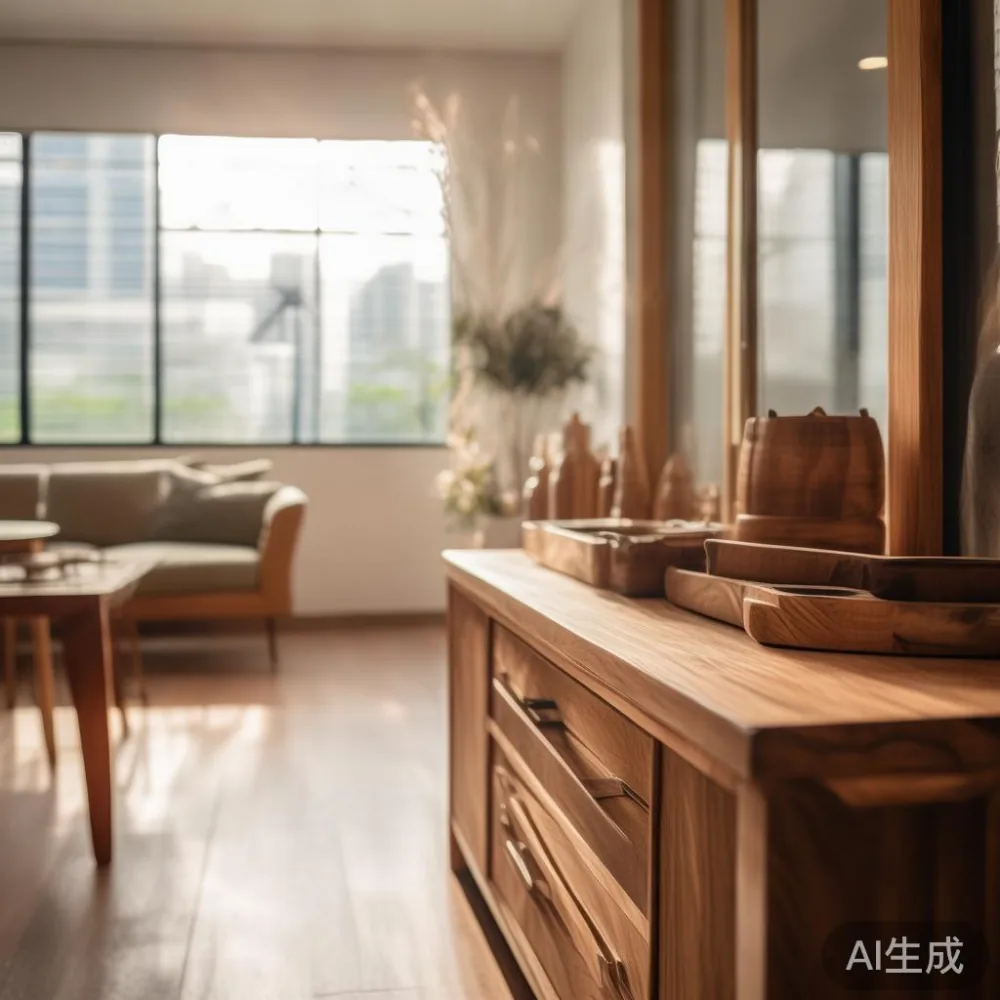
Is the species of wood really the biggest price driver?
Yes, but only after you separate two things: what the wood is, and how it was cut and dried. A solid wood dining table in American white oak at 180 cm typically lists between S$2,400 and S$3,800 in Singapore retail. The same size in rubberwood, a plantation hardwood common across Southeast Asia, often lands between S$1,100 and S$1,700. Walnut sits at the top, around S$4,200 to S$5,600 for the same length, while ash tends to come in slightly under oak. These gaps come from how slowly a tree grows, how dense its fibres are, and how much of the log survives the kiln-drying process without cracking.
On the Foshan floor I walked past stacks of FAS-grade oak boards, each one stamped with batch codes, moisture readings between 8% and 10%, and the name of the supplier. Kiln-drying that slowly, often over 30 to 45 days, costs energy and floor space. That cost is built into every console table, bed frame, and nightstand that leaves the line.
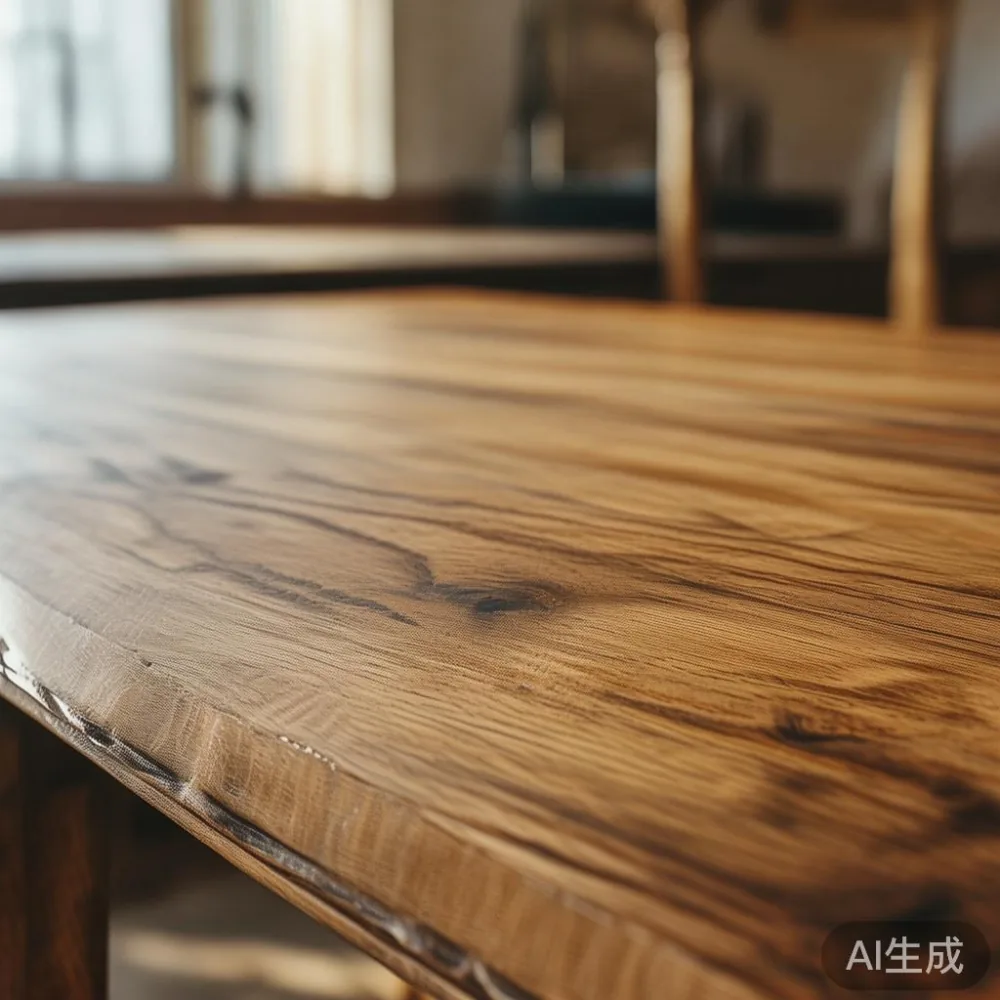
How much of the price is really the wood versus the labour?
In my experience, a fair rule of thumb is that raw material accounts for 35% to 50% of the finished price on a well-run solid wood line, with the rest split across joinery, finishing, hardware, packaging, and overhead. A craftsman in Foshan assembling a queen-size bed frame by hand can complete roughly 3 to 4 frames a day. A CNC-equipped shop can output 12 to 15, but it still needs a hand-sanding team, a finishing team, and a quality control pass before anything is wrapped.
I watched a 200 cm console table get through seven pairs of hands in one shift: cut, plane, sand, assemble, sand again, spray, inspect. The spray booth alone, with its downdraft ventilation and 18°C controlled environment, runs about S$120,000 to set up. That is a single piece of equipment, amortised across thousands of units. None of this shows up in the showroom, but it is in the price.
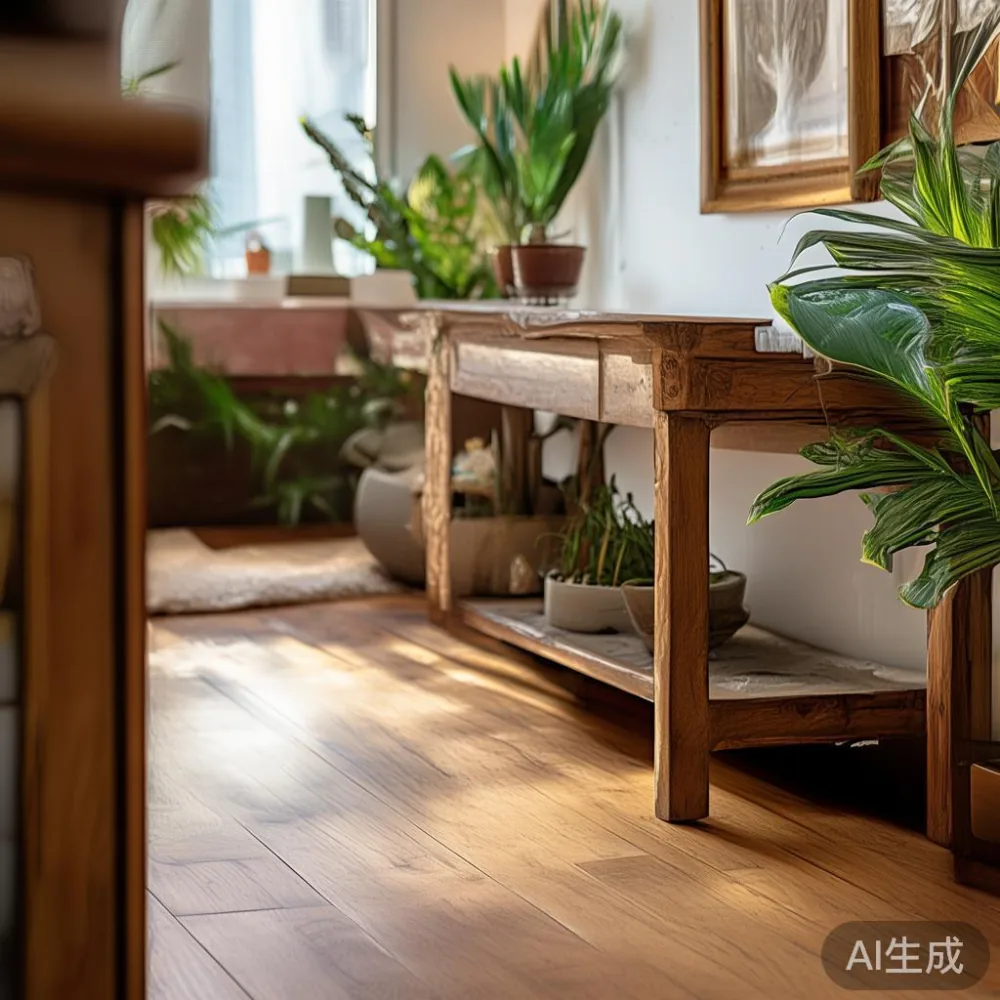
What role does joinery play in long-term cost?
More than most buyers expect. Mortise-and-tenon joints, dovetail drawer boxes, and full corner blocks on a wardrobe add labour hours but remove the wobble that usually shows up in year three. I have a colleague who bought a flat-pack wardrobe in Bedok three years ago for S$480. The side panels now rack about 6 mm out of square, and the doors will not stay aligned. The mid-range solid wood wardrobe he replaced it with cost S$1,950 and has been adjusted exactly once.
On a solid wood sofa, the joinery question shifts to the frame: kiln-dried hardwood rails, corner-blocked, screwed and glued, not stapled. On a bed frame, look for centre support legs every 60 cm or so for anything over 150 cm wide. These are unglamorous details, but they decide whether your S$2,200 dining table still sits flat on a HDB parquet floor in eight years.
How do Singapore-specific factors add to the price?
Three things hit Singaporean buyers that buyers in, say, Riyadh do not always face. First, lift and corridor widths. A 220 cm wardrobe will not fit into a standard Punggol HDB lift if the door panel is pre-assembled. Most Foshan exporters, including the workshop I toured, have learned to ship wardrobes knocked-down with a 4-step on-site assembly fee between S$80 and S$180, and a few pieces that genuinely cannot fit are craned in through windows at S$350 to S$600. Second, GST at 9% is added at checkout on imports above S$400 in CIF value, which catches most container shipments. Third, the last-mile delivery in HDB estates typically runs S$60 to S$120, with an extra S$40 per flight of stairs if there is no lift access.
Free shipping over US$350, which works out to roughly S$470, takes a meaningful bite out of that. A buyer in Tampines ordering a 160 cm solid wood console table at S$1,280 would pay about S$115 in GST and S$90 in delivery on most local sites. A 10-year structural warranty plus lifetime refinishing is another quiet cost-saver, because re-sanding and re-oiling a console table at year seven runs about S$220 to S$350 per piece in Singapore.
How do I choose a budget under1000 for a balcony?
Under S$1,000, focus on a narrow 100–120 cm solid wood console table in ash or rubberwood with a width of 28–32 cm, since HDB balcony corridors and sliding doors usually max out at 90 cm of clear opening, and ask for a knock-down design so it clears the lift without a crane fee.
That single sentence is the rule I now give anyone who messages me about balcony furniture. Most balconies in HDB flats run between 1.2 m and 1.8 m deep, often with a 90 cm sliding door, and a 32 cm-deep console table will leave you a usable 90 cm of walking space behind it. A marble table is a tempting upgrade, but a 100 cm marble console table with a real stone top, not a sintered slab, jumps the price to S$2,100 to S$2,900 in Singapore, and the weight often crosses 60 kg, which makes the lift problem worse. Stick to solid wood under S$1,000, in a light finish so the balcony reads larger, and spend the leftover S$150 to S$250 on a UV-resistant top coat that you can reapply every 18 months.
Is light-luxury styling just a markup, or is there real value in it?
There is real value, but only when the underlying furniture is solid wood. French light luxury tends to use slim tapered legs, brushed brass or champagne hardware, and soft curves on bed headboards and nightstands. American light luxury leans on thicker profiles, shaker-inspired panels, and matte black or antique bronze pulls. Post-modern light luxury mixes both, adding geometric fronts and occasional mixed-material moments where a marble table top meets a solid wood base. The premium you pay for these styles, usually 15% to 30% over a plain version of the same piece, is mostly finishing, hardware, and upholstery on items like a solid wood sofa.
The risk is when the styling is applied to a piece with a thin veneer over particleboard. You will see a console table listed at S$699 with French curves and gold tips, and the moment you lift one end it feels like 12 kg instead of 35 kg. A genuine solid wood console table in the same silhouette will be 28 to 42 kg. The extra mass is not a marketing trick. It is the weight of real material, and it is the single fastest indicator of long-term durability.
What warranty terms should I actually look for in writing?
Ask for four numbers in writing: structural warranty in years, finishing warranty in years, return window in days, and refinishing policy. A 10-year structural warranty on joinery and frames is the current baseline from serious Foshan exporters, while a 1- to 2-year finishing warranty covers cracking, peeling, and excessive fading. A 14-day return window is standard, though some workshops reduce it to 7 days for custom sizes. Lifetime refinishing, where the factory arranges pick-up, re-sanding, and re-oiling at a fixed price, can save S$800 to S$1,200 over the life of a dining table.
MIDHILL, a Foshan maker I visited last month, prints all four on a single card tucked into the packing crate of every console table, bed frame, and wardrobe. The card also lists the batch number of the wood and the name of the finishing line supervisor, which is a level of traceability I have rarely seen in this category. MIDHILL has exported to more than 15 countries since 2008, and the kind of documentation that comes in the crate is part of why their pieces turn up in Tampines and Bedok showrooms rather than only on Alibaba listings.
How can I tell if a discount is real or just a reset sticker?
Compare against at least three reference points: the same model's last 90-day price on a price-tracking site, the landed cost from a Foshan direct quote, and the cost of the raw material alone. For a 180 cm solid oak dining table, the raw material alone in mid-2025 is roughly S$520 to S$680. A sensible retail floor in Singapore, once you add kiln-drying, joinery, finishing, hardware, packing, shipping, GST, and a healthy margin, sits between S$2,200 and S$3,800. Anything more than 30% off that range is usually a fake reference price, and anything below S$1,800 on oak is almost certainly rubberwood dressed up with an oak-veneer edgeband.
I tested this on a friend in Punggol last weekend. He had a S$2,150 oak dining table in his cart marked down from S$3,200. I pulled up a price tracker and the same SKU had sat at S$1,950 for the previous four months. The "discount" was real, but only about 10%, not 33%. He waited two weeks, and a S$300 stackable voucher appeared, which is the actual trick in Singapore: stack voucher on voucher on voucher, then pay.
Are there hidden costs I should budget for beyond the sticker?
Always add four line items. First, GST at 9% on the CIF value. Second, delivery at S$60 to S$120 for HDB ground level, plus S$40 per floor without a lift. Third, on-site assembly for wardrobes, bed frames, and dining tables, usually S$80 to S$220 depending on the number of cartons. Fourth, accessories: felt pads (S$15), anti-tip straps for wardrobes over 180 cm (S$25), and a small tin of touch-up oil matched to your finish (S$30 to S$55). On a S$1,500 order these add up to roughly S$280 to S$420.
The total, not the headline, is what you should compare. A S$1,280 console table that arrives fully assembled with no craning, no GST surprises, and free delivery over US$350 is often a smarter buy than a S$1,050 console table that needs a 4-hour assembly, a S$90 delivery fee, and a S$115 GST top-up. A friend who ordered a 160 cm walnut console table from a smaller Foshan workshop told me the landed figure in his Bedok corridor ended up about 24% above the listed price once everything was tallied. He still considers it a good buy, but only because he ran the numbers first.
What should I walk into a showroom actually checking?
Five physical checks, in this order. Lift one end of the piece. A real solid wood console table at 120 cm should feel like 22 to 30 kg, not 9 to 12 kg. Open every drawer and look at the sides: plywood drawer boxes usually mean a builder cutting corners, solid wood dovetail boxes mean they did not. Run a fingernail along the underside where the finish is thinnest. If it leaves a mark, the top coat is too soft for Singapore humidity, where relative humidity runs 70% to 85% for most of the year. Check the back panel of any wardrobe or nightstand: a 9 mm to 12 mm solid back is acceptable, anything thinner will drum. Finally, smell it. A heavy chemical tang means the finish was rushed and will off-gas for months.
One more check, free and quick: ask the salesperson for the moisture reading on the wood. Serious workshops measure every batch, and the reading should be between 8% and 12% for furniture destined for Singapore. Anything above 14% is a warping risk within the first wet season. MIDHILL prints this on the same card as the warranty, which is a quiet sign of a workshop that has nothing to hide about the wood it ships.
Does buying direct from a Foshan factory really save money?
It can, but only above roughly S$4,000 per order, because the fixed costs of international shipping, customs brokerage at about S$180 per shipment, and on-site assembly do not scale down. A buyer in Punggol ordering a full five-piece solid wood bedroom set, including a queen bed frame, two nightstands, a 6-door wardrobe, and a console table, can save 18% to 28% by going direct, landing somewhere around S$6,800 to S$8,400 all-in instead of S$9,800 to S$11,200 at retail. Below that order size, retail with a strong warranty is usually the rational choice, because the savings get eaten by logistics.
Two more notes on this. First, confirm whether the factory offers a landed quote that includes GST and Singapore delivery, or just an ex-works quote. The difference is often 25% to 32% of the sticker. Second, ask for references from buyers in your specific HDB town. Tampines, Bedok, and Punggol corridors have slightly different widths, and a workshop that has shipped to your block before will already know the lift dimensions and the loading-bay rules, which removes the single biggest source of on-day surprises. Solid wood furniture, bought with the right checks, is one of the few things in a home that genuinely holds value for 15 to 25 years. A S$2,400 dining table spread over 20 years is S$10 a month. That is the framing worth keeping in your head when the sticker feels heavy.