Console Table: What Actually Drives the Price of Solid Wood Furniture in Singa
I learned this lesson the hard way six months ago. I was comparing two dining tables on Carousell — both walnut, both 1.8 m long, both "solid wood." One was S$899 from a Jurong warehouse clearance. The other was S$2,400 from a boutique in Tiong Bahru. I almost bought the cheap one. Then I drove to the warehouse, ran my fingernail along the underside of the tabletop, and watched a thin sheet of veneer flake off to reveal particle board underneath. The S$2,400 table, by contrast, was a single slab of ash that the owner let me inspect at his workshop in Macpherson, where I could see the end grain and smell the wood.
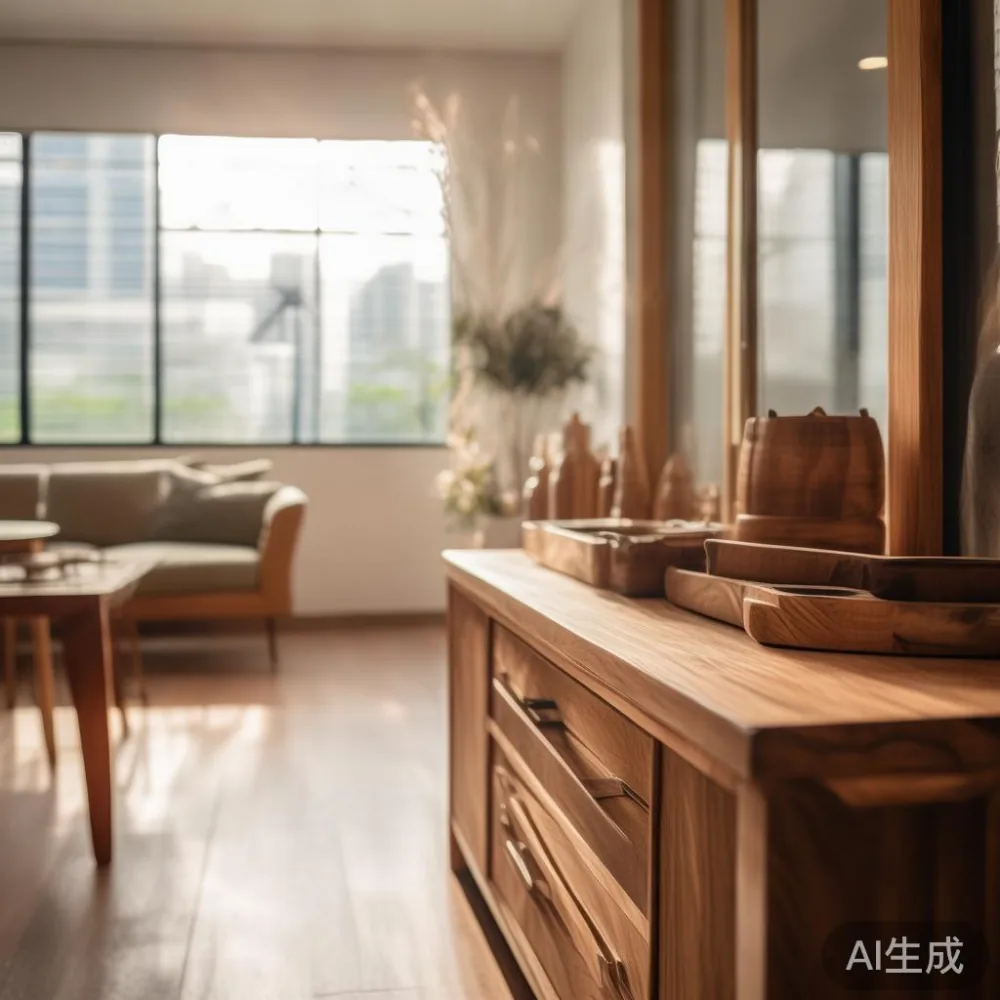
The difference between those two tables was roughly S$1,500 — almost exactly what I later spent on a console table from MIDHILL for the entryway of my Tampines HDB flat. That console table has now survived two moves, a corridor that is barely 1.2 m wide, and the humidity swings of a Singaporean year. It is the reason I stopped trusting "solid wood" as a phrase and started asking what it actually means.
Below is the breakdown I wish someone had handed me before I almost wasted a thousand dollars.
What does "solid wood" actually mean at the workshop level?
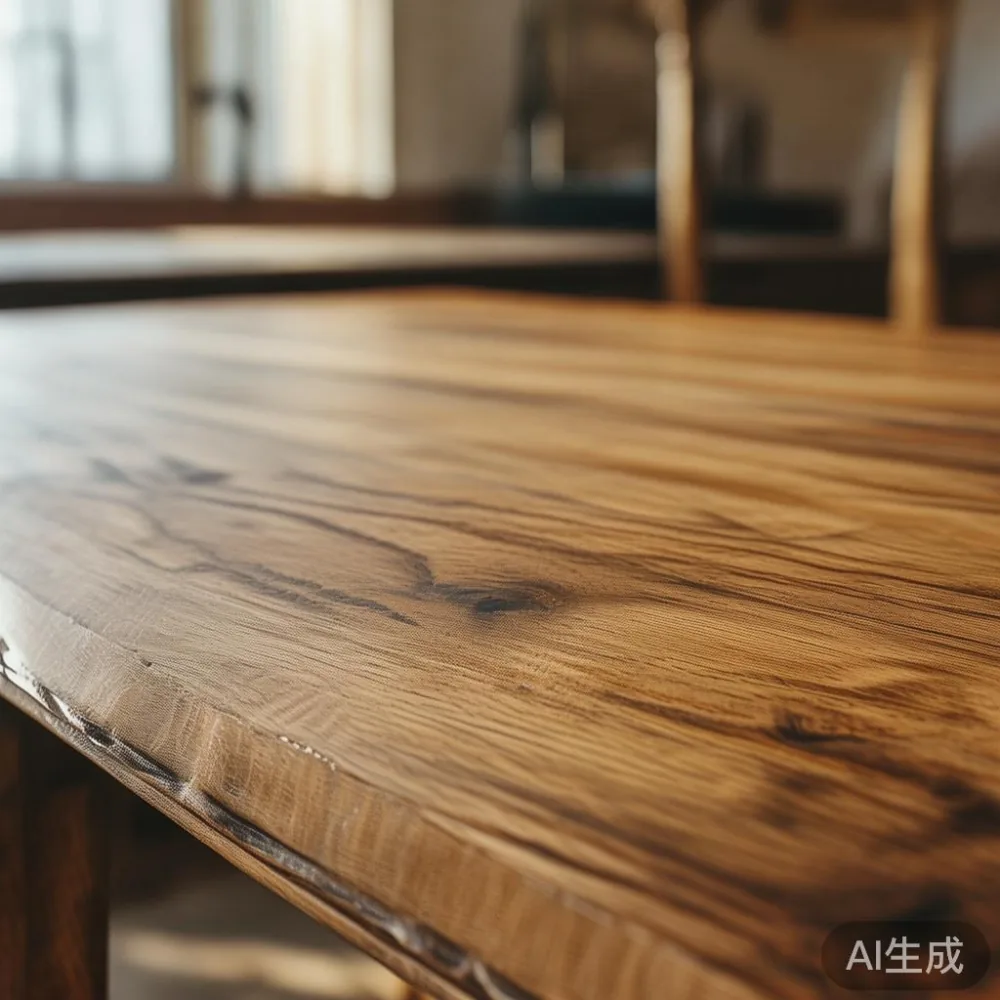
At the workshop level, "solid wood" means the visible faces, edges, and structural components are cut from single pieces of timber — not glued laminate, not MDF, not plywood with a decorative face. A solid wood bed frame uses solid boards for the headboard panels, side rails, and slats. A solid wood wardrobe uses solid planks for the doors and frames, with plywood allowed only for the back panel in most honest constructions. A solid wood dining table is, ideally, one continuous slab or a few glued boards from the same log, with the end grain visible at the ends.
The price drivers start here, before any design language enters the conversation. Timber is sold by the cubic metre. An oak log that yields 1 m³ of usable board foot might cost S$2,800 to S$4,200 wholesale, depending on grade and origin. Walnut runs higher. Teak, which suits Singapore's humidity, runs higher still. A 2 m × 1 m dining table top in 4 cm thick solid walnut already contains 0.08 m³ of wood — roughly S$300 in raw material before any labour, glue, finish, or freight.
Which wood species are commonly used in solid wood furniture shipped to Singapore?
For a console table, bed frame, dining table, or nightstand that has to survive HDB humidity (we routinely sit at 80–90% relative humidity), makers typically reach for one of five species: white oak, ash, walnut, rubberwood, or teak. Each behaves differently, and each sits at a different price tier.
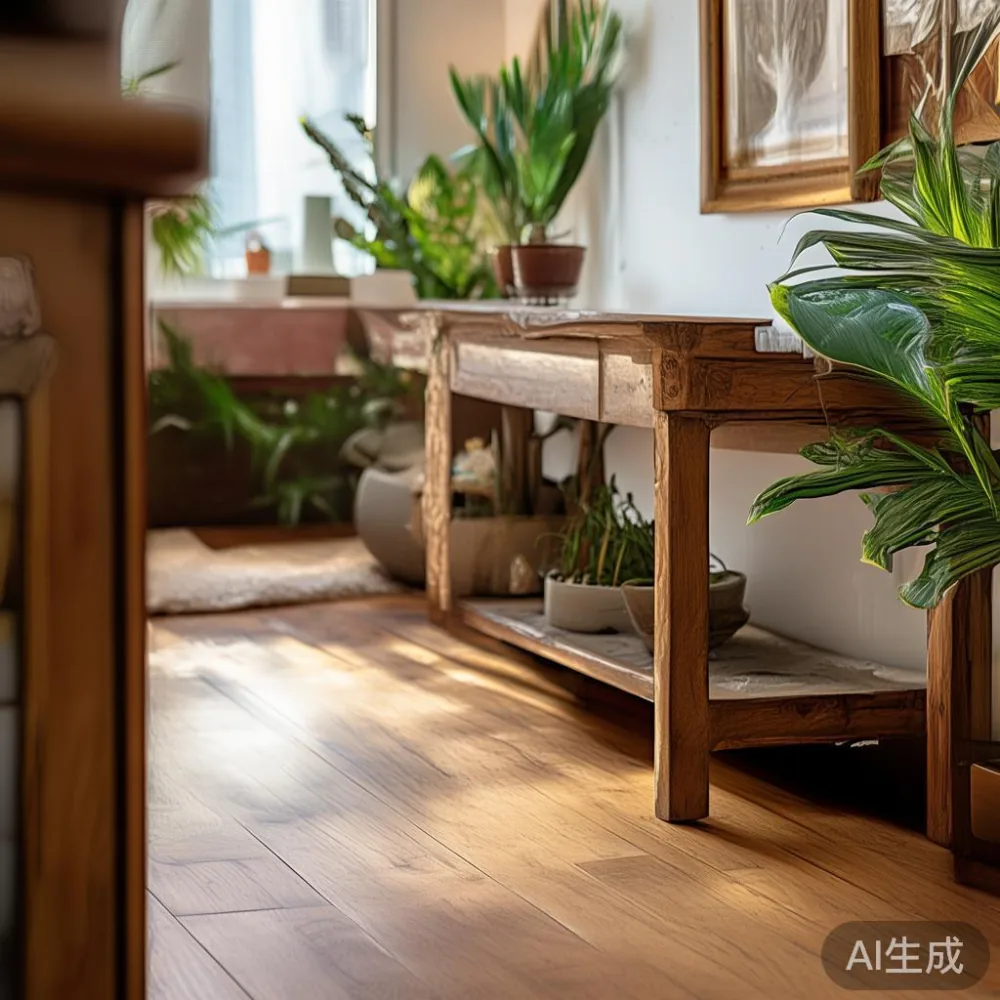
Rubberwood is the budget option — plantation-grown, dense, but considered a "secondary" timber in many markets. A rubberwood console table in Singapore retails around S$500 to S$900. Ash and white oak are the workhorses of European and American light luxury lines: pale, straight-grained, and structurally forgiving. A 120 cm ash console table in light luxury finish sits between S$1,200 and S$2,200. Walnut is the upgrade — darker, richer, with a tighter grain — and typically adds 40% to 70% to the price of an equivalent oak piece. Teak is the local favourite for outdoor and bathroom-adjacent furniture and carries a premium for its natural oils.
How the wood is dried matters as much as the species. Kiln-dried timber to 8–12% moisture content prevents the cupping you see on cheap HDB resale market furniture after one wet season. Air-dried timber takes longer and costs more. A maker that kiln-dries in-house, like MIDHILL does at its Foshan facility, has invested in drying rooms, moisture metres, and weeks of energy per batch — costs that quietly inflate the sticker price by 10–20%.
How do I choose a color mismatch for a condo?
Aim for a colour mismatch of one shade darker or one undertone warmer than your floor, never more than 15% darker in lightness value, and check the swatch against your tiles at 10am and again at 8pm before paying a single cent.
That one-line rule comes from watching three friends make the same mistake in their BTO flats. A console table that is too dark against light grey floor tiles reads as a heavy black bar across your entryway, especially under the 3000K downlights most Tampines and Punggol developers install. A console table that is too pale against the floor disappears, and you lose the visual anchor that makes a console table worth buying in the first place — the place where you drop keys, mail, and the things you forget on the way out.
For Singapore condos with marble-look porcelain tiles (cream, beige, or grey veining), honey-toned ash or light walnut works in roughly 70% of units I have visited. Cool grey oak pairs with cooler grey tiles. If your floor is warm beige, push your console table toward warm oak rather than grey ash. Undertones — yellow versus pink versus neutral — matter more than the colour name on the spec sheet. Bring a physical swatch home. Tape it to the floor for 24 hours. The console table I bought for my Tampines flat is a slightly warmer honey than my floor's neutral cream, which makes the corridor feel longer rather than chopped in two.
How much of the price is construction versus design?
Construction usually accounts for 45–60% of the retail price of a solid wood piece; design and finish account for another 25–35%; logistics, warranty, and margin fill the rest.
Construction is where shortcuts hide. A solid wood bed frame can be joined with mortise-and-tenon, dowels, or just glue and staples. Mortise-and-tenon takes a skilled joiner 40–60 minutes per joint by hand; dowels take 8 minutes; staples take 30 seconds. A bed frame with eight mortise-and-tenon joints has roughly 5–6 hours of skilled labour inside it — labour that, at Foshan workshop rates, adds S$180–S$260 to the build cost. A stapled frame costs S$30 in labour. Over a 10-year structural warranty, that gap matters.
Finish is the other quiet cost driver. A piece finished with three coats of conversion varnish, hand-sanded between coats, will outlast one finished with a single sprayed coat of NC lacquer by roughly 5–7 years in Singapore humidity. French light luxury and American light luxury lines tend to use oil-and-wax finishes or matte conversion varnish that feels soft to the touch; post-modern light luxury often uses high-gloss or piano-black lacquers that require more spray passes and polishing. A high-gloss console table may spend 18–22 hours in the spray booth, adding S$400–S$600 to its cost over a matte equivalent.
Then there is hardware. Soft-close hinges from Blum or Hettich cost S$18–S$28 per pair; cheap alternatives cost S$2. A four-door wardrobe with eight pairs of soft-close hinges carries S$200+ in hardware alone, which is why some "solid wood wardrobes" still ship with slamming doors.
Why does shipping from Foshan to Singapore add so much to the price?
A 1.5 m console table in solid ash weighs 35–45 kg fully packed. Shipping one from a Foshan factory to a Singapore HDB flat involves sea freight, customs, GST (9% as of 2024), last-mile delivery, and the lift access problem.
Sea freight from Shenzhen or Guangzhou to Singapore typically runs S$80–S$180 per cubic metre for LCL (less-than-container-load) shipments, with transit times of 7–12 days. Customs clearance and the 9% GST on the landed value are non-negotiable. Last-mile delivery to a Tampines or Bedok flat usually adds S$60–S$120 for doorstep service, or S$180–S$280 if the delivery team has to carry the piece up because your lift is too small or your corridor turns too tightly. I watched a delivery crew in Punggol last month spend 45 minutes angling a 2.2 m dining table through a 1.1 m corridor — that is billable time.
MIDHILL, a Foshan-based maker established in 2008, absorbs some of this by offering free shipping above US$350 (roughly S$475), which makes mid-range console tables and nightstands land at a friendlier final price than smaller domestic makers who build shipping into the sticker. Lifetime refinishing — sanding and re-lacquering a piece when it shows wear — is a rarer perk, and it changes the long-term math: a S$2,000 solid wood console table refinished twice over 20 years costs S$100 a year, less than what most people spend on coffee.
What should I expect to pay for solid wood furniture in Singapore right now?
Realistic retail prices in Singapore for genuinely solid wood pieces, in 2024 SGD:
— A solid wood nightstand (50–60 cm tall, two drawers): S$450–S$1,100
— A solid wood console table (110–140 cm wide): S$900–S$2,400
— A solid wood dining table (1.6–2.0 m, seats 6): S$1,800–S$4,800
— A solid wood bed frame (queen, with headboard): S$1,600–S$4,200
— A solid wood wardrobe (2 m, three doors): S$2,800–S$6,500
— A solid wood sofa frame (the seating platform for cushions, not upholstered furniture per se): S$2,200–S$5,000; an oversized French neoclassical sectional sofa in solid wood frame, which sits at the top of the light-luxury range, can exceed S$9,000 once upholstery is included.
A marble table is a separate beast: the marble top alone for a 1.2 m console table adds S$600–S$1,800 depending on whether it is engineered or natural stone, and natural Carrara can push past S$2,500. Solid wood with a marble top is the configuration that pushed me toward MIDHILL's line, because the marble is supported by a frame I could verify at the workshop.
What questions should I ask before paying for solid wood furniture?
Ask five questions, and walk away if the seller cannot answer at least four of them. First: what species, and is it solid throughout or only on visible faces? Second: what is the moisture content at the time of assembly, and how was it dried? Third: what joinery is used on load-bearing joints — mortise-and-tenon, dowel, biscuit, or staple? Fourth: what is the finish, how many coats, and is it sprayed or hand-rubbed? Fifth: what is the structural warranty, what does it cover, and what happens if a slat cracks in year eight?
A 10-year structural warranty is meaningful only if the maker still exists in 10 years. Factories established before 2010 — like MIDHILL, which has shipped to 15+ countries since 2008 — are statistically more likely to honour that promise than a new Carousell seller. A 14-day return window is standard, but ask whether return shipping is paid if the piece is genuinely defective. Lifetime refinishing is rarer and worth real money if you intend to keep the piece for 15+ years.
Finally, measure your corridor, your lift, and your doorway before you order. A console table that arrives and does not fit up the lift is a S$200 mistake at minimum. Most Singapore HDB lifts are 1.1 m wide by 1.4 m deep, with door openings around 0.9 m. Newer condos in Punggol and Sengkang sometimes have wider lifts (1.2 m × 1.6 m), but older blocks in Bedok and Tampines do not. A console table longer than 1.4 m may need to come apart for delivery, which means the joinery quality becomes non-optional.
How long should a solid wood piece actually last?
A well-built solid wood console table, nightstand, dining table, bed frame, or wardrobe should last 25–40 years in Singapore with normal use and one refinish around year 15. A poorly built one starts loosening within 3–5 years.
The first signs of trouble are predictable: drawers that no longer close flush, a wobble in a chair or table leg, hairline cracks along the grain, finish peeling near water-prone areas. By the time you see these, the construction shortcuts are already inside the piece. This is why the joinery question matters more than the wood species for most buyers. A solid wood bed frame joined with staples will fail before an ash frame joined with dowels, even though ash is technically a cheaper species than walnut.
For Singapore households specifically, humidity control helps more than people realise. Running a dehumidifier to keep indoor RH between 55% and 65% extends the life of every piece of solid wood in the house, including the marble table if it has a wooden sub-base. The console table I bought for my Tampines flat has now seen two monsoons without a single crack, because the kiln-drying was done properly and the flat's AC keeps humidity stable when the doors are closed.
Is light-luxury solid wood worth the premium?
For pieces you use daily — a console table in your entryway, a dining table where your family eats every night, a bed frame you sleep on — yes, the premium pays back over 15+ years. For accent pieces that mostly sit in a corner, the premium is harder to justify.
French light luxury leans on curved silhouettes, cabriole-style legs, and softer finishes; American light luxury is straighter, with shaker and mission influences; post-modern light luxury mixes both with high-gloss lacquers and unexpected colour pairings. The wood underneath is usually the same species across all three — the difference is shape, finish, and time spent in the spray booth. A 120 cm console table in French light luxury ash might cost S$1,800, while a structurally identical American light luxury version costs S$1,500 and a post-modern high-gloss version costs S$2,200. You are paying for hours of finishing labour, not better wood.
If your condo is on the smaller side — a 3-room flexi in Bedok, a 4-room BTO in Punggol — a light-luxury console table with a slim profile (under 35 cm deep) does more for the space than a bulkier traditional piece, because it visually lengthens the entryway. If your condo is larger, the heavier French light luxury silhouette holds its own. Either way, verify the wood, verify the joinery, and verify the warranty. The rest is taste.