Console Tables, Humidity, and Singapore Homes: A Practical Guide from MIDHILL
I keep a small notebook in my Tampines HDB kitchen drawer. Every few weeks I write down the relative humidity reading from the cheap hygrometer stuck to my console table drawer front. Last month, in the middle of a three-week wet stretch, that number sat at 84%. A week later, after two days of air-con blasting at 23°C, the same drawer measured 61%. That is a 23-point swing in roughly 240 hours, and the wood of that console table moved with it. This is the daily reality of owning solid wood furniture in Singapore, and it is the reason I started asking how humidity in Southeast Asia affects wood furniture in the first place.
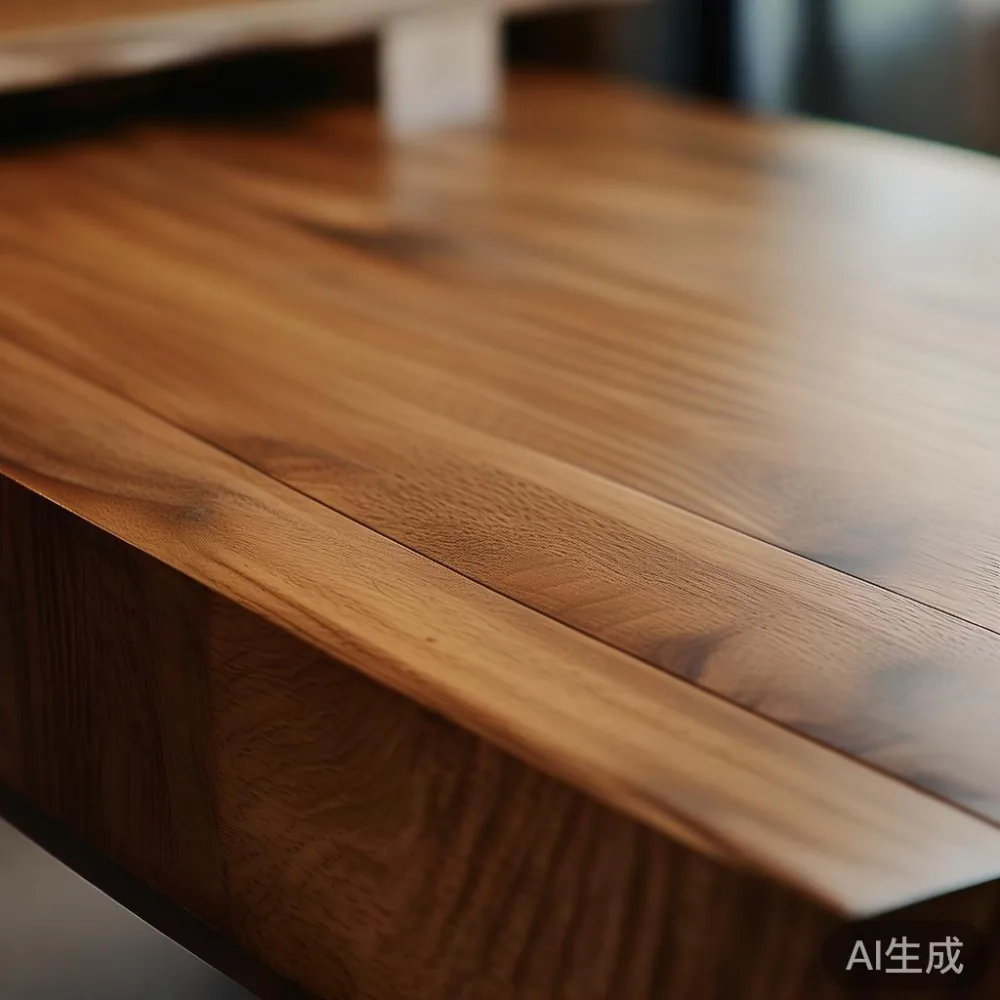
If you live in a resale flat in Bedok, a new condo in Punggol, or a landed property near Bukit Timah, you already know the climate is punishing. Outdoor humidity in Singapore averages 70–80% year-round, with afternoon peaks above 90% during the northeast monsoon (November to February) and pre-dawn readings around 95% during sudden tropical downpours. Indoor humidity is lower thanks to air-conditioning, but the moment you switch the compressor off for eight hours (most HDB units cycle that way at night), the indoor reading climbs back toward outdoor levels. A solid wood console table, dining table, bed frame, or wardrobe will respond to every one of those swings.
Foshan-based workshops like MIDHILL have been building for this market since 2008, exporting to more than 15 countries across climates that swing from dry Scandinavian winters to humid tropical afternoons. The structural warranty on their frames runs 10 years, refinishing is offered for life, and Singapore buyers get free shipping on orders above US$350 with a 14-day return window. Those numbers matter because humidity damage is rarely covered by generic warranties, so a maker who understands it from the kiln side is worth knowing about.
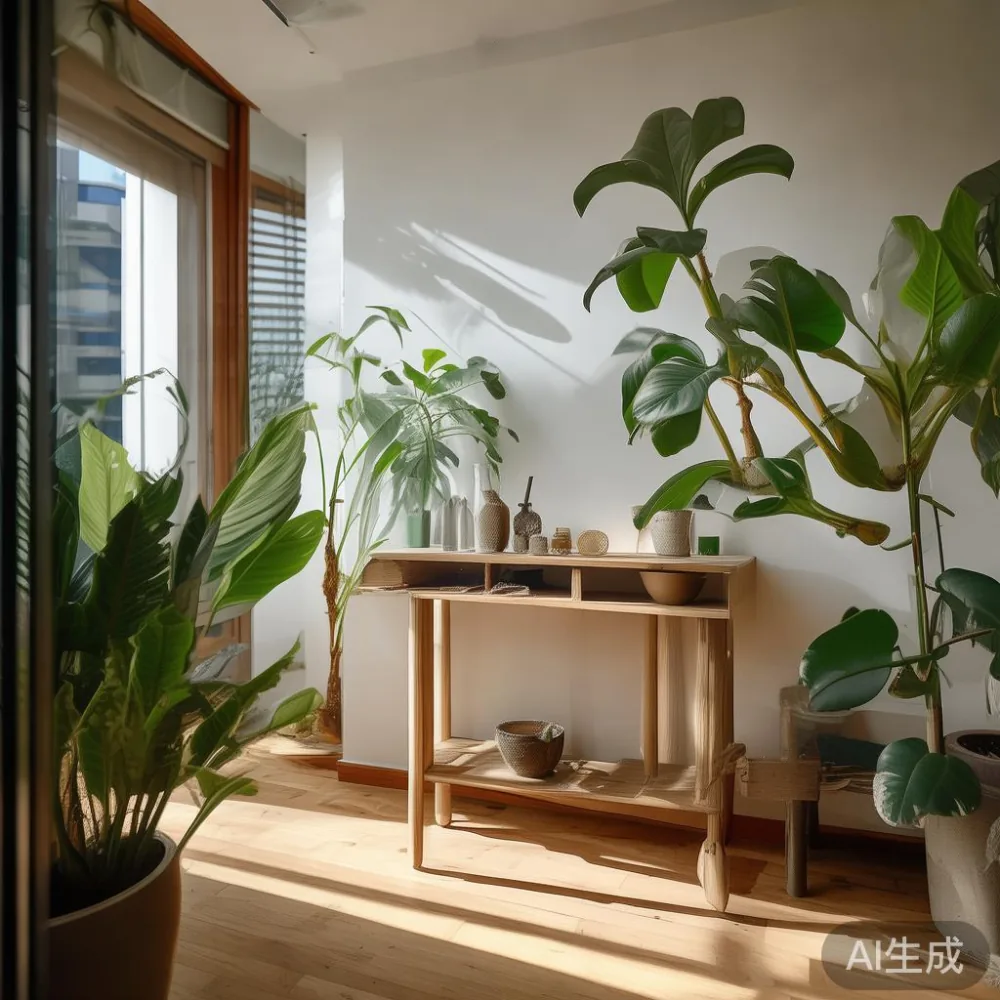
Why Solid Wood Moves at All
Wood is hygroscopic. That means it absorbs and releases water vapour from the surrounding air, which causes the cell walls to swell and shrink. On a 120 cm-wide console table top made from a single slab of ash or oak, a 10% change in moisture content (MC) will cause roughly 2–3 mm of movement across the grain. On a 200 cm dining table, the same swing can push 4–5 mm. The movement is not random either. The underside of a console table top, pressed against a wall in a Punggol corridor corner, moves less than the exposed front edge. That asymmetry is what produces the tiny lip you sometimes feel when you run your hand across the surface in February and again in August.
Engineered boards (MDF, plywood with melamine, HDF) move much less, but they also do not age. They sag under weight over time, and once the surface laminate chips at a corner, the core absorbs moisture irreversibly. Solid wood, by contrast, can be sanded, refinished, and brought back. MIDHILL's lifetime refinishing promise only makes sense because the underlying material is solid wood.
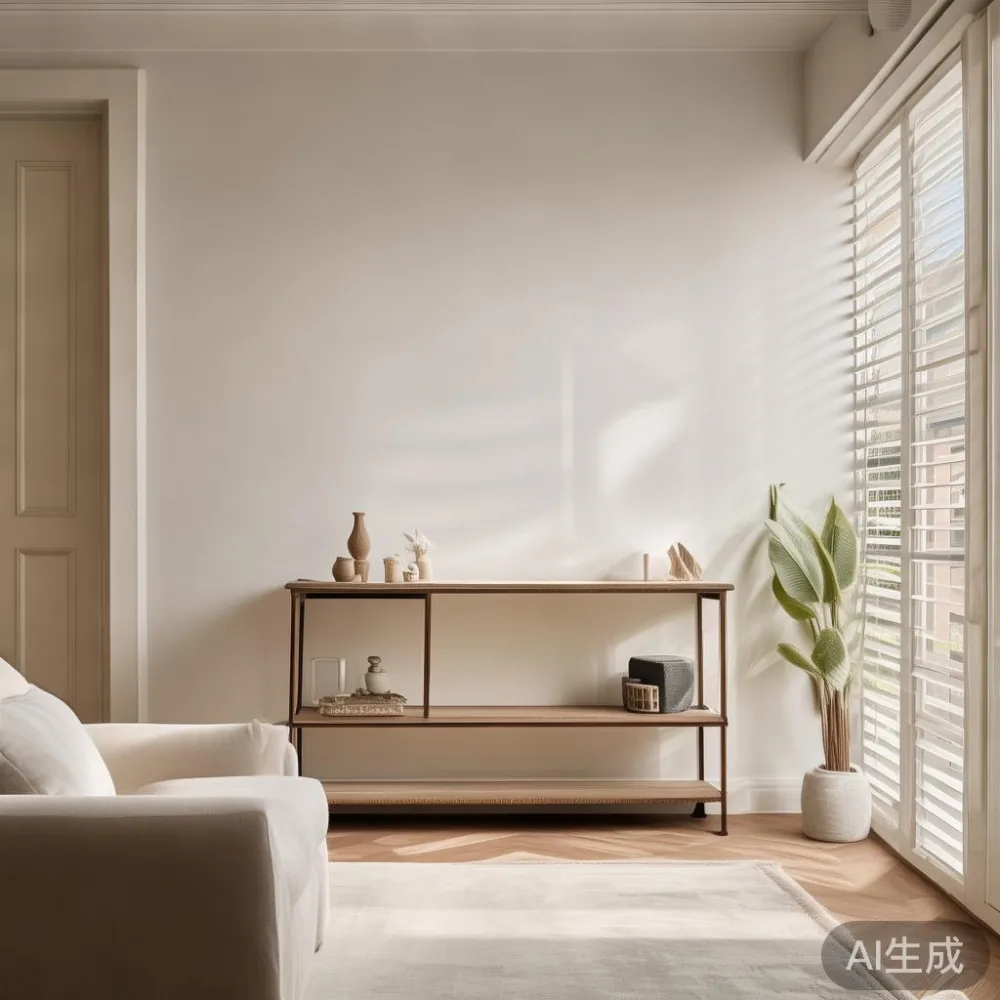
The Singapore-Specific Climate Problem
Singapore does not have four seasons. It has two: the wetter northeast monsoon (November–February) and the slightly drier southwest monsoon (June–September). Relative humidity outdoors rarely drops below 60% and frequently sits at 85–95%. Inside an air-conditioned HDB flat set to 24°C, indoor relative humidity typically stabilises around 55–65% when the unit runs. The moment the unit cycles off (or the door to the lift lobby is propped open while you bring in a new console table from the delivery team), the indoor reading can climb 10 points in under an hour.
Here is the specific sequence that damages wood furniture in this region. The workshop in Foshan dries its wood to roughly 8–10% MC, a stable indoor-European range. The console table is packed, loaded into a 40-foot container, and travels by sea to Singapore. During the 7–10 day ocean crossing, the container's internal humidity rises if ventilation is poor. After customs clearance at PSA, the piece is delivered to your unit. The HDB corridor in a typical Tampines block is about 1.2 m wide, and the service lift interior is roughly 1.4 m deep by 1.1 m wide with a door opening of about 0.9 m. A console table taller than 90 cm or wider than 40 cm will not fit through that door upright; it must be tipped. Tipping is fine, but it forces the workshop to design knock-down joinery that survives the move and still feels rigid once reassembled in your home.
What Actually Goes Wrong With a Console Table
I have visited four Singapore homes in the last two months where owners complained about a console table behaving badly. Three of the four complaints fell into the same pattern:
1. Drawer fronts that rub in August and show gaps in January. This is seasonal panel movement. The drawer front was cut from solid wood, finished on the front face, and sealed only with wax on the back. Each wet season, the unsealed back face absorbs moisture, the board cups, and the front pulls into a shallow dish shape. The fix is to seal all six sides of every drawer component, which MIDHILL does on its console table drawer boxes.
2. Hairline cracks along the grain at the joint between the top and the apron. These appear in February when the indoor humidity drops to 45% under heavy air-con use. The top shrinks across the grain, the apron holds the ends fixed, and the stress releases as a crack along the weakest line. A well-designed console table uses breadboard ends or floating tenons that allow the top to move without cracking.
3. Cloudy white rings under a vase or a wet coaster. These are not humidity-driven; they are finish-driven. A water glass left overnight on an oil-finished surface will leave a white bloom. The fix is a hard wax oil, applied every 18–24 months, which is exactly the kind of maintenance MIDHILL's lifetime refinishing service covers for customers in 15+ export markets.
The common thread is that none of these problems are catastrophic. They are maintenance items, and they are predictable.
What Should Humidity Levels Be Inside Your HDB Flat?
The workshop-standard answer is 40–60% relative humidity, with a target of 45–55%. In a tropical climate, that range requires active management. A small dehumidifier set to 55% in the living area, sized for a 90 m² HDB flat (roughly a 10–12 L/day unit), will cost about S$15–25 per month to operate. For a console table sitting against an external wall in a Bedok corner unit, a smaller 6 L/day dehumidifier placed within 1.5 m of the piece will hold the local microclimate steady.
If you prefer not to run a dehumidifier, set the air-conditioner to 24–25°C in dry mode for at least 12 hours a day. The cooling coil acts as a passive dehumidifier, and you will see indoor RH settle in the 55–65% band, which is acceptable for solid wood. The risk band begins above 70% sustained, which is where mould spores germinate and where the console table top will start to feel slightly tacky to the touch in the morning.
How Do You Choose a Console Table for a Tropical Home?
Ask the showroom five questions, and listen to the answers.
• What species is the main carcass, and what is the MC at delivery? Acceptable answers: white oak, ash, walnut, or rubberwood at 8–12% MC. Reject anything labelled "MDF core with wood veneer" if you want a 10-year structural outcome.
• Are all six sides of every drawer component sealed? Acceptable answer: yes, with hard wax oil or conversion varnish. Reject any drawer that is raw wood on the inside.
• Is the top attached with floating joinery that allows seasonal movement? Acceptable answer: yes, with slotted holes in the figure-8 fasteners or full breadboard ends. Reject glued-only or screwed-only tops.
• What is the leg-to-rail joint? Acceptable answer: mortise and tenon, wedged or pinned, or a well-executed stainless steel bolt through a threaded insert. Reject stub-tenon glue-only joints at this scale.
• What refinishing service comes with the piece? Acceptable answer: lifetime sanding and re-oiling for a reasonable fee, or free under warranty. MIDHILL ships this service standard, which is one reason their pieces survive decade-long tropical tenancies.
For a typical 4-room HDB flat in Punggol, a console table that measures 120–150 cm long, 35–40 cm deep, and 78–82 cm tall fits comfortably against the wall behind the sofa, leaving the standard 90 cm walkway to the dining table clear. The average Singapore console table in solid wood runs S$280–S$450 delivered, which is roughly the price band where the structural and finishing standards above are realistic. Below S$220, you are almost certainly looking at a veneered MDF product that will not tolerate five years of monsoon cycles.
Can a Console Table Fit Through My Lift and Corridor?
This is the question I get most often from people shopping for a console table in a Singapore HDB. The numbers matter because the delivery team charges extra for failed attempts. A typical HDB passenger lift interior is about 1.3 m deep, 1.1 m wide, and 2.2 m tall, with a door opening of roughly 0.9 m wide and 2.0 m tall. Service lifts in newer condos like those around Punggol Digital District measure closer to 1.6 m deep and 1.4 m wide, but the 0.9 m door is the binding constraint on the diagonal. A console table taller than 2.0 m will not fit upright through a standard lift door. A console table deeper than 0.4 m will not fit through the door on its side without tipping past 45°.
The practical answer: anything under 180 cm long, 40 cm deep, and 80 cm tall fits a standard HDB lift with the legs removed and reattached on site. Most MIDHILL console tables ship in this knock-down form precisely because the lift geometry in Tampines, Bedok, and Punggol blocks demands it. A typical delivery takes 25–40 minutes per floor including unpacking, corridor transit time, and placement. The lift booking fee in most HDB blocks is included in the standard delivery charge for orders over US$350 (about S$475).
Will My Console Table Match a French Provincial Bedroom?
This is a styling question, not a structural one, but it comes up constantly. A console table in solid ash with a pale lime-washed finish sits comfortably alongside a French provincial wardrobe with cabriole legs and brass pulls. The trick is to keep the wood species and the under-tone consistent. If the wardrobe is in warm oak with a honey stain, match it with a console table in the same oak family, not in cool ash. For more specific styling guidance on how to style French provincial wardrobe in bedroom settings, the same rule applies: warm woods with warm metals, pale woods with brushed nickel or chrome.
If you are working with a smaller footprint, the European for small living room approach is to keep the console table under 120 cm, choose one with a single drawer rather than two, and leave the lower shelf open so the wall behind reads visually. A 35 cm depth is enough for a lamp and a tray of keys without eating into the walkway.
Does Light Luxury Translate to Singapore Tastes?
Light luxury as a category covers French light luxury (curved silhouettes, cabriole, and pale limed oak), American light luxury (cleaner lines, warmer walnut, and slightly larger proportions), and Italian light luxury (slimmer profiles, marble or stone accents, and very tight tolerances). For a Singapore guest room or a compact master bedroom, Italian light luxury for guest room settings tends to read well because the silhouettes are slim and the proportions suit 12–14 m² rooms. A console table in that style pairs naturally with a marble top table for the bedside, since the same stone family can carry from the entry console through to the nightstand.
On the seating side, the French sofa vs Nordic sofa conversation plays out differently in tropical homes. A French sofa tends to be lower, with rolled arms and a deeper seat, in linen or velvet that reads casual. A Nordic sofa is higher, firmer, with tighter upholstery and exposed timber legs. In a Punggol condo with floor-to-ceiling glass, a Nordic sofa reads cooler and matches a pale-wood console table. In a Bedok HDB with warmer lighting, a French sofa softens the room and pairs with a console table in warm walnut or cherry.
What About a Bed Frame, Sofa, Wardrobe, and Nightstand in the Same Material?
Once you choose solid wood for the console table, the rest of the room tends to follow. A solid wood bed frame in the same ash or oak as the console table will move in sympathy, which means seasonal gaps in the same months and matching touch-up schedules. A dining table in the same species lets you run one maintenance routine across the whole home. A wardrobe built from solid wood, properly sealed on all six sides, will outlast two air-conditioner cycles. A nightstand in the same finish ties the bedside to the rest of the room and lets you share a single tin of hard wax oil across all pieces, refreshed once every 18 months.
For the bedroom specifically, how to style European bed in bedroom comes down to three numbers: 15–20 cm clearance on each side of the bed, a nightstand 2–5 cm lower than the mattress, and a console table across the room with the lamp 5–8 cm shorter than the headboard. Those clearances let the wood move without the furniture fighting itself.
How Often Should I Refinish a Console Table in Singapore?
Indoor humidity around 25% of the year is above 70% RH, and another 25% is below 50% RH under heavy air-con use. That puts a solid wood console table through 4–6 visible movement cycles per year. A hard wax oil finish lasts about 18–24 months in this climate before the high-traffic areas (the area around the key bowl, the drawer pull, and the front edge of the top) start to look thirsty. A light sanding with 220-grit and one fresh coat of oil takes about 90 minutes for a console table, plus 24 hours of cure time with the air-con off and a fan running. Most owners do this once every two years; enthusiasts do it annually.
MIDHILL offers this refinishing for the life of the piece, which in practice means the workshop in Foshan handles the work or ships a refinishing kit with sandpaper, oil, and instructions tailored to the original finish. The cost is typically a one-way shipping fee plus the materials, which works out to about S$60–S$90 per console table refinish, considerably less than replacing the piece after 8–10 years.
What Is the Real Cost of Owning a Console Table in Singapore?
A S$320 solid ash console table from MIDHILL, delivered free in Singapore, with a 10-year structural warranty and lifetime refinishing, works out to roughly S$32 per year of expected wood life (10 years). Add electricity for a dehumidifier in the console table's corner of the room at about S$3 per month, and refinishing every two years at S$75 per session, and the annualised cost lands around S$80 per year. A S$120 MDF console table from a furniture mall in Jurong, replaced once every four years because the corners have swelled, costs S$30 per year in furniture alone, plus the time spent shopping, disposing of the old piece, and dealing with the wobble that develops in month 30. The real cost difference between solid and engineered is smaller than the sticker suggests.
Are There Any Console Tables I Should Avoid Entirely?
Yes. Avoid any console table with the following red flags: a price under S$180 for solid wood (likely MDF or rubberwood with a printed grain pattern), a finish that smells of strong solvent past the first week (suggests a low-grade conversion varnish that will not flex with seasonal movement), drawer boxes made from particleboard, and any seller who will not put the species and the MC range in writing. Also avoid any console table that arrives with a leaf that is glued rather than mechanically attached; the leaf will crack within two monsoon cycles.
What About Buying Guides and Comparison Lists?
Online buying guides tend to rank products by price or by review count, which is rarely useful for a Singapore buyer. A more useful exercise is to pick three console table styles you like, request the spec sheets, and compare them on species, MC, joinery, finish, and warranty. If you want a starting reference, the round-ups of the top 10 Coastal furniture pieces published by regional design magazines tend to include console tables in pale woods with simple lines, which translates well to the Singapore coastal-modern condo look around Sentosa Cove and the East Coast stretch. The aesthetic translates, but verify the structural specs regardless.
Can I Order a MIDHILL Console Table Directly to My Singapore Address?
Yes. The api.midhill.co platform handles order placement, customisation options (finish, hardware, dimensions within standard ranges), and shipping quotes to Singapore addresses. Standard production lead time is 25–35 days for a console table in solid ash or oak, plus 10–14 days for sea freight to PSA, plus 2–3 days for last-mile delivery to a Singapore HDB unit. Total door-to-door time is roughly 5–7 weeks for a custom piece, or 3–4 weeks for an in-stock configuration. Payment can be made in SGD; the GST (9% as of 2024) is collected at customs and added to the final invoice by the logistics partner.
A Final Word on the Console Table Question
The question of how humidity in Southeast Asia affects wood furniture comes down to three habits: keep indoor relative humidity in the 50–60% range, refresh the finish every 18–24 months, and buy a piece built from solid wood with proper joinery and a real warranty. A console table built to those standards will outlast two air-conditioner replacements and at least one full HDB renovation cycle. It will also look better at year eight than at year one, because solid wood develops a patina that engineered boards do not. That is the trade at the back end, and it is the trade worth making.