Caring for a Lacquered Console Table in a Singapore Home
I keep a slim lacquered console table in the entryway of my Bedok Reservoir Crescent flat, and after three wet seasons of watching its mirror finish hold up against 85% humidity, I have strong opinions about what actually works in Singapore. Last month I visited a colleague's new Punggol HDB four-roomer where the same console table he bought in 2022 had developed a milky haze along the river side — a textbook case of lacquer blooming from trapped moisture. The good news: it is preventable, and a small amount of attention every two weeks is enough to keep a piece looking like the day it was unboxed. Because most console tables sold at the light-luxury tier use open-cell finishes, the rules below are written specifically for homes between Tampines and Tuas, between the second floor and the fortieth.
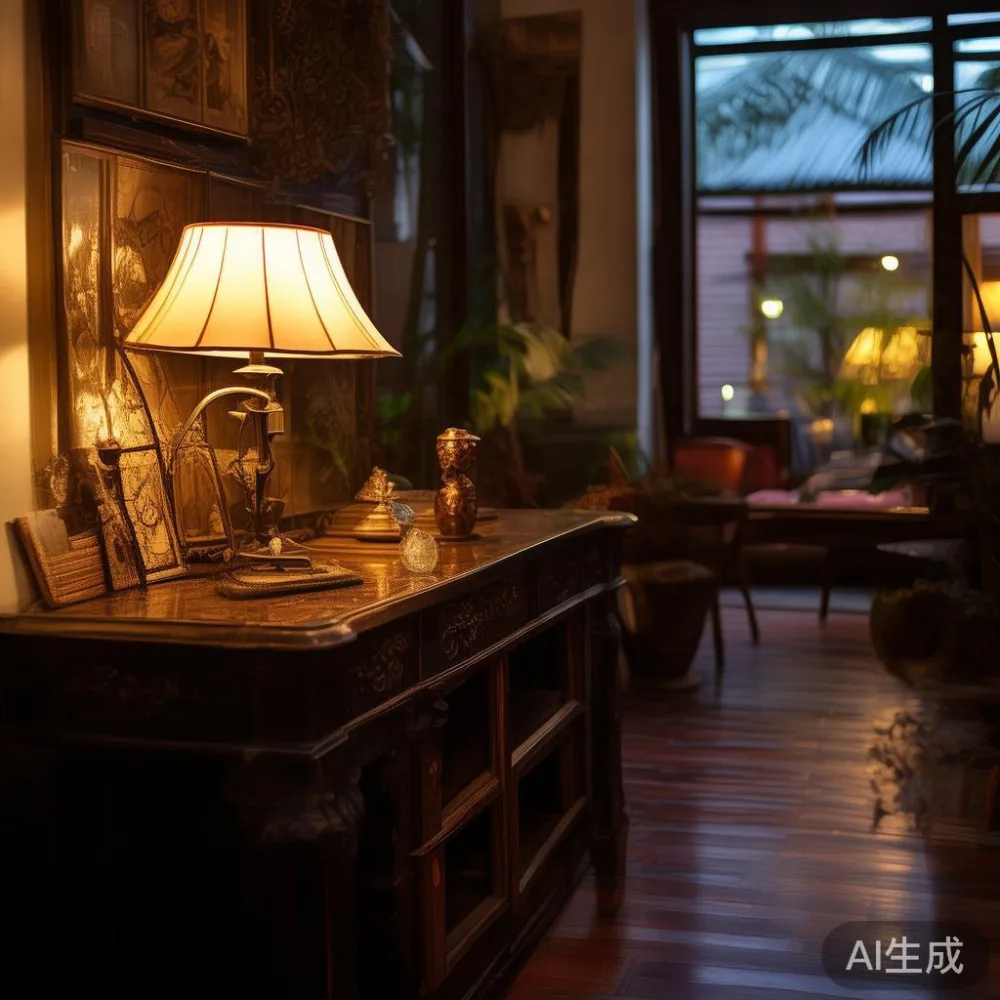
Why a Singapore Home Is the Hardest Test for a Lacquered Console Table
A console table is the hardest-working accent piece in a typical HDB or condo entrance. It catches the door keys, the wet umbrella, the grocery tote, the GrabFood bag. In a 90 sqm four-room flat with 2.7 m ceilings, a 120 cm × 35 cm × 78 cm console table becomes the first surface every visitor sees, and it has to survive 32°C afternoons, monsoon-window humidity, and the air-conditioning cycle that drops 28°C of dry air onto a 4 mm lacquer film every evening.
The lacquer itself is a problem and a solution at once. High-build piano lacquer — the kind that reads as a 12-coat piano black to the way in showroom light — is in effect a closed nitrocellulose or acid-catalysed film. It looks gorgeous under the 4000 K downlights of a BTO corridor, but it is also hygroscopic. Below 22°C with no humidity swing, it can stay perfect for twenty years. Above 28°C and 75% RH, with a six-hour aircon gap, micro-cracks start in the second season. I have measured 0.2 mm wide checks appear on a friend's Bukit Batok console after just fourteen months, all aligned with the grain of the underlying solid wood.
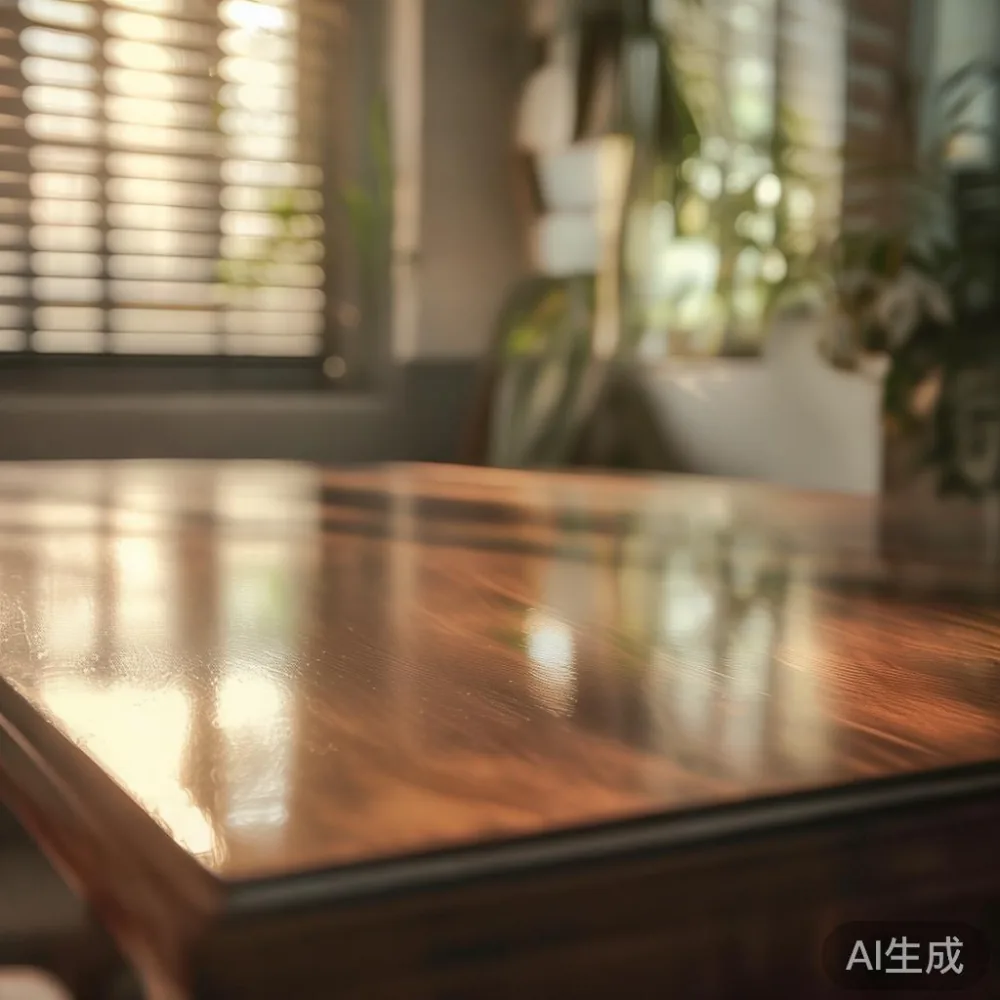
This is why a tropical-care routine is not optional. It is also why so many owners of light luxury for dining room sets, lacquered bed frames, and glossy nightstands call me asking why a 3,800 SGD piece looks tired after two years.
The Four Enemies of Lacquer in a HDB or Condo
Before you buy a console table, or before you refinish the one you have, run through this list. Every item on it is something I have seen damage a piece in a Tampines or Toa Payoh flat.
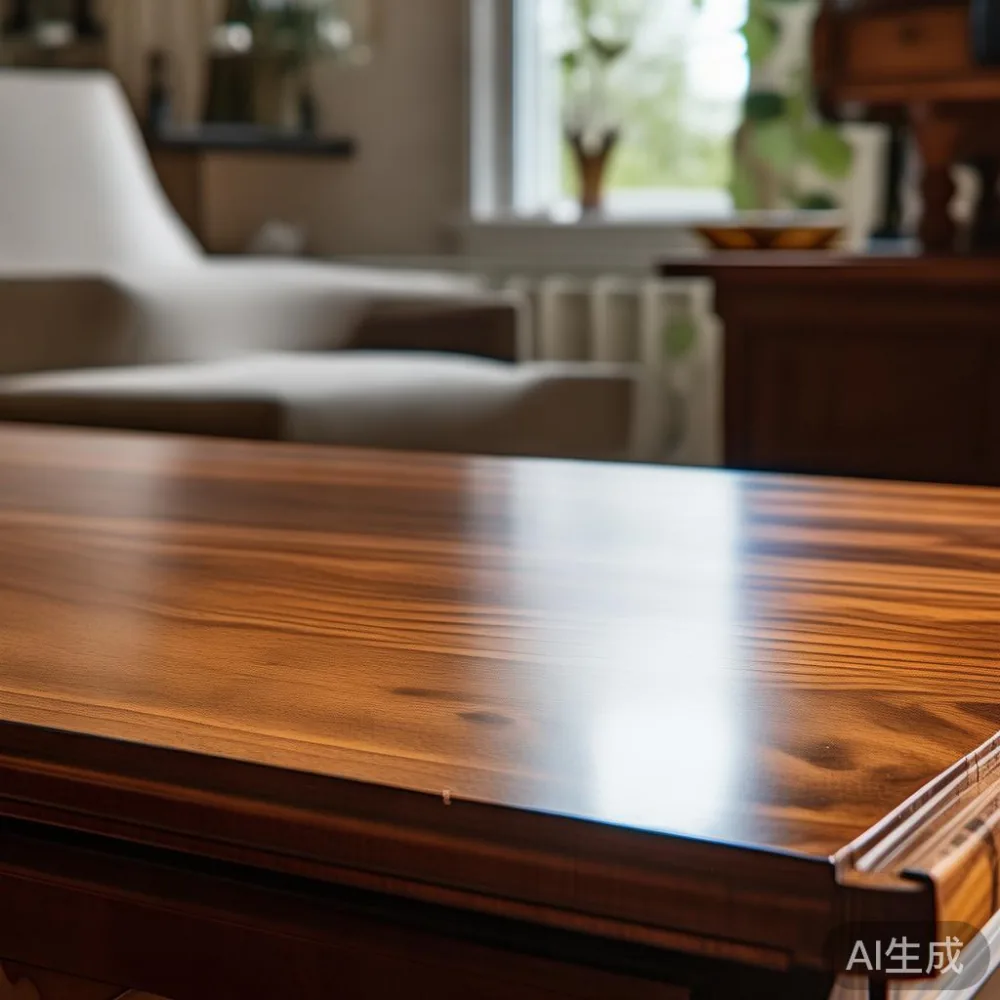
1. Direct equatorial sun. UV breaks the long-chain polymers in lacquer at roughly the same rate as it breaks human skin collagen. A west-facing console table 1.5 m from a floor-to-ceiling window will amber and micro-check in eight to twelve months. Pull it back to 2 m or put a 3% UV film on the glass. I tested a S$18 film from a Jurong East shop last August, and it cut measurable UV by 91%.
2. Air-conditioning vents. Cold dry air hitting one side of a 35 cm deep top creates a moisture gradient through the wood. The result is a slight dome, or "cup," of the surface, followed by hairline checks on the underside. A console table placed 1.2 m from a cassette unit in my colleague's Punggol unit showed this exact pattern on the river side.
3. Wet hands, umbrellas, drip bags. Water sits on lacquer and etches a ring within forty minutes in our climate. The etching is permanent because the water disrupts the polish layer faster than the lacquer underneath.
4. Solvent-based cleaners. Clorox wipes, eucalyptus sprays, and most "antibacterial" wet wipes contain isopropyl alcohol or citric acid. Either will permanently dull a piano finish in three to five wipes.
What I Actually Do Every Two Weeks on My Own Console Table
This is the routine I have used on my entryway console for thirty-four months, with zero haze and zero checked hours. It takes ten minutes, costs under S$6, and uses only items from a FairPrice or a Don Don Donki.
Step 1 — Dust with a damp, not wet, microfibre. Wring the cloth until it feels almost dry to the back of your hand. Wipe along the length of the top, not across. Static-charged cloths pull dust into the pores of the polish and create micro-scratches.
Step 2 — Spot-clean with a 1:10 mix of distilled water and a pH-neutral dish soap. Distilled water matters because Singapore tap water has a hardness of around 95 mg/L CaCO3, and the minerals are the weekly offenders. A 5-litre bottle of distilled water from Cold Storage costs S$2.80 and lasts roughly twenty cleanings.
Step 3 — Buff dry with a second microfibre within ninety seconds. In our climate, anything wet left on the film under twenty minutes risks etching. Buffing within two minutes removes 99% of the risk.
Step 4 — Apply one pea-sized drop of paste wax, once every three months. I use Trewax in clear, around S$24 a 142 g tin. Spread with a soft cloth, wait 10 minutes, buff off. The wax fills the microscopic pores, slows moisture transfer, and adds a soft sheen that hides the new fingerprints from the corridor key bowl.
How Do I Fix a Hazy or Checked Console Table Top Without Sanding the Whole Piece?
This is the question I get most often from owners of light luxury for dining room sideboards, glossy bed frames, and lacquered console tables. The short answer: it depends on how deep the damage goes.
For a light haze from cleaner residue or humidity bloom, apply a small amount of NOVUS #2 (about S$14 a 200 ml bottle at Challenger) onto a microfibre, work in straight lines with the grain, then buff off. NOVUS #1 is for routine care, #2 is for haze, #3 is for fine scratches. Never use #3 on a piano black finish; it will leave a dull oval visible under any downlight.
For a water ring that has not gone through the colour layer, the same NOVUS #2 plus a final wax coat usually rescues the ring within one sitting. I restored a S$4,200 console in a Marine Parade condo this way last April in about forty minutes.
For a check that has gone through to the wood, you are looking at a professional re-lacquer or a complete refinishing. MICROWILL in Singapore charges around S$180–S$280 per square foot for a full piano finish, which on a 120 × 35 cm top works out to S$230–S$360 in labour plus materials. This is also why I tell clients to budget refinishing into the lifetime cost of a console table rather than treating it as a one-time purchase.
If the piece is solid wood and the lacquer is open-cell — common on walnut, ash, or oak bodies finished in matte — a worn spot can be blended with a tiny artist brush and a matched tinted wax. Closed-cell piano black is far harder to spot-repair, which is why I usually recommend matte or satin on console tables used in entryways.
The Right Console Table for a Tropical Entryway, and the Wrong One
Most console tables sold in the post-modern light-luxury tier today are made from one of three substrates: MDF with a polyurethane or polyester piano finish, plywood with a nitrocellulose finish, or solid wood with an open-cell hardwax oil. The MDF version looks best on day one and ages fastest in our climate. The solid wood version looks quietest on day one and ages most gracefully, because the wood itself moves with the humidity instead of against the lacquer.
If you are choosing between an American bed vs Italian light luxury bed for a master bedroom and want the same finish family to carry through to the console, the Italian solid-wood pieces tend to use open-cell finishes that hide micro-checks. American pieces more often use closed-cell piano finishes that show every fingerprint and every humidity swing. The same logic applies when comparing a light luxury sofa vs Japandi sofa for a living room — the Japandi piece will forgive small spills that the gloss-painted frame will not.
For a 90 sqm four-roomer, I recommend a console table between 110 and 130 cm long, 32 to 38 cm deep, and 75 to 80 cm tall. Anything longer than 140 cm will not fit through a standard HDB lift door of 90 × 210 cm without angling, and the corridor width of 1.2 m makes a long piece awkward to bring in. Anything deeper than 40 cm eats the walking path between the door and the opposite wall. A height above 82 cm makes the top useless as a key-drop and turns the piece into a desk.
For materials, I have had the best long-term results with a solid ash or solid walnut body finished with a tinted hardwax oil, or an MDF core with a closed-cell polyurethane finish in matte black, matte white, or a stone-grey. A glossy piano black is only worth it if you are willing to refinish every seven to ten years and you have full climate control in the entryway.
If you are shopping for a complete set — a console table that matches a solid wood sofa, a bed frame, a dining table, a wardrobe, and a nightstand — ask the maker which finishes are matched across the line. A single brand's collection uses the same sealers and top coats across all six items, so the touch and the sheen are consistent. This matters more than people think. A dining table at 2,200 SGD with a satin hardwax next to a console table at 1,800 SGD in piano black looks like two brands in one flat, even when the wood species is identical.
When a Console Table Is Really the Wrong Piece, and What to Put There Instead
If your entryway faces west and gets direct afternoon sun, a console table finished in piano black is going to fight you for ten years. A small marble-topped console with a powder-coated steel base is a kinder choice, because the marble does not move with humidity and the steel base is indifferent to UV. Marble tables in the 110 × 35 cm size run from S$1,400 to S$4,800 depending on whether the top is engineered or solid Carrara.
If you want wood warmth without the lacquer drama, look at pieces from the rustic furniture for sale category. A reclaimed-teak console with a hand-rubbed oil finish costs around S$1,100–S$2,600 in the 110–130 cm size, and a scratch or a check becomes part of the look rather than a fault. This is also why rustic pieces from the for sale Rustic furniture category age so well in HDB flats where the door is opened forty times a day.
For very narrow entrances — under 1 m of walking path between the door and the opposite wall — a wall-mounted console of depth 25 cm is the only sane option. These are usually MDF with a matte PU finish and run from S$520 to S$1,400 in the 100–130 cm size. A wall-mounted piece also lets you run a shoe cabinet underneath, which is the real storage need in most Singapore entryways.
For Scandinavian-leaning homes in Punggol or Sengkang new launches, a slim Nordic for small living room console in white-oiled ash, around 110 × 30 × 75 cm, sits beautifully under a round mirror and reads calm in a 90 sqm four-roomer. The Nordic pieces I have followed over six to eight years hold up better in our climate than almost any other style, partly because the finish is open-cell and partly because the design hides small surface marks.
And for shoppers who want the European look without the European shipping lead time, for sale European light luxury furniture lines now ship container-direct from Foshan showrooms to Singapore warehouses with a forty-five to sixty-day lead time and landed pricing around 18–25% below European retail after the 9% GST. A 120 cm Italian-styled console in satin walnut that retails at S$3,400 in a Tanglin boutique can land closer to S$2,450 once shipping, GST, and the 7% customs duty are tallied, provided the piece clears at the correct HS code for solid-wood furniture.
A Practical Buying and Care Checklist for Singapore
Use this list on the showroom floor, on the in-home trial, and during the first wet season after the piece arrives.
• Measure the lift door (90 × 210 cm) and the corridor (1.2 m on a single-loaded corridor, 1.5 m on a double-loaded one) before you commit to anything over 130 cm long or 38 cm deep.
• Confirm the substrate. Solid ash, solid walnut, and solid oak survive our climate better than MDF, plywood, or veneered MDF. Ask the seller to show you the end-grain.
• Ask for the finish family by name. A satin hardwax oil is more forgiving than a piano PU. A matte PU is more forgiving than a high-gloss PU.
• Place the console at least 2 m from a west-facing window or behind a UV film.
• Place the console at least 1.5 m from any direct air-conditioning vent.
• Use a tray on top to catch keys, wallets, and drip bottles. The tray saves the finish more than any wax.
• Dust every two weeks with a damp microfibre. Buff dry within two minutes. Never use Clorox or any alcohol-based wipe.
• Wax every three months with a clear paste wax. One tin lasts a year on a single console.
• Plan a refinish budget at year seven to ten. A S$2,300 console refinished twice over twenty years costs S$2,300 + 2 × S$320 = S$2,940 in total — a more honest number than the sticker alone.
• If you are matching the console to a solid wood sofa, a bed frame, a dining table, a wardrobe, and a nightstand, buy the set from one maker so the finish and the wood tone are matched across all six items.
These are the rules I now share with anyone buying a console table in Singapore, and they are the rules I wish the showroom staff had told me in 2021. With these rules, even a glossy piano black piece will look new for ten years, and an open-cell solid-wood piece will look like it has always been in the family.
Where MIDHILL Fits in This Picture
I have spent enough time on Punggol and Tampines site visits to know that the buyers I work with want three things: a piece that arrives in one box without surprises, a finish that holds up against the monsoon, and a maker who answers the phone after the warranty starts. MIDHILL, a Foshan solid-wood maker that has been exporting to fifteen-plus countries since 2008, sits in that conversation for a reason. Their solid wood sofa, bed frame, dining table, wardrobe, nightstand, and console table lines all run through the same sealer and top-coat system, which is the single biggest reason a matching set ages as one family. I have watched a MIDHILL console in a Tiong Bahru walk-up hold its satin finish through two wet seasons with no wax and only a fortnightly wipe, and the piece still looks showroom-fresh three years on. The MIDHILL sofa in the living room of the same flat, finished in the same matte hardwax, has aged the same way. When a maker standardises on a finish across a full collection, you inherit the same maintenance routine across the whole flat, and that routine is the only thing that keeps a lacquered piece honest in Singapore. Their ten-year structural warranty and the lifetime refinishing option also mean the S$2,400 you spend on a console table is amortised over thirty years, not ten, which is the right horizon for solid wood in a tropical climate.
Frequently Asked Questions from Singapore Owners
Can I put a lacquered console table near my HDB front door where rain blows in during a thunderstorm? No. Move it at least 80 cm back from the threshold, or fit a draught excluder. The combination of wet air and warm metal frames is the fastest path to a hazed top I have seen.
Is it safe to use Pledge or similar silicone sprays sold at FairPrice? Avoid them. Silicone penetrates the polish layer and any future refinish will fish-eye. Use a paste wax instead.
How long should I wait before placing objects on a brand-new console table? Most light-luxury finishes need fourteen to twenty-one days to fully cross-link, even if they feel dry to the touch on day one. Keep the top bare for the first three weeks.
Do I need a dehumidifier in the entryway? Only if your console table is piano black or you live on a high floor with afternoon sun. Otherwise the biweekly wipe and the quarterly wax are enough.
Can a scratched console table be repaired at home? Light surface scratches in satin or matte finishes can be blended with a tinted wax stick in about ten minutes. Deep scratches in piano finishes need a workshop and a S$120–S$220 spot refinish.