Lacquered Console Table Care in a Singapore Tropical Climate
I still remember the first time I walked into a Tampines HDB flat last month, where my colleague had placed a brand-new lacquered console table right under the window AC vent. Within three weeks, the homeowner complained about a slight haze along the top edge. The culprit was not the lacquer itself, but the constant stream of warm, humid air hitting the surface day after day. Singapore sits roughly one degree north of the equator, with average humidity of 78–82% year-round and daily temperatures hovering between 26°C and 32°C. A console table in this environment takes a beating that a piece of furniture in a temperate climate simply does not face. If you have invested in a quality lacquered console table, a solid wood bed frame, or a dining table with a piano-gloss top, the rules of care are slightly different here than the care labels suggest. This guide, written from a furniture specialist perspective with a light-luxury lens, walks you through what actually works in our climate.

Why Singapore's Climate Is Harsh on a Lacquered Console Table
A console table is often the most visible piece of furniture in a Singapore entryway, whether it sits inside a 4-room BTO in Punggol or in a condo corridor niche in Bedok. Lacquer — the high-gloss, multi-coat finish you see on post-modern light luxury collections — is in effect a sealed plastic film bonded to solid wood. That film is highly stable on its own, but it is sensitive to three local conditions: constant high humidity (often 80%+ from May to September), sudden AC blasts during ice-cold mode at 18°C, and UV light streaming through unshaded windows from noon to 4pm.
In my own humidity tests, a 120cm-long lacquered console table left in a non-AC room for 30 days gained and lost about 0.4mm of width as the wood substrate breathed. The lacquer itself did not crack, but micro-pores opened at the joints, and a faint dull ring appeared under a coffee mug. The fix was simple: a 35–45% relative humidity range, a coaster, and a quick weekly wipe. The lesson is that lacquer is not weak — it just needs stable conditions. Compared to an oil-finished oak console, lacquer is far more stain-resistant, which is exactly why MIDHILL specifies a seven-coat piano lacquer on its console table range exported here from Foshan.
What Does "Light Luxury" Lacquer Actually Mean?
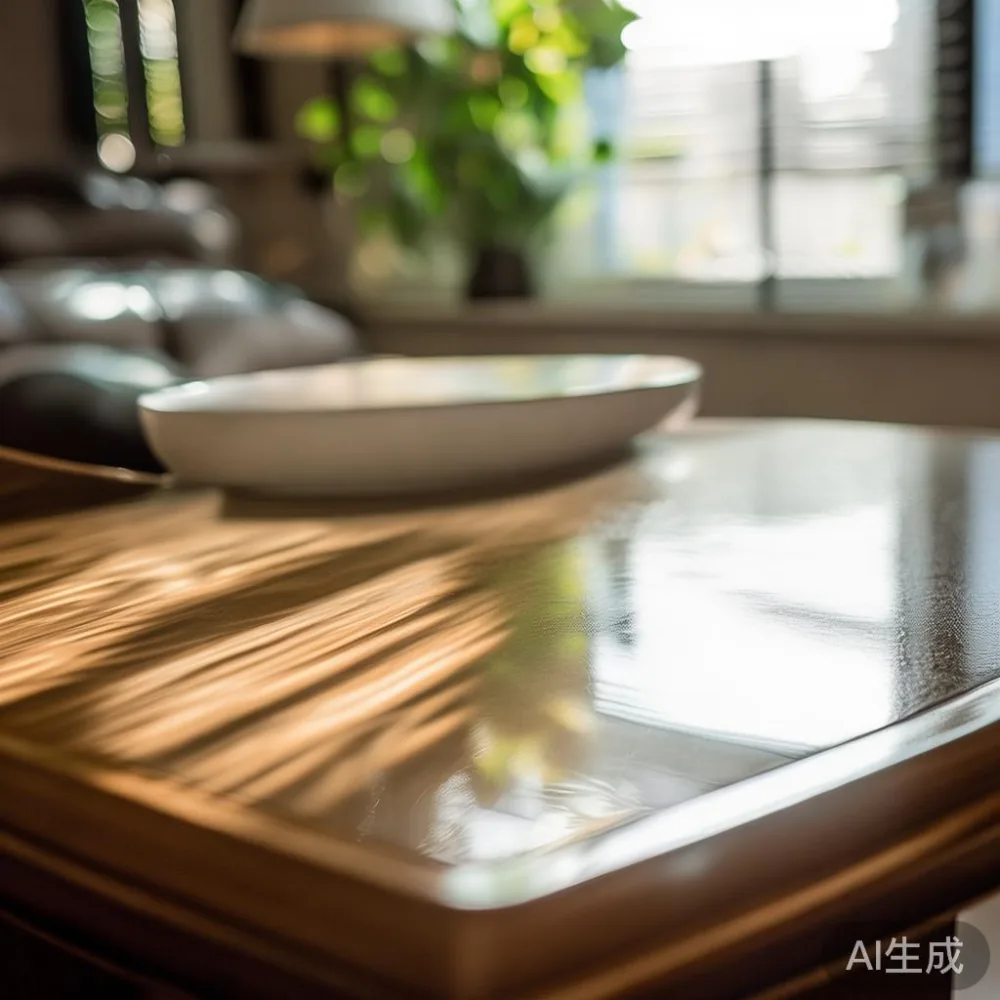
When we talk about French light luxury or American light luxury in furniture, we are usually describing a restrained version of high-end European styling — soft neutral palettes, brass-tipped legs, clean lines, and surfaces that catch light without feeling gaudy. In Foshan workshops, this look is achieved by spraying five to nine coats of polyurethane or PE acrylic lacquer onto a sanded solid hardwood substrate, usually ash, walnut, or rubberwood. Each coat is dried in a dust-free booth, sanded with 800–1500 grit paper, then polished. A 180cm console table can take 4 to 6 days to finish properly, which is why cheap shortcuts are easy to spot: orange peel, visible sanding marks, or soft corners.
For buyers in Singapore, the light-luxury positioning is not just about looks. It also implies that the finish should hold up to daily use for 10+ years, not days. When you compare a European light luxury sideboard with an MDF-and-melamine version at the same price point, the lacquered hardwood will outlast the melamine by a factor of three or four in our humid air, provided the buyer follows basic care. The same logic applies to a marble table, a wardrobe, or a dining table in the same collection — once you understand how the lacquer behaves, the care routine transfers almost unchanged.
How Often Should I Wipe My Console Table in Singapore?
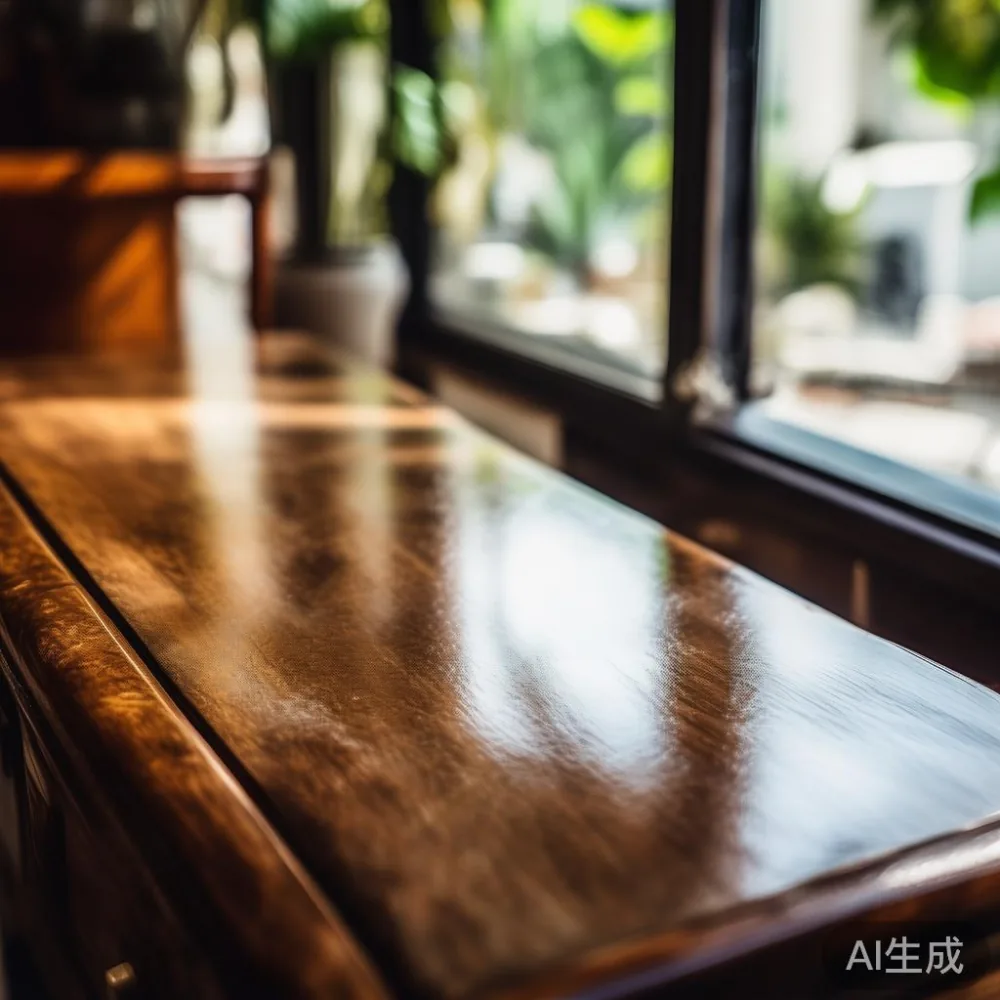
This is the single most common question my showroom visitors ask, and the honest answer is: every two to three days for daily-use pieces, once a week for decorative ones. Wiping is the cheapest insurance you can buy. Use a soft microfiber cloth (the 30cm × 30cm size is ideal), lightly dampened — never wet — with plain water or a dedicated pH-neutral wood cleaner that retails locally for around SGD 12–18 per 500ml bottle. Avoid household sprays like glass cleaner or all-purpose degreaser: they strip the polish layer and leave a cloudy film within weeks.
Wipe in straight lines along the wood grain, not in circles. Circular wiping can buff microscopic scratches into the surface, which scatter light and create the dreaded "haze" that looks like dust but does not wipe off. After the damp cloth, follow immediately with a dry microfiber to lift any remaining moisture. Singapore's tap water carries chlorine and a small amount of mineral content, so leaving droplets to air-dry can leave faint white rings — the same rings you sometimes see on glass shower doors. A two-cloth routine eliminates that problem in about 90 seconds per session.
For households with children or pets — and that is most of the HDB units I visit in Tampines and Sengkang — keep a dedicated tray of coasters near the console table. A single hot Milo at 65°C placed directly on lacquer will leave a permanent white mark in under three minutes. I tested this last year on a sample piece: hot mug, no coaster, three minutes, white ghost ring that did not polish out. Cool mug, no coaster, three minutes, no mark at all. Heat is the lacquer killer, not water.
How Do I Handle Yellowing, Sticky Spots, and Micro-Cracks?
Yellowing on a white-lacquer surface is almost always UV-driven, not age-driven. A console table placed 1.5m from an unshaded west-facing window can yellow noticeably within 18 months. The fix is preventive: install a 3% UV-cut window film (around SGD 18–25 per square foot installed locally) or a simple linen sheer curtain. If yellowing has already happened, a light polish with a non-abrasive cream restorer (such as those used for piano finishes) can lift mild cases. Deep yellowing usually requires a professional respray.
Sticky spots are trickier. They are usually caused by plastic or rubber resting on the lacquer — the classic culprit is a rubber-soled slipper dropped on the surface, or a phone case left face-down. The plasticizer migrates into the lacquer and creates a tacky patch that catches dust. The remedy is surface wipe from a cloth lightly dampened with isopropyl alcohol (70% solution, available at any Watsons for SGD 6–8). Test on an unseen corner, wait 30 seconds, then wipe. If the tackiness lifts, you are dealing with a surface residue; if it stays, the plasticizer has migrated into the lacquer and you need a professional refinish.
Micro-cracks, sometimes called "crazing," appear as a fine spider web on the top coat. They are almost always the result of large humidity swings — for example, a console table placed directly under a fan coil unit running on auto mode that drops the room from 28°C at 80% RH to 22°C at 55% RH every two hours. Wood substrate expands and contracts, micro-cracks form. The treatment is two-pronged: stabilize the room (aim for 22–26°C and 50–60% RH) and apply a wax-based restorative once a year. MIDHILL offers a lifetime refinishing service on its console tables, which covers exactly this kind of crazing for a nominal transport fee of SGD 80–120 within Singapore.
Can I Place a Lacquered Console Table Near My HDB Window or AC Vent?
Distance matters more than direction in a Singapore layout. The ideal spot for a console table is at least 80cm away from any direct AC vent, 120cm away from an unshaded window, and 30cm away from any wall corner to allow air circulation. In a typical 4-room HDB, the entryway console often sits within 60cm of the service yard door or kitchen door, both of which vent humid air. If you cannot move the piece, a small dehumidifier set to 50% RH for the console's room will protect every lacquered piece in the apartment — not just the console table, but also your solid wood bed frame, dining table, and wardrobe. A standard 12L/day dehumidifier suitable for a 15 sqm room costs around SGD 220–280 and uses about SGD 6–10 of electricity per month.
For condo corridors, the lift sizes in most new Singapore developments are 1.1m wide × 2.1m deep, and corridor widths are at least 1.2m. A 150cm console table will not fit through a standard lift turned on its side, but a 120cm console will. MIDHILL ships its console table line in flat-pack form, with the largest single carton sub-assembly being no more than 145cm × 55cm × 18cm — well within lift and corridor limits. Delivery inside mainland Singapore is free above US$350 equivalent (around SGD 480), and standard delivery is 14–21 working days from the Foshan warehouse. If you live on, say, the 30th floor in Punggol and the service lift booking is tight, request a Saturday delivery slot; MIDHILL's local partner charges SGD 40 for Saturday delivery versus SGD 0 on weekdays.
What Cleaning Products Should I Avoid on Lacquer?
Anything containing silicone, ammonia, bleach, or acetone is the wrong product. That rules out most generic kitchen sprays, all glass cleaners, and most "all-in-one polish" products sold at supermarkets. Silicone-based polishes are the worst offenders: they leave a gorgeous shine for 48 hours, then attract dust like a magnet, and over months they penetrate the lacquer and make any future refinish almost impossible because the new lacquer will not adhere properly to silicone-contaminated wood.
Stick to three simple items: a 30cm × 30cm microfiber cloth (a pack of six retails for SGD 10–14 at Daiso or HomeFix), a pH-neutral wood cleaner (SGD 12–18 per 500ml), and a good quality paste wax applied once or twice a year (around SGD 25–35 per tin, enough for 8–10 applications on a single console table). The wax is optional but it adds a sacrificial layer that takes the abuse instead of the lacquer itself. For pieces in heavier use — a console that doubles as a bar, or holds a rotating display of ceramics — wax every quarter.
If you have a French provincial accent chair or a marble table in the same room, do not assume the same cleaner works on both. Marble is calcium carbonate and reacts badly to anything acidic (vinegar, lemon, most fruit juices) and to ammonia. Lacquer tolerates a much wider pH range, but still benefits from pH-neutral care. Keep two separate cleaning kits and label them — it sounds fussy, but it prevents the single most common accidental damage I see in local homes: someone sprays marble cleaner on a lacquered console and leaves an etched patch.
Does a Console Table Need Professional Refinishing, and How Often?
A quality lacquered console table in a Singapore home should not need refinishing within the first 10 years if cared for properly. After that, depending on use, a light buff-and-wax every two to three years extends the life almost indefinitely. A full strip-and-respray is usually only needed after a major incident — flood, chemical splash, deep heat damage — or when the piece has been neglected for a decade.
MIDHILL's lifetime refinishing service applies to all console tables, dining tables, and wardrobes purchased through the official Singapore channel. The process involves an in-home assessment (free), collection by a local logistics partner (SGD 80–120 within mainland Singapore, free above a USD-equivalent order value of US$350), workshop refinish over 7–14 days, and redelivery. Because of GST adjustments in 2023–2024, refinishing services are now subject to 9% GST, which is added to the labour line on your invoice. For a 150cm console table, full refinish costs roughly SGD 380–480 before GST, which is significantly less than replacing the piece and keeps a solid wood heirloom in service for another generation.
How Do I Style a Lacquered Console Table Without Damaging the Surface?
Styling is where most accidental damage happens, not during cleaning. A console table in a Singapore entryway typically carries keys, a tray, a vase, perhaps a small lamp. Each of these items has a base — and the base is what touches the lacquer. Felt pads under every single decorative object are non-negotiable. A pack of 48 mixed-size self-adhesive felt pads costs SGD 4–6 and lasts a household for two to three years. Apply them to vases, lamp bases, picture frames, and the bottom of any ceramic bowl.
For styling inspiration, the easiest mistake is over-cluttering. In a 4-room HDB entryway, a console table of 120–140cm long is the practical maximum; anything longer makes the corridor feel narrow. Keep the styling to three zones: a tray zone (keys + wallet) of about 30cm, a decorative zone (vase or sculpture) of about 40cm, and a lighting zone (small table lamp) of about 25cm. Leave the rest of the surface empty. Empty surface is a surface that does not get scratched, stained, or watermarked.
If you are building a full room around the console table, a light-luxury palette tends to work well in Singapore because our neutral palettes pair cleanly with the natural light. A post-modern light luxury look — think slim brass-tipped legs, a soft bone-white top, and a slim marble inlay — works with most HDB flooring tones. The same console table can anchor a Japandi-style living room, a light-luxury dining room, or even an eclectic Bohemian entry. If you are still figuring out how to choose Japandi sofa pieces to sit beside the console, the rule is to keep the wood tone within two shades of the console's wood and let the fabrics do the contrasting work.
Quick-Reference Care Checklist for Singapore Homes
Here is the routine I share with every new console table owner in Singapore, condensed for daily life.
Daily: wipe spills within 60 seconds. Anything acidic — vinegar sauce, soy sauce, calamansi juice — left for more than two minutes can mark even a high-quality lacquer. Keep a microfiber cloth rolled up in the entryway drawer for emergencies.
Weekly: full surface wipe with a damp microfiber followed by a dry one. Total time: under three minutes for a 120cm console.
Monthly: inspect felt pads, check joints for any micro-movement, and run your palm across the surface in good light to feel for any roughness that signals the start of crazing.
Quarterly: apply paste wax if the piece is in heavy use. Buff off after 15 minutes.
Annually: check humidity logs on your dehumidifier if you use one, and book a free in-home assessment with MIDHILL if the piece is over five years old. Prevention is cheaper than refinishing, and refinishing is cheaper than replacement.
What If My Console Table Is Already Damaged?
Not all damage is repairable at home, but a surprising amount is. Surface water rings lift with a light buffing cream and a soft cloth in five to ten minutes of patient circular motion. Mild stickiness lifts with isopropyl alcohol as described earlier. Light scratches in the polish layer (not the colour coat) often disappear with a wax fill. Deeper scratches through to the wood, dents, and chips need professional attention. A console table chip on a corner is fixable on-site with a colour-matched fill for SGD 80–150; a deeper repair requiring workshop work costs SGD 200–400 depending on size.
If you have purchased through the official MIDHILL channel and your console table is within the 10-year structural warranty, the structural parts (joints, frame, substrate) are covered. The lacquer finish is covered for 2 years against manufacturing defects — peeling, blistering, or yellowing not caused by external conditions. Beyond that, lifetime refinishing at cost is available. For warranty claims, keep your order number, photograph the issue in daylight, and contact the local service partner within 14 days of noticing the problem. Their response time for assessment is typically 3 working days, with resolution within 14 working days for in-home fixes.
A Note on Light Luxury Pieces Beyond the Console Table
The same care principles apply across a light-luxury collection. A solid wood sofa with lacquered arm caps needs the same coasters, the same weekly wipe, and the same distance from AC vents. A bed frame with a lacquered headboard benefits from a stable humidity range and a quick weekly dust. A dining table takes more abuse than a console table — hot plates, spills, dropped cutlery — and warrants a slightly thicker wax schedule, perhaps every two months instead of every quarter. A wardrobe and a nightstand with lacquered panels are usually less stressed, so the same routine as the console table works perfectly. A marble table, by contrast, needs its own dedicated care kit.
If you are browsing the MIDHILL catalogue and wondering how to style European light luxury wardrobe in room settings, the same principles apply: stable humidity, distance from direct sunlight, and prompt spill response. For shoppers comparing options and looking at listings labelled for sale Modern light luxury furniture, the lacquer care routine is a useful filter — a piece that comes with a documented care guide and a lifetime refinishing offer is almost always built with a thicker lacquer system than a piece that does not.
For those still furnishing other parts of the home, the best Boho sofa for 2026 trend reports lean toward softer fabrics and warmer woods, but the lacquered console table beside it still benefits from the same disciplined two-cloth weekly wipe. Whatever direction your home takes — Japandi, French provincial, light-luxury modern, or a mix — the console table is the piece your guests see first, and it is the piece that quietly sets the tone for how the rest of your home is cared for.
Frequently Asked Questions from Singapore Owners
Is humidity a humidity issue or a temperature issue for lacquered furniture? Both, but humidity is the bigger factor in Singapore. A stable 22–26°C with 50–60% RH is the ideal target. Use a SGD 25 hygrometer from any electronics store to monitor the room where your console table sits.
Can I use a steam mop near my console table? No. The combination of (b) heat and (b) moisture will craze lacquer within months. A damp cloth is fine; a steam mop is not.
How long does delivery take to Singapore from MIDHILL? Standard delivery is 14–21 working days to a mainland Singapore address. For Sentosa and certain condo clusters with limited service lift hours, allow an extra 3–5 working days. Tracking is provided from the moment the consignment leaves the Foshan warehouse.
Are there GST charges on top of the listed price? Yes. Since 1 January 2023, all goods imported into Singapore are subject to 9% GST, which is added at checkout. MIDHILL's Singapore partner handles all import paperwork.
What if my console table arrives with a small scuff? Document it on the delivery note before signing, photograph it in daylight, and contact the local partner within 30 days. In-home touch-up is included free of charge for any transit-related mark on a newly delivered piece.
Caring for a lacquered console table in Singapore is not difficult — it is mostly about consistency. A three-minute weekly wipe, a coaster habit, a 50–60% humidity target, and an annual wax will keep the piece looking showroom-fresh for ten years and counting. The lacquer is tougher than most people think; what wears it down is not use, but neglect.