What Actually Drives the Price of Solid Wood Furniture
Walking through a furniture showroom in Singapore, especially in areas with new developments like Tampines or Punggol, the price difference between two console tables can be staggering. One might be a simple, unassuming piece for SGD 350, while another, seemingly similar in size and function, commands SGD 2,500 or more. As a specialist who has spent years examining the craft and commerce of home furnishings, I can tell you that the price is rarely arbitrary. The cost of solid wood furniture is a story told in materials, time, geography, and value. Last month, I visited a workshop in Foshan to understand this firsthand, and the experience revealed the hidden layers that determine what you pay for a piece that will anchor your home for decades.

Why Does a Simple Console Table Cost So Much? It's All About the Wood
The most fundamental factor in the price of any solid wood furniture, including a console table, is the raw material itself. Not all wood is created equal, and the choice of timber dictates everything from the piece's longevity to its aesthetic appeal. The origin, grade, and even the part of the tree the wood comes from play a critical role in its cost.
Consider a console table made from North American White Oak. This is a dense, durable hardwood with a prominent grain pattern that is highly sought after for its strength and beauty. A single plank of high-grade, quarter-sawn White Oak wide enough for a console table top can easily cost SGD 400 or more. In contrast, a table made from Rubberwood, a more common and faster-growing Southeast Asian hardwood, might use planks that cost a fraction of that, perhaps SGD 80 for the same size. This difference in material cost is passed directly to the consumer.

The grade of the wood is another layer. A console table constructed from 'Select' grade White Oak will have a very uniform grain with minimal knots or imperfections. This requires careful selection and yields less usable wood from a single log, making it more expensive. A 'Common' grade, while still solid wood, will have more character marks, knots, and color variations, which is acceptable for a rustic or post-modern light luxury style but comes at a lower material cost. For a homeowner in a Bedok HDB flat, a console table with a few character knots might add charm, while someone in a Punggol condo might prefer the clean lines of a higher grade.
My colleague at the workshop explained it perfectly: "We can build a console table that looks similar from two different woods. The one from Oak will feel heavier, more substantial, and will resist dents for 20 years. The one from Rubberwood is a solid piece, but it's a different material for a different price point. The wood is the foundation."
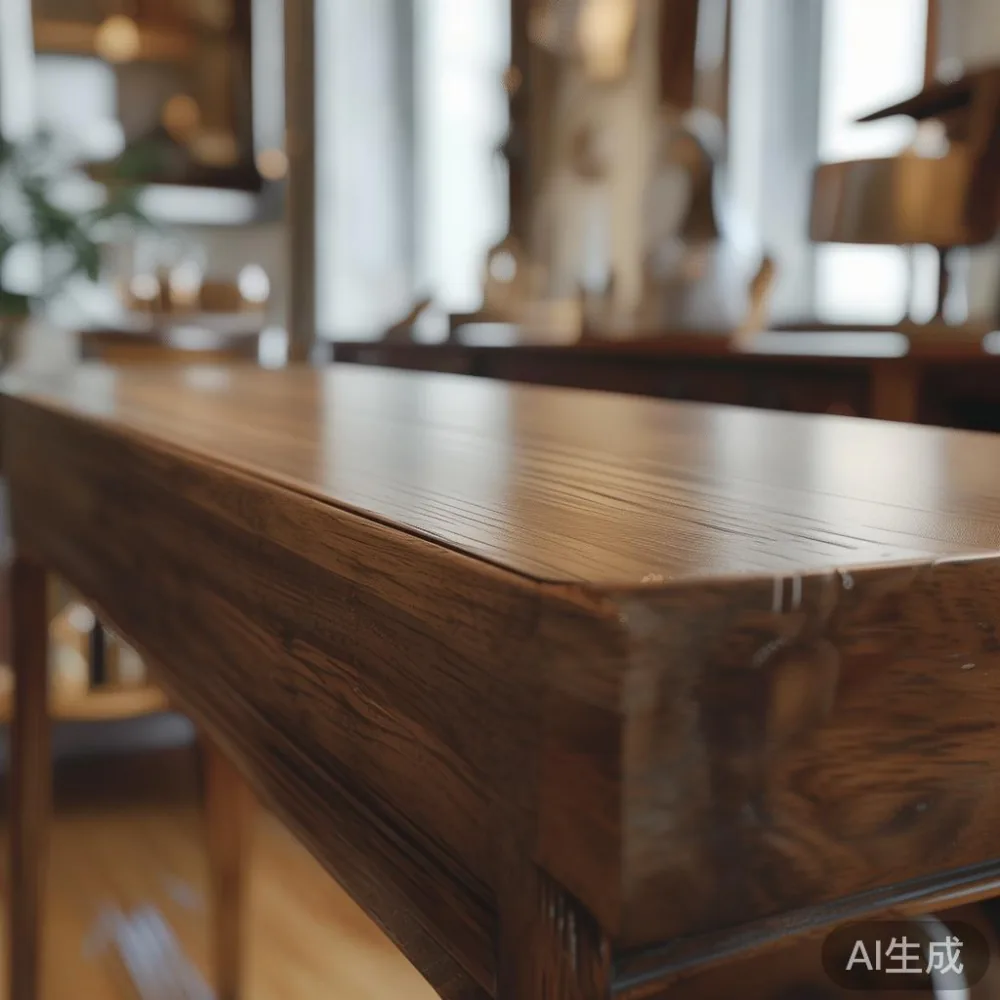
From Forest to Flat Pack: The Journey and Its Price Tag
A piece of solid wood furniture doesn't magically appear in a showroom. It travels a long, complex journey, and every step of that journey adds to the final price. Understanding this logistics chain reveals why a console table in Singapore costs what it does.
p>Let's trace the journey of a console table from MIDHILL's Foshan factory to a living room in Singapore. The process begins with the logs being sawn into rough planks. These planks are then kiln-dried for 15-20 days to reduce their moisture content to 8-10%. This is a critical step to prevent the wood from warping or cracking in Singapore's humid climate. A large industrial kiln costs thousands of SGD to run, and the energy consumed is a significant operational expense.
Once dried, the wood is planed, sanded, and cut to the specific dimensions needed for the console table. The components are then assembled by skilled carpenters using traditional joinery techniques like mortise and tenon, or with modern adhesives and screws. After assembly, the piece goes through a multi-stage finishing process: sanding between coats of primer, applying a base colour, and finally, multiple layers of a protective lacquer or oil. This finishing process alone can take 3-4 days per piece and requires a controlled environment free of dust.
After the console table is complete and inspected, it is carefully packed. For export to Singapore, this means protecting it from the 30-day sea journey. The packaging must be solid enough to withstand humidity changes and potential rough handling. The cost of this protective packaging, plus the sea freight charge for a container holding 50-60 console tables, is factored into the price of each individual unit. When the container arrives in Singapore, the goods are subject to 9% GST, which is added to the final retail price. This entire process, from raw log to finished, taxed product, involves numerous costs for labour, machinery, materials, and shipping, all of which accumulate.
The Singapore Context: HDBs, Condos, and Practical Realities
The price of furniture is not set in a vacuum; it is deeply influenced by the environment it is designed for. In Singapore, this means considering the specific dimensions and challenges of HDB flats and condominiums. A console table is often placed in a narrow entryway or a corridor, and its design must accommodate these spaces.
A typical HDB corridor in Tampines or Bedok might be only 120 cm wide. A console table that is 45 cm deep and 120 cm long fits this space perfectly. However, if a homeowner lives in a condo with a more spacious entryway, they might opt for a larger console table, perhaps 60 cm deep and 150 cm long. The larger table requires more wood, more labour to build, and consequently, costs more. A manufacturer like MIDHILL must produce a range of console tables to cater to these different living situations, from compact, space-saving designs for older HDB estates to more expansive pieces for modern condominiums.
Another practical consideration is weight. Solid wood furniture is heavy. A console table made from solid oak can weigh 35-40 kg. A homeowner on the 15th floor of a Punggol condo with a small lift needs to consider how they will get that piece upstairs. Some furniture companies offer a 'white glove' delivery service that includes assembly in the home, which adds to the cost but provides immense convenience. For a piece that needs to work through a tight HDB staircase, weight and disassembly become key design factors, influencing both the price and the product itself.
Also, the humid Singapore climate necessitates high-quality finishing. A poorly finished console table will absorb moisture from the air, leading to swelling, warping, or a sticky surface. A piece with a 7-layer lacquer finish, designed to resist this humidity, will be more expensive to produce than one with a simple oil finish. This investment in durability is a direct response to the local environment and is a justified cost for a piece meant to last a lifetime.
Why Does a French Sofa vs Nordic Sofa Cost Differently?
While our focus is on the console table, it's useful to understand how design philosophy affects price across the furniture board, as the same principles apply. Take the long-tail query: 'French sofa vs Nordic sofa'. The price difference between these two styles is not about which is 'better,' but about the materials, labour, and design intent behind each.
A French provincial sofa is a statement of light luxury. It is typically upholstered in rich fabrics like velvet or linen, features ornate wooden legs with carved details, and has a more substantial, plush frame. The upholstery work alone is highly labour-intensive. The fabric is cut, sewn, and fitted over a complex frame with multiple layers of padding. The wooden legs might be hand-carved or feature intricate mouldings that require skilled craftsmanship. This combination of premium textiles and detailed woodwork makes a French sofa a significant investment, often costing several thousand SGD.
On the other hand, a Nordic sofa embodies a different kind of luxury: one of simplicity and material honesty. It typically features a clean-lined wooden frame, often in light woods like ash or beech, with simple, straight legs. The upholstery is usually made from durable, natural fabrics like wool or cotton in neutral tones. The design focuses on function and form, with less ornamentation. While still made from high-quality solid wood, the reduced labour for carving and the often simpler upholstery process means a Nordic sofa can be less expensive than its French counterpart, offering a different value proposition.
This same logic applies to a console table. A console table in a French light luxury style might feature cabriole legs, intricate inlays, and a dark, multi-toned finish, requiring hours of detailed work. A post-modern light luxury console table, by contrast, might favour clean lines, geometric shapes, and a minimalist finish, focusing on the beauty of the wood grain itself with less applied decoration. The difference in labour and design complexity directly impacts the final price, even if both are made from the same type of solid wood.
Is a Lifetime Refinishing Warranty Really Worth the Extra Cost?
This is a question I hear often from homeowners in Singapore who are weighing the upfront cost of a solid wood console table. A piece with a 10-year structural warranty and a lifetime refinishing promise will almost always be more expensive than a cheaper, mass-produced alternative. But is this added cost justified? For many, the answer is a resounding yes, and it represents the core value proposition of premium furniture.
Consider the alternative: a console table made from particleboard with a wood veneer. It might look beautiful in the showroom and cost only SGD 450. However, over time, the particleboard core can swell and degrade in Singapore's humidity, causing the veneer to peel or bubble. If it gets scratched or dented, it cannot be sanded and refinished. When it eventually breaks, it's landfill. The initial low price is offset by a short lifespan and no possibility of restoration.
A solid wood console table from a reputable maker is an investment in longevity. The 10-year structural warranty guarantees that the frame, the legs, and the joints will hold up under normal use. The lifetime refinishing promise is even more significant. A solid wood top can be sanded down multiple times over decades. If a homeowner changes their decor from a coastal theme to a more industrial look, the console table can be refinished to match. A dark walnut stain can be stripped off and replaced with a light oak finish. This adaptability means the piece never becomes obsolete. It can move from a first HDB flat to a future condo, adapting to different homes and styles. This long-term value is what you are paying for, and it's a key reason why a higher initial price makes financial sense over the life of the furniture.
How to Make an Informed Purchase Decision
Understanding the factors that drive price empowers you to make a smart decision that aligns with your budget, your home, and your values. When shopping for a console table, or any solid wood furniture, move beyond the sticker price and consider the total value of the investment.
First, assess your space. Measure your entryway or corridor accurately. Consider the lift size if you live in a high-rise condo. A console table that is too large will overwhelm a small HDB entryway, while one that is too small will look lost in a spacious condo lobby. Knowing your exact dimensions helps you narrow your options and choose a piece that is perfectly proportioned.
Second, ask questions. When you're looking at a console table, don't be afraid to inquire about the wood species, the country of origin, and the type of joinery used. Ask about the finishing process and what kind of maintenance it requires. A good salesperson will be happy to explain these details. For example, if you're looking for 'for sale Post-modern furniture', you should ask if the geometric forms are solid wood or just veneered on MDF. Understanding the materials helps you justify the price to yourself.
p>Third, think about your lifestyle and future plans. If you plan to stay in your current HDB for many years, a durable, timeless console table is a wise choice. If you anticipate moving or changing your decor frequently, a piece that can be easily refinished, like a solid oak console table, offers incredible flexibility. This long-term perspective shifts the focus from the immediate cost to the cost-per-year of ownership. A SGD 1,500 console table that lasts 30 years costs SGD 50 per year. A SGD 400 particleboard table that needs to be replaced in 5 years costs SGD 80 per year. Over time, the more expensive option is the more economical one.
Finally, consider the brand's reputation and support. A company that offers a 14-day returns policy gives you peace of mind. Free shipping over SGD 350 removes a significant logistical hurdle and cost. A 10-year warranty is a sign of confidence in the product's quality. These services, while not part of the physical furniture, are part of the total value package and should be factored into your decision.
Final Thoughts on Value Beyond the Price
Ultimately, the price of a solid wood console table is a reflection of its story. It's the story of a tree that grew for decades, the hands that shaped it, the journey it took across continents, and the promise it holds for your home for years to come. In a world of fast furniture that is disposable and impersonal, a solid wood piece offers something different: permanence, character, and a connection to craftsmanship.
For a homeowner in Singapore, where space is at a premium and homes are long-term investments, choosing a well-made console table is a statement. It’s a choice to invest in quality over quantity, in durability over disposability. It's about finding a piece that not only fits your current space but can also adapt to your future, whether that's a new condo in Tampines or a larger home elsewhere. When you look at a console table and understand what goes into it, the price becomes less of a mystery and more of a reflection of the tangible and intangible value it brings to your life.