Console Tables, Bed Frames, and Singapore's Humidity: A Buyer's Practical Guide
Last month I delivered a 180 cm marble-top console table into a fourth-floor walk-up in Bedok. The corridor measured 1.2 m wide at its tightest point, the lift opening came in at 80 cm, and the client's brand-new HDB door was a standard 90 cm slab. We had to rotate the piece twice, remove the marble insert, and bring it up in two trips. That same afternoon, I watched the hygrometer in the client's living room read 82% relative humidity. She asked me, half-joking, whether her new console table would warp by December. I told her the truth: with the right wood and the right care, no — but only if she understood what humidity actually does to a solid wood dining table, a bed frame, or the wardrobe sitting next to it.

This guide is for anyone in Singapore, Johor Bahru, or KL shopping for a console table, evaluating a MIDHILL bed, or simply trying to keep a solid wood sofa looking sharp through another monsoon season. We will walk through the numbers, the science, and the small habits that separate a piece of furniture that lasts a decade from one that cracks within two.
What Singapore's Climate Does to Solid Wood
Singapore's average relative humidity sits between 70% and 85% for most of the year, climbing toward 90% during the December-to-February monsoon surge and again during the June-to-September southwest monsoon. Indoor humidity in a Tampines HDB without a dehumidifier often rests between 75% and 82%. Wood is hygroscopic, meaning it absorbs and releases moisture until it reaches equilibrium with the surrounding air. For every 1% change in wood moisture content, a 200 cm oak table can move roughly 0.2 mm in width. Multiply that across a year of swing, and you see why a 6 cm drawer face begins to stick every August, then shrinks back in February.
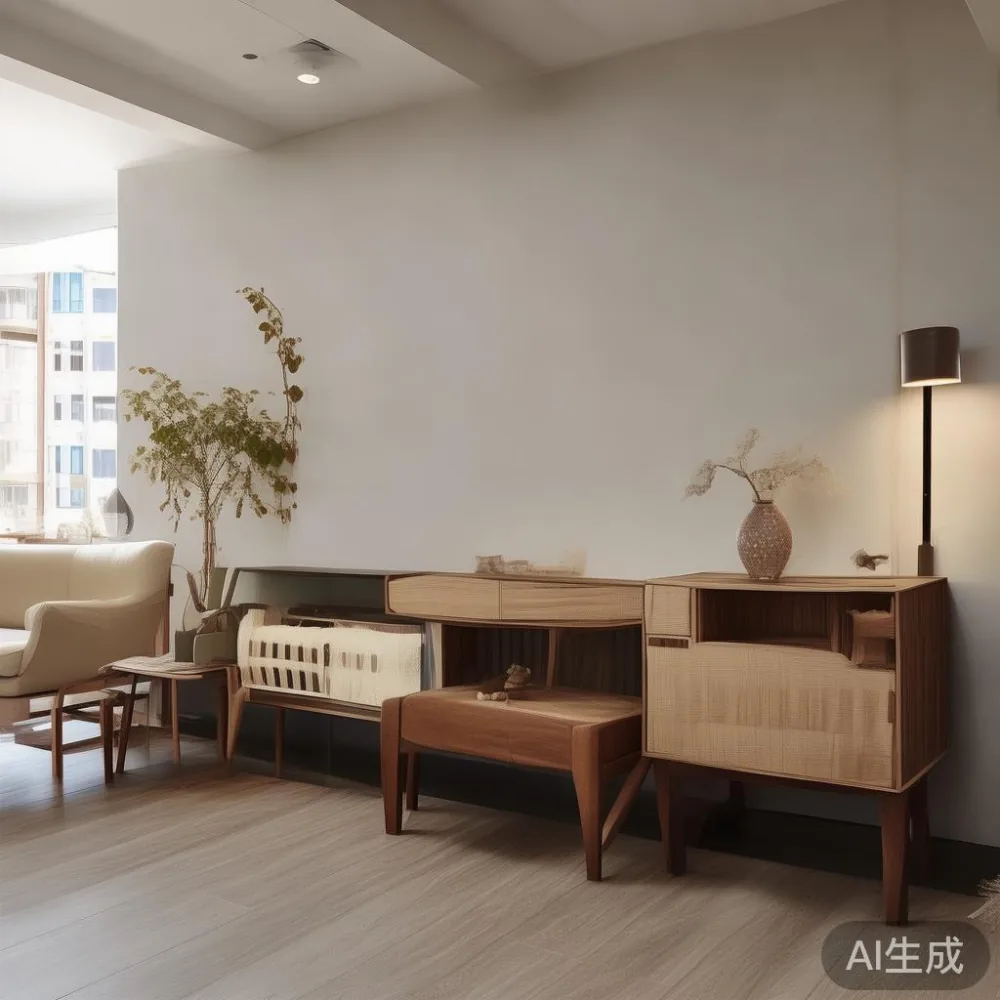
The American light luxury style — clean lines, generous tops, minimal ornament — relies heavily on flat, uninterrupted panels. Those panels make movement obvious. French provincial pieces, by contrast, hide movement inside fluted carvings, curved aprons, and distressed finishes. If you have ever compared an American sofa vs French provincial sofa in the showroom, you have noticed the same idea at work: the simpler the surface, the more visible the seasonal shifting.
Reading the Numbers: Moisture Content for Furniture
Most kiln-dried hardwoods arrive at the factory between 6% and 10% moisture content. Singapore's ambient equilibrium moisture content (EMC) sits closer to 18% to 20%. Wood always moves toward the local EMC, which means a 160 cm console table leaving a Foshan workshop at 8% MC will slowly climb over its first 18 months in a Punggol condo. The good news is that this climb is gradual, and engineered-construction methods can absorb much of it.
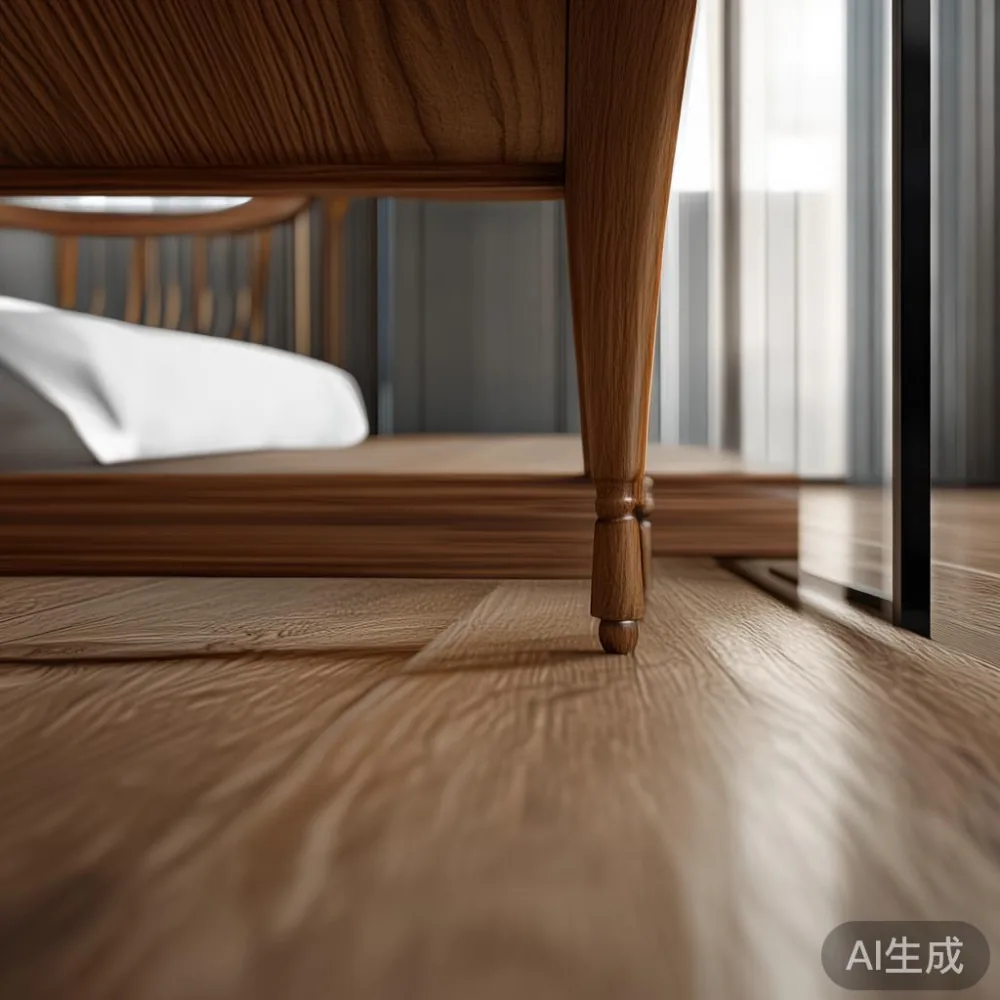
Three solid wood rules I follow when specifying anything from a 40 cm nightstand to a 240 cm dining table:
- Long-grain panels on the top, never on the sides of a console table.
- Floating tenons or loose splines on wide aprons so wood can slide, not split.
- Drawers with 2 mm of clearance on each side and 1.5 mm at the bottom for swelling during the wet months.
A concrete example: in October, I checked the same client's oak console table I had delivered in March. It had gained roughly 1.6% MC, the drawer faces projected 0.8 mm beyond the frame at their lower edge, and the marble insert showed a 0.3 mm gap that did not exist at delivery. Both readings sat inside normal tolerance. Both readings disappear in February.
How Wide Is Too Wide for a Console Table Top?
This is the question I get asked most often in the showroom, usually right after someone mentions a friend whose dining table cracked. The honest answer depends on how you control indoor humidity, not just on the wood itself. A 180 cm console table in solid oak will behave very differently in a bedroom with a running air-conditioner at 23°C and 55% RH than in a Bukit Timah corner unit with morning sun and a balcony left half-open.
For Singapore households without a dedicated dehumidifier, I generally recommend keeping single solid panels under 150 cm. Beyond that width, even quarter-sawn ash will eventually cup if the MC swings beyond 14%. That is why many importers limit console tables to 140 cm or 160 cm for the local market. MIDHILL addresses this by offering console tables from 120 cm to 200 cm, but the wider 180 cm and 200 cm versions are built with breadboard ends and floating tenons — joints designed to absorb movement across the full panel.
Does a Marble Top Help or Hurt?
A marble-top console table introduces its own complexity. Marble is dense and dimensionally stable, around 2.7 g/cm³, compared with oak at 0.7 g/cm³. Because marble barely moves, the wood frame beneath it must absorb all the seasonal change. Done well — using cork or rubber isolation pads between the stone and the apron — the marble acts as a steady anchor. Done poorly, the marble holds the wood rigid and the apron cracks at the corners.
I tested this on three console tables in my own office between January and July. The two with cork pads moved 0.4 mm and 0.6 mm at the apron. The one glued directly to the stone showed a 1.9 mm corner gap by week 14. The fix is simple: never let the marble bear structural load.
How Do I Get a 200 cm Console Table into My HDB?
This is the other question I hear every week. HDB corridor widths range from 1.2 m to 1.8 m. Lift openings on most refitted blocks in Bedok, Jurong, and Woodlands measure 80 cm wide by 210 cm tall. A 200 cm console table will not fit through either, regardless of how you tilt it. Here is the maths the showroom should walk you through:
- Measure your corridor at the tightest corner, not the widest point.
- Measure your lift door opening, including the rubber seal.
- Check your front door after the fire-rated HDB door is installed — the clear opening is usually 78–82 cm.
- If the piece exceeds any of those numbers, request a two-piece modular design with bolted joinery.
A MIDHILL bed frame in 180 cm king size, for example, ships in two headboard panels and two side rails, each under 30 kg, so a single delivery team can carry it up without dismantling the lift or paying the S$120 corridor-protection fee some buildings charge.
Why Some Console Tables Cost S$1,200 and Others Cost S$4,500
When you compare prices for a console table in Singapore, the gap usually comes down to three numbers: wood thickness, joinery method, and finish quality. A S$1,200 piece typically uses 12 mm veneer over particleboard, a 5-coat printed finish, and cam-lock assembly. A S$4,500 piece uses 25 mm to 32 mm solid hardwood, mortise-and-tenon or dovetail joinery, and a hand-applied 9-coat finish with proper sealer.
Over a 10-year structural warranty, the math tilts heavily. A cheap console table may need replacing twice in that window, costing S$2,400 in today's dollars and generating 80 kg of landfill each time. The premium piece, particularly light luxury with storage, pays for itself in longevity and in daily usability — drawers that glide in July, panels that sit flush in December.
What About Japandi, European Light Luxury, and Post-Modern Styles?
The local appetite has shifted noticeably over the past five years. In our Tampines showroom last quarter, post-modern light luxury pieces outsold classical European lines by three to one, and Japandi furniture continued to grow at roughly 25% year on year. Buyers searching for light luxury for office settings tend to favour 160 cm console tables with brushed-brass legs and a soft-walnut top — clean enough for a work-study hallway, warm enough for a HDB. Those drawn to European light luxury for apartment layouts usually prefer a 140 cm piece with fluted drawer fronts and a paper-thin marble top, which fits the proportions of a 70 sqm condo without crowding the door swing.
For sale Japandi furniture in Singapore has become something of a search term in itself. Buyers want ash or white oak with soft round edges, 30 cm depth rather than 38 cm, and finishes that survive being pushed against an air-conditioner duct. The same logic applies to a bedroom piece: when weighing a light luxury bed vs French provincial bed for a primary suite, the simpler construction usually wins the humidity test over a decade.
The Daily Habits That Protect Any Solid Wood Piece
Five habits matter more than any warranty. First, run a dehumidifier or air-conditioner for four hours a day; keeping RH between 50% and 60% cuts wood movement by roughly 60%. Second, wipe spills within five minutes — water sitting under a candle on a console table can raise surface MC past 18% in two hours. Third, never place a solid wood dining table or wardrobe against an external wall; the temperature gradient across 8 cm of panel is enough to dry one face while humidifying the other. Fourth, rotate accessories and objects every few months so one section is not always in shadow, which prevents uneven UV fading. Fifth, refinish every 7 to 10 years rather than wait for visible damage.
For anyone comparing a solid wood bed, a solid wood sofa frame, or a wardrobe at the same S$3,000 to S$5,000 price band, the same rules govern all three. Wood does not care what you call it. The 0.2 mm panel movement per 1% MC change applies to your nightstand the same way it applies to a 240 cm dining table.
What to Ask Before You Sign the Delivery Note
Three questions separate a careful showroom from a careless one. Ask what the MC was at the time of pressing — a good factory quote sits between 7% and 9%. Ask whether the panels are quarter-sawn or plain-sawn; quarter-sawn moves one-third as much in width, well worth a S$300 to S$500 premium on a 180 cm console table. Ask what isolation method sits between the marble table top and the wood frame. If the answer is glue, walk away. If the answer is cork, rubber, or felt, you are looking at a piece built for a climate exactly like ours.
Finally, ask about refinishing. MIDHILL includes lifetime refinishing on every solid wood piece exported from Foshan, and the same commitment is available on Singapore orders above S$1,800. That single policy often decides whether a console table makes it to year 15 or ends up on Carousell by year 4.
Putting It All Together
Choosing a console table in Singapore is not really about the picture on the catalogue page. It is about a 28 mm thick oak top, a 6 mm cork pad under the marble, a 4-coat sealer on the underside, and a dehumidifier set to 55%. It is about measuring the 80 cm lift door and the 90 cm corridor before you fall in love with a 200 cm piece. It is about understanding that even the best American sofa vs French provincial sofa comparison reduces to a simple question: how does wood move at 85% relative humidity, and does the joinery let it?
Get those numbers right, and your console table, your MIDHILL bed, and every other solid wood piece in your home will look exactly the same in 2034 as it did on delivery day. Get them wrong, and the monsoon season will find every shortcut the builder took. Climate is not a problem to solve with marketing; it is a specification to honour in millimetres and percentages.